Kiến thức
IELTS Speaking Part 1 Social Media: 12 câu hỏi về mạng xã hội, câu trả lời mẫu, từ vựng và gợi ý Part 2, Part 3
19 phút đọc
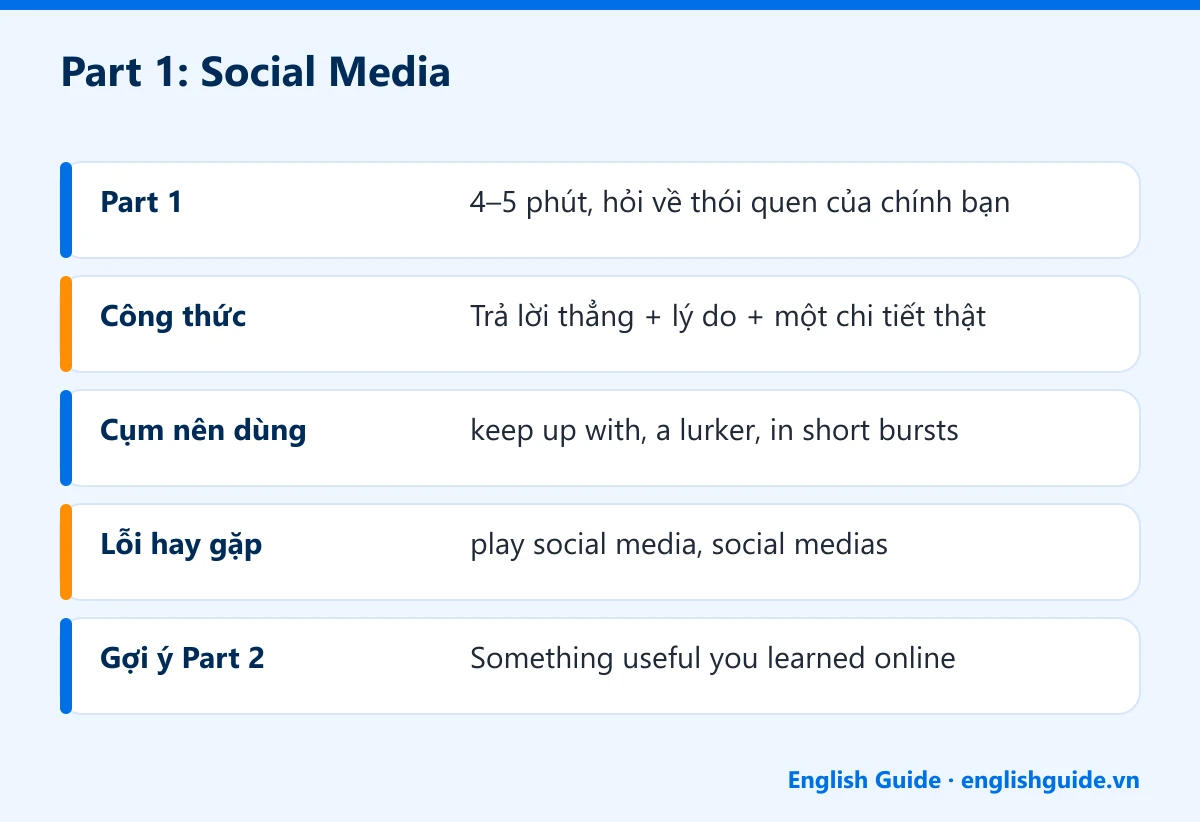
IELTS Speaking Part 1 Social Media là nhóm câu hỏi ngắn về thói quen dùng mạng xã hội của bạn, ví dụ Do you use social media?, How much time do you spend on it? hay Do you often post things online?. Cách trả lời hiệu quả: nói thật thói quen của mình, thêm một lý do hoặc một tình huống cụ thể, rồi dừng sau 2–4 câu. Bài này gồm 12 câu hỏi hay gặp kèm câu trả lời mẫu tự soạn, từ vựng có nghĩa tiếng Việt, các lỗi người Việt hay mắc và gợi ý cho Part 2, Part 3.
Nếu chưa nắm rõ Part 1 diễn ra thế nào, bạn nên đọc trước bài IELTS Speaking Part 1: kiểu câu hỏi và cách trả lời. Bài này không nhắc tên hay đánh giá nền tảng cụ thể nào; khi luyện, bạn cứ thay bằng ứng dụng mình thật sự dùng.
Chủ đề social media trong IELTS Speaking Part 1
Theo mô tả phần thi Speaking trên ielts.org, Part 1 dài 4–5 phút: giám khảo giới thiệu, kiểm tra danh tính rồi hỏi câu chung về các chủ đề quen thuộc như nhà ở, gia đình, công việc, việc học và sở thích. Hướng dẫn Part 1 của IDP cũng cho biết sau phần giới thiệu, giám khảo chuyển sang các chủ đề thường ngày như sở thích. Mạng xã hội là một phần trong ngày của hầu hết chúng ta, nên đây là chủ đề nên chuẩn bị trước.
Câu hỏi về mạng xã hội thường đi theo 5 hướng sau:
Hướng hỏi | Ví dụ câu hỏi | Bạn cần nói được |
|---|---|---|
Thói quen | Do you use social media? How much time do you spend on it? | Dùng lúc nào, bao lâu, để làm gì |
Nội dung | Do you often post things? What accounts do you follow? | Bạn đăng gì, xem gì, vì sao |
Con người | Do older people in your family use it? Online or face to face? | Gia đình, bạn bè dùng ra sao, bạn thích cách giao tiếp nào |
Trước và nay | When did you start using it? Have you ever taken a break? | Kể bắt đầu thế nào, thói quen đã đổi ra sao |
Ý kiến, tương lai | Do you spend too much time on it? Will you use it more in the future? | Nêu quan điểm, một lý do, dự định |
Part 1 hỏi về chính bạn; những câu mang tính xã hội như trẻ em nên dùng mạng xã hội từ mấy tuổi thường để dành cho Part 3.
12 câu hỏi IELTS Speaking Part 1 Social Media và câu trả lời mẫu
Các câu trả lời dưới đây là bài mẫu tham khảo band 7.0+ do English Guide tự soạn, theo lời một người 23 tuổi ở Buôn Ma Thuột (nhân vật hư cấu) đang phụ giúp cửa hàng rang xay cà phê nhỏ của gia đình và lo trang bán hàng trên mạng. Đừng học thuộc nguyên câu: IDP khuyên thí sinh không đưa ra câu trả lời thuộc lòng và nên tự thêm thông tin trước khi giám khảo phải hỏi why. Hãy xem cách triển khai ý rồi thay bằng thói quen thật của bạn.
1. Do you use social media?
Yes, every day, and partly for work. I help run the online page for my family's small coffee roastery, so most mornings I'm posting photos and answering customers' messages. On a personal level, I mainly use it to keep up with friends who've moved away for university or work.
Điểm hay: trả lời Yes ngay rồi tách hai mục đích (công việc, cá nhân); keep up with (cập nhật tin tức của ai) tự nhiên hơn know news about.
2. When did you first start using social media?
Around the age of thirteen, I think. Everyone in my class had already set up an account, and I didn't want to be the only one left out of the class group chat. Looking back, I posted some pretty embarrassing things, so I'm glad they're buried deep in my profile now.
Điểm hay: quá khứ đơn kết hợp quá khứ hoàn thành (had already set up); Looking back (nhìn lại) mở ra một chi tiết hài hước rất đời thường.
3. What do you mainly use it for?
Three things, really: staying in touch, picking up ideas and, if I'm honest, killing time. My cousins and I have a family group chat where we share photos, and I follow a few pages about coffee and photography that give me ideas for the shop. And a fair amount of my time goes on funny videos.
Điểm hay: báo trước Three things rồi đi lần lượt từng ý là cách giữ mạch lạc rất hiệu quả; kill time là giết thời gian.
4. How much time do you spend on social media every day?
Probably around two hours, but it's spread out in short bursts rather than one long session. I check messages first thing in the morning, reply to customers at lunchtime and scroll for a while before bed. My phone gives me a weekly report, but I try not to look at it too closely.
Điểm hay: không cần con số chính xác; in short bursts (từng chút một) và first thing in the morning (việc đầu tiên khi thức dậy) là cụm chỉ thời gian tự nhiên.
5. Do you think you spend too much time on it?
Some days, definitely. The problem isn't the time I spend replying to friends or customers; it's the mindless scrolling late at night, when I open an app for a minute and before I know it, forty minutes have gone. Recently I've started leaving my phone in the kitchen at night, and it's made a real difference to my sleep.
Điểm hay: thừa nhận, phân biệt thời gian có ích và vô ích, rồi nêu giải pháp; hiện tại hoàn thành (I've started, it's made) nói về thay đổi gần đây.
6. Do you often post things on social media?
Not on my personal account. I'm more of a lurker: I read what other people share but rarely post anything myself, maybe a photo or two after a trip. The shop's page is a different story. There I post almost every day, because if a small business goes quiet online, customers forget about it surprisingly quickly.
Điểm hay: lurker là người chỉ đọc, ít đăng; a different story (khác hẳn) giúp chuyển sang ý đối lập mà không cần however.
7. What kind of accounts do you follow?
Mostly practical ones. I follow a couple of baristas who share brewing tips, some photographers who explain how they edit their pictures, and a local news page so I know about road works or events in the city. I've unfollowed most celebrity accounts, because they made me feel like I was watching adverts all day.
Điểm hay: trả lời tổng quát trước (Mostly practical ones) rồi đưa ví dụ; unfollow và lý do đi kèm cho thấy bạn có chính kiến.
8. Do older people in your family use social media?
More than you'd expect. My mum was very sceptical at first, but now she's the most active member of our family group chat, sending good-morning pictures and health tips every single day. My grandfather only uses it for video calls with my aunt in Hanoi, but that alone has made a huge difference to him.
Điểm hay: More than you'd expect là câu mở gây chú ý; was sceptical at first (lúc đầu nghi ngại) đặt cạnh now tạo phép so sánh trước và nay.
9. Do you prefer chatting online or talking face to face?
Face to face, if I have the choice. Online, it's easy to misread someone's tone, and a short reply can seem rude even when it isn't meant to be. Messaging is perfect for quick, practical things, like arranging when to meet. So I'd say online is for planning, and in person is for actually talking.
Điểm hay: chọn ngay, đưa lý do, nhận mặt tốt của phía còn lại, rồi chốt bằng một câu cân đối (online is for…, in person is for…).
10. Have you ever taken a break from social media?
Yes, once, for about a week before my final exams at university. I deleted the apps from my phone and told my friends to call me if anything was urgent. The first two days felt strange, because I kept reaching for my phone out of habit, but after that I felt much calmer. I'd like to do it again sometime.
Điểm hay: kể một lần cụ thể bằng quá khứ đơn; out of habit (theo thói quen) và kept reaching for (cứ với lấy) là chi tiết rất thật.
11. Would you like to work in social media?
In a way, I already do, on a very small scale. I enjoy planning posts for the shop and seeing which photos people respond to. But I wouldn't want it to be my full-time job. Having to be online all the time and chase every new trend sounds exhausting, so I'd rather keep it as one part of my work.
Điểm hay: In a way (theo một nghĩa nào đó) trả lời khéo; câu điều kiện I wouldn't want… và I'd rather… nói mong muốn rõ ràng.
12. Do you think you'll use social media more or less in the future?
Probably less for entertainment and more for practical things. As I get busier, I have less patience for endless videos, but I can see myself relying on it even more for the business, especially for selling online. So the total time might not change much; it's the purpose that will shift.
Điểm hay: không trả lời đơn thuần more hay less mà tách theo mục đích; I can see myself + V-ing là cách nói dự đoán về bản thân rất tự nhiên.
Những câu hỏi social media khác có thể gặp
Which app is most popular with people your age? Nêu tên ứng dụng được, nhưng giữ giọng trung tính và giải thích vì sao bạn bè bạn dùng nó.
Do you trust the information you see on social media? Trả lời có chừng mực (It depends on the source), rồi kể cách bạn kiểm tra lại.
Have you ever made a friend through social media? Câu này có bài mẫu ở bài IELTS Speaking Part 1 Friends.
Vì sao các câu trả lời này ở mức 7.0+?
Bảng mô tả band Speaking của IELTS chấm 4 tiêu chí: Fluency and Coherence, Lexical Resource, Grammatical Range and Accuracy và Pronunciation. Ở band 7, thí sinh nói dài được mà không thấy gắng sức và dùng linh hoạt từ nối trong văn nói; có một số từ ít phổ biến, thành ngữ và cho thấy ý thức về collocation; dùng hiệu quả cả câu đơn lẫn câu phức dù còn vài lỗi. Các câu mẫu trên có ý chính ngay câu đầu, cụm tự nhiên (keep up with, in short bursts, out of habit) và thì đổi đúng theo câu hỏi. Phát âm không thể hiện được trên giấy, nên hãy tự ghi âm khi luyện.
Từ vựng hay cho chủ đề social media trong Part 1
Những từ mang tính khái quát như social media platform, go viral, influencer hay screen time đã có ở bài từ vựng IELTS chủ đề Technology. Phần này tập trung vào cụm nói về thói quen cá nhân, đúng thứ Part 1 hỏi:
Từ, cụm từ | Nghĩa | Ví dụ ngắn |
|---|---|---|
keep up with (someone) | cập nhật tin tức của ai | Social media helps me keep up with old classmates. |
a group chat | nhóm chat | Our family group chat is busiest at dinner time. |
post / share / upload | đăng / chia sẻ / tải lên | I rarely post, but I often share useful articles. |
my feed | bảng tin của tôi | My feed is mostly cooking videos these days. |
a lurker | người chỉ đọc, ít khi đăng | I'm more of a lurker than a poster. |
follow / unfollow / mute | theo dõi / bỏ theo dõi / tạm ẩn | I muted a few accounts that kept posting adverts. |
kill time | giết thời gian | I scroll just to kill time while I wait for the bus. |
mindless scrolling | lướt vô thức | Mindless scrolling before bed ruins my sleep. |
a digital detox | khoảng thời gian tạm xa thiết bị số | I'm planning a weekend digital detox. |
FOMO (fear of missing out) | nỗi sợ bỏ lỡ | FOMO is the main reason I check my phone so often. |
show off | khoe khoang | Some people use social media mainly to show off. |
Nói về tần suất và thời lượng
Cách nói | Nghĩa |
|---|---|
first thing in the morning / last thing at night | việc đầu tiên khi thức dậy / việc cuối cùng trước khi ngủ |
in short bursts | từng chút một, ngắt quãng |
on and off throughout the day | lúc có lúc không suốt cả ngày |
more than I'd like to admit | nhiều hơn mức tôi muốn thừa nhận |
once in a while / hardly ever | thỉnh thoảng / hầu như không |
Cách mở rộng câu trả lời về mạng xã hội
Câu trả lời Part 1 tốt có 3 lớp: trả lời thẳng, thêm lý do hoặc tình huống, rồi một chi tiết riêng. Hướng dẫn của IDP cũng gợi ý dùng các cụm mở đầu khi kể trải nghiệm như I remember when…, Not so long ago… hay (Just) the other day… để câu trả lời đa dạng hơn. Với social media, lớp thứ hai và thứ ba dễ tìm nhất ở 4 hướng: mục đích (for work, to keep up with…), thời điểm (before bed, at lunchtime), con người (my mum, my cousins) và thay đổi trước và nay (I used to…, but these days…).
Ví dụ với câu Do you spend a lot of time on social media?:
Mức | Câu trả lời |
|---|---|
Quá ngắn | Yes, a lot. |
Đủ ý nhưng chung chung | Yes, I spend a lot of time on social media because it is very interesting and useful. |
Tự nhiên, cụ thể | More than I'd like to admit. I check it in short bursts all day, and the worst part is the half hour before bed, when one video somehow turns into twenty. |
Những lỗi thường gặp khi nói về social media
Lỗi | Ví dụ chưa đúng | Nên nói |
|---|---|---|
Dịch từng chữ "chơi" | I play social media every night. | I'm on social media every night. / I use social media… |
Thêm s cho media | I use many social medias. | I use several social media apps. |
Thừa the | I saw it on the social media. | I saw it on social media. |
Sai giới từ sau spend | I spend two hours for social media. | I spend two hours on social media. |
Thiếu on sau comment | She commented my photo. | She commented on my photo. |
Không có động từ "lướt" đúng | I surf my phone before bed. | I scroll through my feed before bed. |
Biến câu trả lời thành bài luận | Social media has many advantages and disadvantages. Firstly… | Nói về thói quen của chính bạn, để phần phân tích cho Part 3 |
Về lỗi cuối: Part 1 không chấm bạn hiểu biết về xã hội đến đâu. Câu trả lời ngắn, thật, có chi tiết luôn tốt hơn một đoạn liệt kê ưu nhược điểm.
Gợi ý Part 2: Describe something useful you learned from social media
Mạng xã hội cũng hay xuất hiện ở Part 2. Theo ielts.org, bạn có 1 phút chuẩn bị, được bút và giấy để ghi chú, rồi nói khoảng 2 phút. Một thẻ đề có thể như sau (English Guide tự soạn):
Describe something useful you learned from social media.
You should say: what you learned; where and when you saw it; what you did with this information; and explain why it was useful.
Ghi chú trong 1 phút chỉ cần vài từ khóa:
What: compost from used coffee grounds
Where/when: short video · farmer from a nearby district · last rainy season
What I did: tried it with mum · old bucket · 1st try too wet · 2nd worked
Why useful: less waste · free fertiliser · customers ask for grounds
Bài nói mẫu tham khảo (English Guide tự soạn, khoảng 2 phút):
I'd like to talk about a short video I came across on social media last year, which taught me how to turn used coffee grounds into compost.
It popped up on my feed one evening during the rainy season. It was made by a farmer from a district not far from my city, and he was simply standing in his garden explaining, step by step, how he mixes coffee grounds with dry leaves and vegetable scraps, keeps the pile slightly damp and turns it every few days. The video was only a few minutes long, with no fancy editing, which is probably why I trusted it.
The timing was perfect, because our shop throws away a big bag of used grounds every day, and it always felt like a waste. So the next weekend, my mum and I tried it with an old bucket behind the house. The first attempt smelled terrible because we'd added too much water, but the second batch worked, and a couple of months later we had dark, crumbly compost for her vegetable patch.
It was useful because it solved two problems at once. We throw away less, and my mum hardly ever buys fertiliser for her vegetables now. It's even become a small talking point with customers: some of them ask to take a bag of grounds home for their own gardens. It made me realise that social media isn't only for entertainment. If you follow the right people, it can teach you genuinely practical things.
Bài mẫu đi đủ 4 ý của thẻ đề, có một sự cố nhỏ (lần đầu ủ quá ướt) làm câu chuyện thật hơn, và dùng quá khứ hoàn thành đúng chỗ (because we'd added too much water). Câu chuyện này dùng lại được cho đề Describe a time you saw something interesting on social media. Nếu đề hỏi về một trang web hoặc ứng dụng, bạn xem bài Describe a website you often use.
Câu hỏi IELTS Speaking Part 3 về mạng xã hội
Ở Part 3 (4–5 phút theo ielts.org), giám khảo hỏi những câu chung hơn, cần trả lời dài hơn Part 1 và có lý do. Một số câu và gợi ý trả lời do English Guide tự soạn:
At what age should children be allowed to use social media?
I'm not sure what the official rules are, but personally I'd say not before the early teens. Younger children find it hard to tell genuine friends from strangers, and they're more easily hurt by unkind comments. Even then, I think parents should stay involved, for example by keeping phones out of the bedroom at night, rather than simply banning it, which usually just makes kids use it in secret.
Why do people compare themselves with others so much on social media?
Largely because what we see is a highlight reel. People post their holidays, promotions and perfect meals, but not the boring or difficult days, so it's easy to feel that your own life doesn't measure up. Young people are especially affected, I think, because they're still working out who they are. The healthiest approach is to remember that everyone is editing their own story.
How can social media help small local businesses?
In a city like mine, it's made a big difference. A small café or a family-run shop can now reach customers without paying for a billboard or a newspaper advert; a few good photos and quick replies can be enough. The drawback is that it takes a lot of time, and one bad review can spread quickly, so owners need to treat their page almost like a second shopfront.
Để ý cách mỗi câu trả lời nêu quan điểm ngay, giải thích, rồi cân nhắc mặt còn lại. Gặp câu hỏi trừu tượng hoặc phải dự đoán, bạn xem thêm bài cách trả lời câu hỏi khó IELTS Speaking Part 3.
Luyện Speaking cùng English Guide
Muốn nói trôi chảy, bạn cần được hỏi bất ngờ và chữa lỗi thường xuyên. Mọi lớp ở English Guide có 8–15 học viên, lớp IELTS tại trung tâm có chấm Speaking chi tiết, học phí ghi rõ theo giờ:
Còn ngại mở miệng: khóa Speak Now luyện nghe nói căn bản tại cơ sở Buôn Ma Thuột (36 Trần Nhật Duật), 32 giờ, 4.900.000đ (khoảng 153.000đ/giờ).
Đã có nền, nhắm 5.0–5.5: khóa IELTS Master 5.0–5.5 tại cơ sở Buôn Ma Thuột, 80 giờ, 9.900.000đ (khoảng 124.000đ/giờ). Ở xa thì có bản online học trực tiếp cùng giáo viên, 80 giờ, 7.140.000đ (khoảng 89.000đ/giờ).
Chưa rõ trình độ: làm bài kiểm tra trình độ miễn phí 70 phút, sau đó được tư vấn xếp lớp.
Câu hỏi thường gặp
Tôi không dùng mạng xã hội thì trả lời thế nào?
Cứ nói thật và thêm lý do, ví dụ Not really. I deleted my accounts last year because they were eating up my time. Sau đó kể bạn giữ liên lạc với bạn bè bằng cách nào. Giám khảo chấm tiếng Anh, không chấm thói quen của bạn.
Có nên nêu tên ứng dụng cụ thể không?
Được. Nói tên một lần, kèm một câu giải thích nó dùng để làm gì, rồi tập trung vào việc bạn làm với nó. Giữ giọng trung tính, không cần khen hay chê ứng dụng.
Mỗi câu trả lời Part 1 nên dài bao nhiêu?
Khoảng 2–4 câu, chừng 15–25 giây: đủ trả lời và thêm một lý do hoặc ví dụ. Nói dài hơn dễ lạc ý và giám khảo có thể ngắt lời để chuyển câu.