Kiến thức
Từ vựng IELTS chủ đề Art: 5 nhóm từ, collocation, bài mẫu Speaking Part 1–3, Writing và bài tập
17 phút đọc
Từ vựng IELTS chủ đề Art là những từ, cụm từ giúp bạn gọi tên tác phẩm, nói về nghệ sĩ và cách sáng tác, diễn tả cảm nhận của mình, và tranh luận về nghệ thuật trong trường học hay trong ngân sách công. Nhiều bạn ngại chủ đề này vì nghĩ mình "không rành nghệ thuật", nhưng đề IELTS chỉ hỏi trải nghiệm và quan điểm của một người bình thường. Bài này gom khoảng 40 từ, cụm từ thành 5 nhóm, mỗi mục có từ loại, nghĩa và ví dụ dùng được trong bài thi.
Phần sau có collocation, đề Writing Task 2, đoạn mẫu, câu trả lời Speaking Part 1, 2, 3 và bài tập có đáp án. Từ vựng về lễ hội, di sản, nghệ thuật dân gian và đồ thủ công đã có ở bài từ vựng IELTS chủ đề Culture; bài này tập trung vào bản thân tác phẩm, người làm nghệ thuật và các tranh luận quanh nghệ thuật hiện đại.
Chủ đề Art xuất hiện ở đâu trong IELTS
Speaking Part 1 (4–5 phút, theo trang mô tả phần thi Speaking của IELTS): câu hỏi ngắn như bạn có thích vẽ không, đã từng đến phòng tranh chưa, hồi nhỏ có học vẽ ở trường không.
Speaking Part 2: 1 phút chuẩn bị, nói khoảng 2 phút. Đề có thể yêu cầu tả một bức tranh hay tác phẩm bạn thích, một người sáng tạo bạn biết, một bức ảnh đẹp.
Speaking Part 3 (4–5 phút): vì sao nghệ thuật quan trọng với trẻ em, máy móc có thay được nghệ sĩ không, vì sao nhiều người thấy nghệ thuật hiện đại khó hiểu.
Writing Task 2: đề về môn mỹ thuật ở trường, nhà nước có nên tài trợ nghệ sĩ, tranh do AI tạo ra, tượng và tranh tường nơi công cộng.
Theo trang giải thích điểm của IELTS, vốn từ được chấm qua tiêu chí Lexical Resource, một trong bốn tiêu chí có trọng số ngang nhau ở Speaking và ở mỗi bài Writing. Với Art, điểm khó là chủ đề lạ. Bảng mô tả band Speaking phân biệt rõ chỗ này; chuẩn bị trước vốn từ giúp bạn không bị kẹt ở mức chỉ nói được ý cơ bản:
Band | Mô tả Lexical Resource (trích nguyên văn) | Hiểu đơn giản |
|---|---|---|
4 | Resource sufficient for familiar topics but only basic meaning can be conveyed on unfamiliar topics. | Gặp chủ đề lạ chỉ nói được ý rất cơ bản. |
5 | Resource sufficient to discuss familiar and unfamiliar topics but there is limited flexibility. | Nói được cả chủ đề lạ nhưng cách diễn đạt còn cứng. |
7 | Resource flexibly used to discuss a variety of topics. Some ability to use less common and idiomatic items and an awareness of style and collocation is evident though inappropriacies occur. | Linh hoạt với nhiều chủ đề, có từ ít phổ biến và dùng đúng cụm từ. |
Từ vựng IELTS chủ đề Art theo 5 nhóm
Ký hiệu từ loại: (n) danh từ, (v) động từ, (adj) tính từ, (phr) cụm từ.
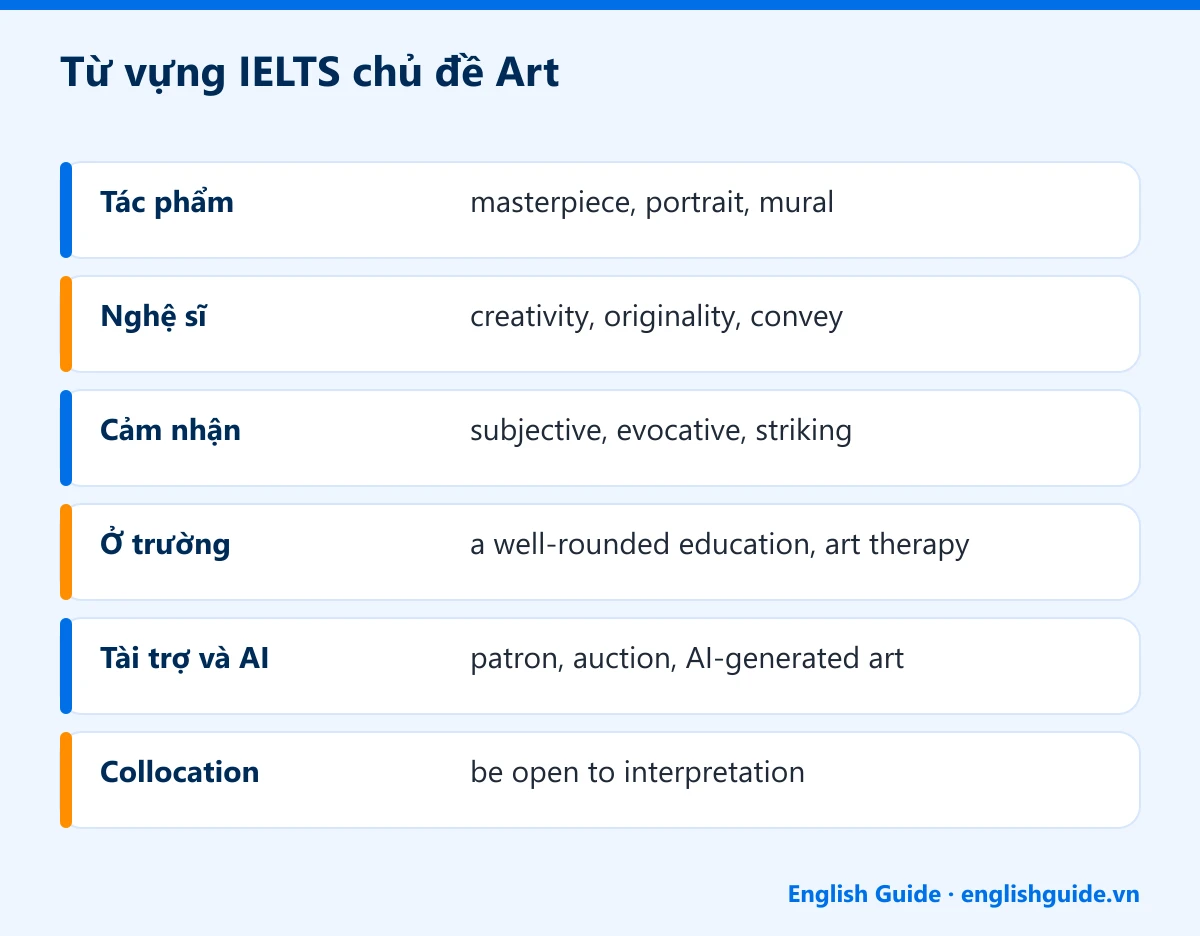
Nhóm 1: Tác phẩm và thể loại
Từ, cụm từ | Từ loại | Nghĩa | Ví dụ |
|---|---|---|---|
work of art / artwork | n | tác phẩm nghệ thuật | The café near my house displays artworks by local students. |
masterpiece | n | kiệt tác | Some visitors queue for hours just to stand in front of one masterpiece for a few seconds. |
painting / painter | n | bức tranh (vẽ bằng màu) / họa sĩ | The painting shows a market at dawn, full of colour and movement. |
sculpture / sculptor | n | tác phẩm điêu khắc / nhà điêu khắc | A bronze sculpture stands in the middle of the square. |
portrait / landscape | n | tranh chân dung / tranh phong cảnh | She prefers landscapes because they remind her of her hometown. |
abstract art | n | nghệ thuật trừu tượng | Abstract art uses shapes and colours rather than recognisable objects. |
contemporary art | n | nghệ thuật đương đại | Contemporary art often deals with current issues such as migration. |
mural / street art | n | tranh tường / nghệ thuật đường phố | A colourful mural turned an ugly wall into a popular photo spot. |
Nhóm 2: Nghệ sĩ và quá trình sáng tác
Từ, cụm từ | Từ loại | Nghĩa | Ví dụ |
|---|---|---|---|
creativity / creative | n / adj | sự sáng tạo / sáng tạo | Art lessons give children a space to use their creativity without fear of mistakes. |
imagination / imaginative | n / adj | trí tưởng tượng / giàu trí tưởng tượng | Picture books without words leave plenty of room for a child's imagination. |
be inspired by | phr | lấy cảm hứng từ | Many of her paintings are inspired by the coffee hills where she grew up. |
self-expression | n | sự thể hiện bản thân | For shy teenagers, drawing can be a safe form of self-expression. |
originality / original | n / adj | sự độc đáo / độc đáo, nguyên bản | Competition judges look for originality rather than technical perfection. |
gifted / talented | adj | có năng khiếu / có tài | Gifted young artists need guidance as much as praise. |
aspiring artist | phr | người đang theo đuổi con đường nghệ thuật | Aspiring artists often take part-time jobs to pay the rent. |
convey (a message) | v | truyền tải (thông điệp) | The best posters convey a message without a single word. |
medium (số nhiều: media) | n | chất liệu, phương tiện sáng tác | Watercolour is a difficult medium because mistakes are hard to correct. |
Nhóm 3: Thưởng thức, cảm nhận và đánh giá
Từ, cụm từ | Từ loại | Nghĩa | Ví dụ |
|---|---|---|---|
art gallery | n | phòng tranh, bảo tàng mỹ thuật | I rarely go to big art galleries, but I enjoy small shows in cafés. |
aesthetically pleasing | phr | đẹp mắt, có tính thẩm mỹ | Public buildings should be practical as well as aesthetically pleasing. |
interpret / interpretation | v / n | diễn giải / cách hiểu | Two people can interpret the same painting in completely different ways. |
subjective | adj | chủ quan | Taste in art is highly subjective, so there is no single right answer. |
thought-provoking | adj | gợi suy nghĩ | The photo show was thought-provoking rather than simply beautiful. |
evocative (of) | adj | gợi cảm xúc, gợi nhớ | The painting is evocative of a rainy afternoon in the countryside. |
vivid | adj | sống động, rực rỡ | The artist uses vivid reds and yellows to show the heat of the dry season. |
striking | adj | nổi bật, gây ấn tượng mạnh | What is most striking about the portrait is the woman's eyes. |
priceless | adj | vô giá | Some museums hold priceless works that could never be replaced. |
Nhóm 4: Nghệ thuật trong trường học và đời sống
Từ, cụm từ | Từ loại | Nghĩa | Ví dụ |
|---|---|---|---|
art education | n | giáo dục nghệ thuật | Art education teaches children to observe carefully and accept that there is more than one answer. |
a well-rounded education | phr | nền giáo dục toàn diện | A well-rounded education should include music and art as well as maths and science. |
emotional development | n | sự phát triển cảm xúc | Drawing can support young children's emotional development, because they can show feelings they cannot yet name. |
fine motor skills | n | kỹ năng vận động tinh (cử động nhỏ của tay) | Colouring and cutting paper help young children develop fine motor skills. |
art therapy | n | liệu pháp nghệ thuật | Some hospitals offer art therapy to help patients cope with long treatments. |
an outlet for (emotions) | phr | cách giải tỏa (cảm xúc) | Painting gives me an outlet for emotions I find hard to talk about. |
Nhóm 5: Tài trợ, thị trường và công nghệ
Từ, cụm từ | Từ loại | Nghĩa | Ví dụ |
|---|---|---|---|
public funding | n | kinh phí từ ngân sách nhà nước | Critics argue that public funding should go to hospitals before galleries. |
patron | n | người bảo trợ nghệ thuật | In the past, wealthy patrons paid artists to paint their families. |
auction | n / v | cuộc đấu giá / bán đấu giá | The painting was sold at auction for a record price. |
graffiti | n | hình vẽ, chữ viết trên tường nơi công cộng | Is graffiti a form of art or simply a mess? |
vandalism | n | hành vi phá hoại tài sản | Painting on walls without permission is usually treated as vandalism. |
AI-generated art | n | tranh, ảnh do AI tạo ra | AI-generated art raises questions about who the real creator is. |
copyright | n | bản quyền | Artists worry that their copyright is ignored when their images are used to train AI tools. |
make a living (from) | phr | kiếm sống (bằng) | It is hard for most artists to make a living from selling their work alone. |
Collocation chủ đề Art nên dùng
Nói về nghệ thuật cần nhiều cụm diễn tả cảm xúc và cách hiểu. Thuộc vài cụm dưới đây, câu trả lời của bạn sẽ bớt lặp "beautiful" và "I like it".
Collocation | Nghĩa | Ví dụ |
|---|---|---|
be open to interpretation | có thể hiểu theo nhiều cách | Abstract paintings are open to interpretation, which is part of their charm. |
evoke strong emotions | khơi gợi cảm xúc mạnh | A good war photograph can evoke strong emotions in viewers. |
capture the atmosphere of | nắm bắt được không khí của | The painting captures the atmosphere of a busy morning market. |
strike a chord with | chạm đến, gây đồng cảm với | Pictures about leaving home strike a chord with students who live far from their families. |
a source of inspiration | nguồn cảm hứng | Nature has always been a source of inspiration for artists. |
stimulate the imagination | kích thích trí tưởng tượng | Open-ended art tasks stimulate the imagination better than copying a model. |
express one's feelings | bày tỏ cảm xúc | Young children often express their feelings through drawings. |
nurture young talent | nuôi dưỡng tài năng trẻ | Art competitions are one way to nurture young talent. |
leave a lasting impression on | để lại ấn tượng lâu dài | The first gallery I visited left a lasting impression on me. |
see the world through someone else's eyes | nhìn thế giới bằng đôi mắt của người khác | Art lets us see the world through someone else's eyes. |
Lưu ý văn phong: strike a chord with và see the world through someone else's eyes rất tự nhiên khi nói. Trong Writing Task 2, ưu tiên cụm trung tính như stimulate the imagination, nurture young talent, public funding. Các cụm cố định khác và cách học chúng có ở bài collocation trong IELTS.
Đề Writing Task 2 chủ đề Art hay gặp
Các đề dưới đây do EG tự diễn đạt để luyện tập, bám theo những hướng ra đề phổ biến về nghệ thuật:
Dạng đề | Đề luyện tập |
|---|---|
Agree/disagree | Art should be a compulsory subject for all students in secondary school. To what extent do you agree or disagree? |
Advantages/disadvantages | Computer programs can now produce paintings and music in a few seconds. Do the advantages of this development outweigh the disadvantages? |
Discussion | Some people think governments should give financial support to artists, while others believe artists should support themselves by selling their work. Discuss both views and give your opinion. |
Problem/solution | Many young people with artistic talent give up art for more secure careers. What problems does this cause, and what can be done about it? |
Two-part question | Some cities spend large amounts of money on public sculptures and murals. Why do they do this? Is it a good use of public money? |
Đoạn mẫu Writing Task 2 dùng từ vựng Art
Đề: đề agree/disagree về môn mỹ thuật bắt buộc ở bảng trên. Đoạn thân bài dưới đây đi theo hướng đồng ý; từ vựng của bài được in đậm.
Making art compulsory at secondary level would, in my view, benefit students far beyond the classroom. First, art lessons stimulate the imagination in a way that exam-focused subjects rarely do; a task with no single correct answer encourages teenagers to take risks and develop original ideas. Second, drawing or painting offers an outlet for emotions at an age when many young people find it hard to talk about stress. A student who struggles to explain her worries, for example, may be able to express her feelings through a picture. Finally, the creativity developed in art classes is useful in many fields, from design and marketing to engineering. A well-rounded education, therefore, should not treat art as an optional extra for a few gifted students.
Đoạn văn xếp ba lý do bằng First, Second, Finally; lý do nào cũng có giải thích hoặc ví dụ, và từ vựng nghệ thuật nằm trong câu lập luận chứ không đứng rời.
Câu trả lời Speaking mẫu chủ đề Art
Part 1
Do you like drawing or painting?
I'm not very talented, to be honest, but I do enjoy sketching when I'm bored. I usually draw simple things, like the coffee cup in front of me. It's not really about the result; it just helps me slow down and notice small details.
Have you ever been to an art gallery?
Only a few times, mostly on school trips. I remember feeling a bit lost because I didn't know how to "read" the paintings. These days I prefer small shows in cafés, where the atmosphere is more relaxed and the artists are sometimes around to chat about their work.
Part 2
Describe a piece of art you like. You should say: what it is, where you saw it, what it looks like, and explain why you like it.
I'd like to talk about a painting I saw in a small café in my hometown last year. It was done by a young local artist, and it shows a woman picking coffee cherries on a misty hillside early in the morning. What's most striking is the colour. Most of the picture is soft grey and green, but the coffee cherries are a vivid red, so your eyes go straight to her hands. I wouldn't call myself an art lover, but this painting struck a chord with me because my grandmother used to work on a coffee farm, and the artist really captures the atmosphere of those cold harvest mornings. I also like the fact that it's open to interpretation. A friend of mine thought it was about hard work, while I saw it as a quiet, peaceful moment. I went back twice just to look at it again, and I was honestly a bit disappointed when someone bought it.
Bài nói đi đủ bốn ý trong đề, dùng một kỷ niệm cá nhân để giải thích lý do. Cách chia thời gian 2 phút và ghi chú trong 1 phút chuẩn bị có ở bài IELTS Speaking Part 2.
Part 3
Why do some people find modern art hard to understand?
I think many people expect a painting to look like something real, so when they see a canvas covered in lines or just one colour, they feel the artist is playing a joke on them. A lot of contemporary art focuses on an idea rather than on technique, and unless you know the background, the message is hard to read. Galleries could help by adding short, plain explanations instead of texts full of jargon.
Will computers ever replace human artists?
They'll probably take over some commercial work, like simple illustrations for adverts, because AI-generated images are fast and cheap. But I doubt they'll replace artists completely. Part of what we value in art is the story behind it: the person, their experience, the effort. A machine can copy a style, but it doesn't really have anything it wants to say. So artists who use these tools wisely might even benefit from them.
Bài tập từ vựng Art có đáp án
Bài 1: Điền từ thích hợp
Từ gợi ý: subjective, mural, aspiring, priceless, convey, masterpiece
Taste in art is ___, so two critics can disagree completely about the same painting.
The students painted a huge ___ on the school wall showing the history of the town.
Many ___ artists work in cafés while they build up a collection of their own work.
The museum guards the painting day and night because it is considered ___.
A good poster can ___ a clear message in just a few seconds.
Most critics agree that this portrait is the painter's ___.
Bài 2: Chọn art, artist, artistic hoặc artwork
My brother has always been very ___; he draws on any piece of paper he finds.
The ___ spent three months finishing the portrait.
Every year, the school displays students' ___ in the main hall.
Some people believe ___ should be taught in every school, not only to gifted children.
Bài 3: Nối hai nửa của cụm từ
Nửa đầu | Nửa sau |
|---|---|
1. be open | a. a chord with |
2. strike | b. to interpretation |
3. capture | c. strong emotions |
4. evoke | d. the atmosphere of |
5. nurture | e. young talent |
Đáp án
Bài 1: 1. subjective · 2. mural · 3. aspiring · 4. priceless · 5. convey · 6. masterpiece
Bài 2: 1. artistic · 2. artist · 3. artwork (hoặc artworks) · 4. art
Bài 3: 1-b · 2-a · 3-d · 4-c · 5-e
Học và dùng từ vựng Art sao cho nhớ lâu
Với Art, cách luyện hiệu quả là tập mô tả hình ảnh mỗi ngày. Chọn bất kỳ bức tranh, tấm ảnh hay tấm áp phích nào bạn gặp, nói trong một phút: nó vẽ gì, màu sắc ra sao (vivid, soft), nó gợi cho bạn điều gì (evocative of, strike a chord with), và người khác có thể hiểu khác bạn thế nào (open to interpretation). Ghi âm lại để tìm từ mình lặp nhiều nhất. Phương pháp ôn lặp lại có ở bài cách học từ vựng IELTS. Đề Part 3 đôi khi đặt nghệ thuật cạnh khoa học (nên đầu tư cho bên nào hơn), nên bạn có thể học kèm từ vựng IELTS chủ đề Science.
Chủ đề trừu tượng như Art thường là điểm khó với người học từ band 5 trở lên. Khóa IELTS Advanced 6.0+ của EG dành cho học viên đã có 5.0–5.5, gồm 60 giờ học, lớp 8–15 học viên, chấm Writing và Speaking chi tiết. Học tại Cơ sở Buôn Ma Thuột học phí 7.400.000đ (khoảng 123.000đ/giờ); học online cùng giáo viên 5.940.000đ (khoảng 99.000đ/giờ). Giữa các buổi, học viên ôn từ vựng trên nền tảng EG LMS. Chưa chắc mình ở mức nào, bạn có thể làm bài kiểm tra trình độ miễn phí trước khi chọn khóa.
Câu hỏi thường gặp
Art và the arts khác nhau thế nào?
Art thường chỉ nghệ thuật thị giác như hội họa, điêu khắc, nhiếp ảnh. The arts rộng hơn, gồm cả âm nhạc, sân khấu, múa, văn học. Đề nói "funding for the arts" là nói chung mọi loại hình, không chỉ tranh.
Artist và artisan khác nhau thế nào?
Artist là nghệ sĩ, người sáng tác tác phẩm nghệ thuật. Artisan là thợ thủ công lành nghề, làm ra đồ vật có công năng như gốm, đồ gỗ, vải dệt. Hai từ viết gần giống nhau nên hay bị nhầm.
Không biết nhiều về nghệ thuật thì làm Part 2 thế nào?
Chọn thứ gần gũi: một tấm ảnh treo trong nhà, tranh ở quán cà phê, một áp phích phim. Giám khảo chấm cách bạn diễn đạt, không chấm hiểu biết về hội họa. Tập trung tả hình ảnh, màu sắc và cảm xúc của bạn, như bài mẫu ở trên.