Kiến thức
Từ vựng IELTS chủ đề Culture: 5 nhóm từ, collocation, đoạn mẫu Writing và Speaking
17 phút đọc
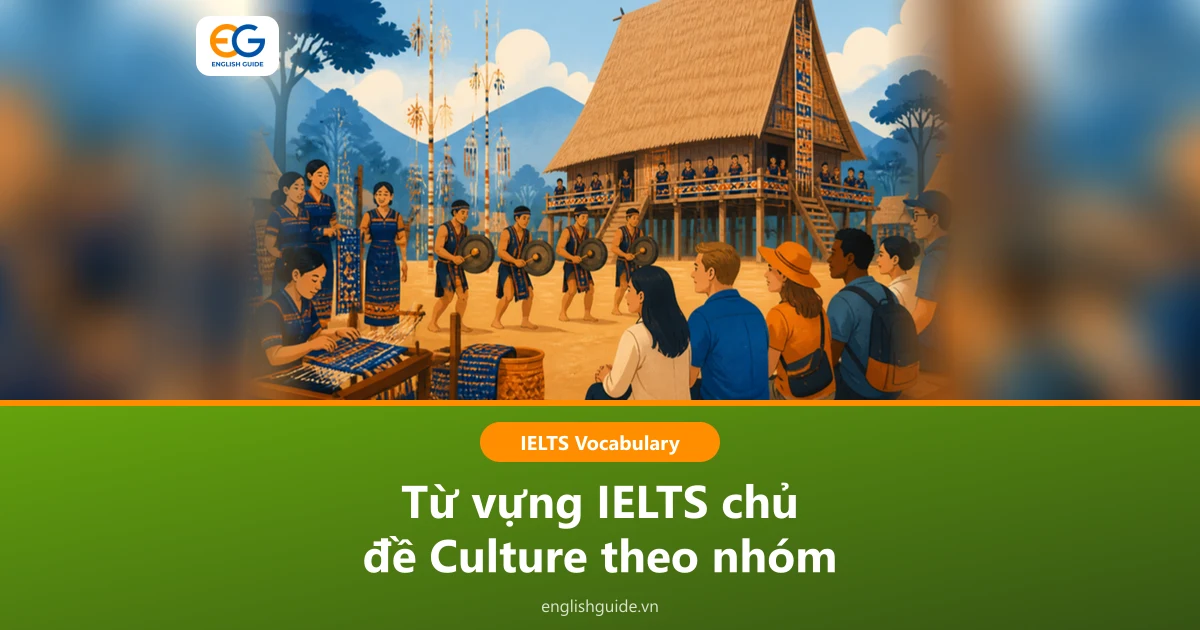
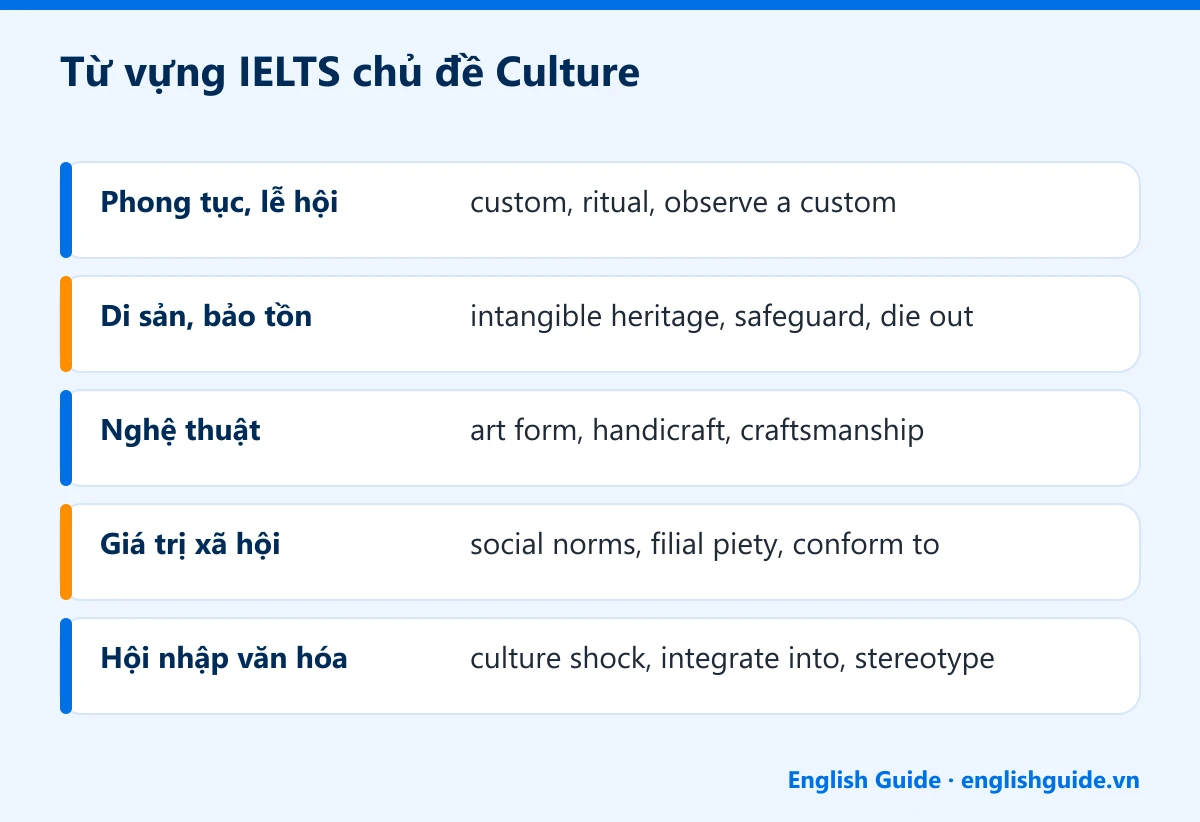
Từ vựng IELTS chủ đề Culture (văn hóa) xoay quanh 5 nhóm ý: phong tục, truyền thống và lễ hội; di sản và bảo tồn; nghệ thuật và đời sống văn hóa; giá trị và chuẩn mực xã hội; giao lưu và hội nhập văn hóa. Culture xuất hiện ở Speaking (lễ hội, âm nhạc truyền thống, phong tục quê bạn) và ở Writing Task 2 (chi tiền cho nghệ thuật, bảo tồn truyền thống, người nhập cư hòa nhập). Bài này gom các từ, cụm từ dùng được ngay, mỗi mục có từ loại, nghĩa và ví dụ đặt trong ngữ cảnh bài thi.
Nhiều ví dụ lấy từ văn hóa Việt Nam và Tây Nguyên, vì đề IELTS thường hỏi về văn hóa nước bạn, và một ví dụ cụ thể, quen thuộc luôn thuyết phục hơn ví dụ chung chung. Cuối bài có collocation, đề Task 2, đoạn mẫu Writing, câu trả lời Speaking và bài tập có đáp án.
Chủ đề Culture xuất hiện ở đâu trong IELTS
Speaking Part 1 (4–5 phút, theo mô tả phần thi Speaking của IELTS): câu hỏi ngắn về ngày lễ, âm nhạc truyền thống, đồ thủ công, bảo tàng.
Speaking Part 2: mô tả một lễ hội, một phong tục, một buổi biểu diễn hay một món đồ truyền thống; có 1 phút chuẩn bị và nói khoảng 2 phút.
Speaking Part 3 (4–5 phút): vì sao người trẻ ít quan tâm truyền thống, có nên dạy văn hóa ở trường, văn hóa địa phương thay đổi thế nào.
Writing Task 2: nhà nước có nên tài trợ nghệ thuật, nên giữ công trình cổ hay xây mới, người nhập cư nên giữ văn hóa riêng hay hòa nhập, bảo tàng có nên miễn phí.
Vốn từ được chấm qua tiêu chí Lexical Resource. Bảng mô tả band Writing ghi band 7 cần “some ability to use less common and/or idiomatic items” và cho thấy “an awareness of style and collocation”. Với Culture, cái khó không nằm ở từ hiếm mà ở những cặp từ dễ lẫn (custom, tradition, habit; cultural, cultured) và những cụm phải đi đúng động từ (observe a custom, uphold a tradition, safeguard heritage).
Từ vựng IELTS chủ đề Culture theo 5 nhóm
Ký hiệu từ loại: (n) danh từ, (v) động từ, (adj) tính từ, (phr) cụm từ, (phr v) cụm động từ. Một số cụm gần chủ đề đã có ở bài khác nên ở đây không lặp lại: cultural exchange, preserve cultural heritage ở bài từ vựng chủ đề Travel; cultural identity, cultural homogenisation ở bài Writing Task 2 chủ đề Globalisation; generation gap, gender roles, breadwinner ở bài từ vựng chủ đề Family.
Nhóm 1: Phong tục, truyền thống và lễ hội
Từ, cụm từ | Từ loại | Nghĩa | Ví dụ |
|---|---|---|---|
custom | n | phong tục (của một cộng đồng) | Giving lucky money to children is a Tết custom in Vietnam. |
tradition / traditional | n / adj | truyền thống | Wrapping bánh chưng together is a family tradition that many households still keep. |
ritual | n | nghi lễ, nghi thức | In many Central Highlands villages, gong music accompanies important rituals. |
festivities | n | các hoạt động lễ hội | The festivities usually last several days and end with a shared meal. |
ancestor worship | n | thờ cúng tổ tiên | Ancestor worship remains central to family life in Vietnam. |
superstition / superstitious | n / adj | sự mê tín / mê tín | Some older people are superstitious about sweeping the house on the first day of Tết. |
etiquette | n | phép lịch sự, quy tắc ứng xử | Table etiquette in Vietnam includes inviting the oldest person to start eating first. |
taboo | n / adj | điều cấm kỵ | In some cultures, asking about someone's salary is a taboo. |
deeply rooted (in) | adj | ăn sâu, bắt rễ sâu | Respect for teachers is deeply rooted in Vietnamese culture. |
observe | v | giữ, tuân theo (phong tục, ngày lễ) | Most families still observe the custom of visiting relatives during Tết. |
Nhóm 2: Di sản và bảo tồn
Từ, cụm từ | Từ loại | Nghĩa | Ví dụ |
|---|---|---|---|
heritage | n | di sản | A region's heritage includes not only old buildings but also songs, stories and skills. |
tangible / intangible heritage | n | di sản vật thể / phi vật thể | Folk songs and festivals are examples of intangible heritage. |
heritage site | n | khu di sản, di tích | Heritage sites need careful management when visitor numbers rise. |
safeguard | v | bảo vệ, gìn giữ (trước nguy cơ mất) | Recording elders' stories is one way to safeguard local legends. |
revive / revival | v / n | khôi phục / sự hồi sinh | Some villages have revived weaving by selling their products online. |
authentic / authenticity | adj / n | đích thực / tính nguyên bản | A ritual staged only for tourists may lose its authenticity. |
be commercially exploited | phr | bị khai thác vì mục đích thương mại | When a sacred ceremony is commercially exploited, its meaning can be lost. |
die out | phr v | mai một, biến mất | Many folk tales could die out if nobody writes them down. |
restore / restoration | v / n | trùng tu / sự trùng tu | The restoration of the old temple was funded by local people. |
raise awareness of | phr | nâng cao nhận thức về | School trips to museums raise awareness of local history. |
allocate funds (to) | phr | phân bổ ngân sách (cho) | The government should allocate more funds to protecting historic buildings. |
Nhóm 3: Nghệ thuật và đời sống văn hóa
Từ, cụm từ | Từ loại | Nghĩa | Ví dụ |
|---|---|---|---|
the arts | n | các loại hình nghệ thuật | Funding for the arts is often the first thing to be cut in a crisis. |
performing arts / visual arts | n | nghệ thuật biểu diễn / thị giác | Traditional theatre belongs to the performing arts. |
art form | n | loại hình nghệ thuật | Gong music is a living art form, not just a museum exhibit. |
folk music / folk dance | n | nhạc dân gian / múa dân gian | Folk music is often performed at community festivals. |
handicraft | n | đồ thủ công | Handicrafts made by local women are sold at the weekend market. |
craftsmanship | n | tay nghề, sự tinh xảo | The craftsmanship of a hand-carved statue is hard to copy with machines. |
exhibition / exhibit | n | triển lãm / hiện vật | The museum is holding an exhibition of traditional costumes. |
longhouse | n | nhà dài | A traditional Ede longhouse is shared by several generations of one family. |
communal house | n | nhà chung của làng (như nhà rông) | The communal house is where villagers gather for festivals and meetings. |
appreciate | v | thưởng thức, trân trọng | You need some background knowledge to fully appreciate classical music. |
Nhóm 4: Giá trị và chuẩn mực xã hội
Từ, cụm từ | Từ loại | Nghĩa | Ví dụ |
|---|---|---|---|
values | n | giá trị, quan niệm sống | Schools help pass on shared values such as honesty and hard work. |
social norms | n | chuẩn mực xã hội | Social norms about marriage have changed a great deal in one generation. |
conform to | phr v | làm theo, tuân theo (chuẩn mực) | Teenagers often feel pressure to conform to their friends' tastes. |
filial piety | n | đạo hiếu | Filial piety means children are expected to look after their parents in old age. |
collectivist / individualist | adj | đề cao tập thể / đề cao cá nhân | In collectivist cultures, big decisions are often made with the whole family in mind. |
conservative / progressive | adj | bảo thủ / cấp tiến | Rural areas tend to be more conservative about dress and behaviour. |
ancestors / forefathers | n | tổ tiên, ông cha | Many of these customs were handed down to us by our ancestors. |
mother tongue | n | tiếng mẹ đẻ | Children of migrants may gradually lose their mother tongue if it is not spoken at home. |
lose touch with one's roots | phr | xa rời cội nguồn | Young people who move abroad can lose touch with their roots. |
cherish | v | trân quý | I cherish the memories of New Year's Eve at my grandparents' house. |
Nhóm 5: Giao lưu, hội nhập và đa dạng văn hóa
Từ, cụm từ | Từ loại | Nghĩa | Ví dụ |
|---|---|---|---|
multicultural | adj | đa văn hóa | Multicultural classrooms teach children to respect differences. |
cultural diversity | n | sự đa dạng văn hóa | The Central Highlands is known for its cultural diversity, with many ethnic groups living side by side. |
ethnic group / ethnic minority | n | dân tộc / dân tộc thiểu số | Each ethnic group in the region has its own weaving patterns. |
cultural assimilation | n | sự đồng hóa văn hóa | Cultural assimilation can make immigrants feel they must hide their own customs. |
integrate (into) | v | hòa nhập (vào) | Language classes help newcomers integrate into the local community. |
culture shock | n | sốc văn hóa | Many international students experience culture shock in their first few months. |
stereotype | n / v | định kiến, khuôn mẫu | Films can reinforce stereotypes about other countries. |
cultural sensitivity | n | sự tinh tế, tôn trọng khác biệt văn hóa | Staff who work with foreign partners need cultural sensitivity. |
Westernised | adj | Tây hóa | Diets in big cities have become increasingly Westernised. |
foreign influence | n | ảnh hưởng từ nước ngoài | Foreign influence can be seen in the music and clothes young people choose. |
Collocation chủ đề Culture nên dùng
Collocation là những từ thường đi với nhau. Học theo cụm giúp bạn tránh kiểu dịch từng chữ từ tiếng Việt, chẳng hạn nói do a tradition thay vì follow hoặc uphold a tradition.
Collocation | Nghĩa | Ví dụ |
|---|---|---|
uphold a tradition | duy trì, giữ gìn một truyền thống | Many families uphold the tradition of visiting their ancestors' graves before Tết. |
be handed down through generations | được truyền qua nhiều thế hệ | Gong-playing skills have traditionally been handed down through generations by ear. |
play a pivotal role in | đóng vai trò then chốt | Festivals play a pivotal role in bringing scattered communities together. |
breathe new life into | thổi sức sống mới vào | Young designers are breathing new life into traditional patterns. |
a rich cultural heritage | di sản văn hóa phong phú | Vietnam has a rich cultural heritage shaped by more than fifty ethnic groups. |
an integral part of | một phần không thể thiếu | Coffee has become an integral part of daily life in Buon Ma Thuot. |
come under threat | bị đe dọa | Many oral traditions have come under threat as villages modernise. |
celebrate diversity | tôn vinh sự đa dạng | Schools can celebrate diversity by marking festivals from different cultures. |
bridge cultural differences | vượt qua khác biệt văn hóa | Learning a language is one of the best ways to bridge cultural differences. |
be steeped in history | thấm đẫm lịch sử | The old quarter is steeped in history. |
Lưu ý văn phong: các cụm trên đều dùng được trong Writing. Câu thành ngữ When in Rome, do as the Romans do (nhập gia tùy tục) hợp với Speaking, không nên đưa vào Writing Task 2.
Đề Writing Task 2 chủ đề Culture hay gặp
Các đề dưới đây do EG tự diễn đạt để luyện tập, bám theo những hướng ra đề phổ biến về văn hóa:
Dạng đề | Đề luyện tập |
|---|---|
Agree/disagree | Governments should spend money on preserving traditional music and crafts rather than supporting modern art. To what extent do you agree or disagree? |
Advantages/disadvantages | Some people think museums and historical sites should be free for everyone. Do the advantages of this outweigh the disadvantages? |
Discussion | Some people believe immigrants should adopt the customs of their new country, while others think they should keep their own culture. Discuss both views and give your opinion. |
Problem/solution | In many places, traditional festivals are turning into shows for tourists rather than community events. What problems does this cause, and what can be done? |
Two-part question | Many people say they learn more about a culture from its food and music than from history books. Why do you think this is? Do you agree? |
Cách phân tích đề và dựng dàn bài cho từng dạng có ở bài cách viết IELTS Writing Task 2.
Đoạn mẫu Writing Task 2 dùng từ vựng Culture
Đề: đề agree/disagree về tài trợ cho âm nhạc, nghề thủ công truyền thống ở bảng trên. Đoạn thân bài dưới đây đi theo hướng đồng ý; từ vựng của bài được in đậm.
Modern art certainly deserves some public support, as it reflects the concerns of today's society. However, traditional music and crafts have a stronger claim on government budgets because they are far more vulnerable. Unlike a contemporary painter, who can sell work online, a village gong ensemble has almost no commercial market, and its skills have traditionally been handed down through generations by ear. If the last experienced players pass away without students, an entire art form may die out. Vietnam's own experience shows what is at stake: the Space of Gong Culture in the Central Highlands has been recognised by UNESCO as intangible heritage, yet recognition alone does not keep it alive. Allocating funds to classes in which elders teach young villagers, and to recording performances, is therefore a modest price for safeguarding something that cannot be recreated once it is lost.
Đoạn văn mở bằng một ý nhượng bộ, đưa ra lý do, rồi dùng một ví dụ có thật để làm rõ. Thông tin về cồng chiêng ở đây là kiến thức kiểm chứng được: theo trang của UNESCO, Không gian văn hóa Cồng chiêng Tây Nguyên được công nhận năm 2005 và đưa vào Danh sách di sản văn hóa phi vật thể đại diện của nhân loại năm 2008. Trong bài thi, bạn không cần nêu năm; chỉ cần ví dụ đúng và gắn chặt với lập luận. Không chắc thì đừng đưa con số.
Câu trả lời Speaking mẫu chủ đề Culture
Part 1
What is the most important festival in your country?
That would definitely be Tết, the Lunar New Year. What I love about it isn't really the food, though there's plenty of that. It's the feeling that everyone stops working at the same time and goes home. My family still observes most of the old customs: we clean the house before New Year's Eve, put food on the altar for our ancestors, and visit relatives on the first few days.
Is coffee important in the culture of your hometown?
Absolutely. I'm from Buon Ma Thuot, and coffee is an integral part of daily life there. People don't just drink it; they meet over it, do business over it, and spend whole mornings chatting in cafés. Even my grandparents, who are quite conservative in other ways, love trying the new coffee shops that young people open.
Part 3
Why are some young people less interested in traditional culture?
I think part of the reason is foreign influence. Films, music and fashion from abroad are everywhere on social media, so traditional things can seem a bit dated next to them. There's also pressure to conform to what friends like. That said, I wouldn't say young people have completely lost touch with their roots. Some young designers and musicians are actually breathing new life into traditional styles, mixing folk melodies with modern beats, and that makes the old culture feel relevant again.
Should children learn about other cultures at school?
Yes, I think it's essential, especially now that so many people study or work abroad. If children learn early that other cultures have different values and etiquette, they're less likely to rely on stereotypes and they'll probably suffer less culture shock later. But I'd say it should go hand in hand with learning about their own culture, so they have something to share in return.
Để ý cách mỗi câu trả lời Part 3 nêu quan điểm, giải thích, rồi cân nhắc mặt còn lại. Từ vựng được dùng trong câu tự nhiên chứ không chèn vào cho có.
Bài tập từ vựng Culture có đáp án
Bài 1: Điền từ thích hợp
Từ gợi ý: culture shock, die out, authenticity, etiquette, allocate, ritual
When I first moved abroad, I experienced real ___: even the way people queued felt strange.
Many local crafts may ___ unless young people are trained to make them.
Business ___ in some countries includes exchanging cards with both hands.
Performances staged only for tourists can lose their ___.
The city council plans to ___ more money to restoring the old theatre.
Gong music is played during almost every important ___ in the village.
Bài 2: Chọn custom, habit, tradition hoặc culture
Drinking coffee every morning is just my personal (habit / custom).
It is a Vietnamese (custom / habit) to give lucky money at Tết.
Living abroad helped me understand British (culture / tradition) much better.
Our school has a long (tradition / habit) of putting on a play every spring.
Bài 3: Nối động từ với danh từ phù hợp
Động từ | Danh từ |
|---|---|
1. uphold | a. funds |
2. raise | b. a tradition |
3. allocate | c. awareness |
4. bridge | d. new life into |
5. breathe | e. cultural differences |
Đáp án
Bài 1: 1. culture shock · 2. die out · 3. etiquette · 4. authenticity · 5. allocate · 6. ritual
Bài 2: 1. habit · 2. custom · 3. culture · 4. tradition
Bài 3: 1-b · 2-c · 3-a · 4-e · 5-d
Học và dùng từ vựng Culture sao cho nhớ lâu
Chủ đề Culture có lợi thế là bạn đã có sẵn chất liệu: Tết, đám cưới ở quê, ly cà phê sáng, lễ hội ở địa phương. Mỗi ngày học một nhóm 6–8 từ, đặt một câu về chính phong tục trong gia đình bạn, rồi dùng lại trong một câu trả lời Speaking có ghi âm. Phương pháp ôn lặp lại có ở bài cách học từ vựng IELTS.
Nếu muốn có giáo viên chữa lỗi dùng từ trong bài viết và bài nói, khóa IELTS Master 5.0–5.5 của EG có 80 giờ học, lớp 8–15 học viên, chấm Writing và Speaking chi tiết. Học tại Cơ sở Buôn Ma Thuột (36 Trần Nhật Duật) học phí 9.900.000đ (khoảng 124.000đ/giờ); học online cùng giáo viên 7.140.000đ (khoảng 89.000đ/giờ). Giữa các buổi, học viên ôn từ vựng trên nền tảng EG LMS. Chưa rõ trình độ, bạn có thể bắt đầu bằng bài kiểm tra trình độ miễn phí.
Câu hỏi thường gặp
Culture, custom và tradition khác nhau thế nào?
Culture là cả hệ thống: ngôn ngữ, nghệ thuật, niềm tin, lối sống của một cộng đồng. Custom là một cách làm quen thuộc của cộng đồng đó (lì xì ngày Tết). Tradition nhấn vào việc được truyền lại từ lâu đời (gói bánh chưng). Habit chỉ là thói quen của cá nhân.
Cultural và cultured khác nhau ra sao?
Cultural (adj) là thuộc về văn hóa: cultural diversity, cultural events. Cultured (adj) dùng cho người, nghĩa là có hiểu biết, có gu về nghệ thuật: a cultured person. Viết a cultured festival là sai.
Có được dùng từ tiếng Việt như Tết, áo dài trong bài thi không?
Được, vì đó là tên riêng của sự vật. Ở lần đầu, hãy giải thích ngắn bằng tiếng Anh, ví dụ Tết, the Lunar New Year hoặc áo dài, our traditional long dress, để giám khảo hiểu ngay.
Nên viết Westernised hay Westernized?
Cả hai đều đúng: -ised là cách viết Anh – Anh, -ized là Anh – Mỹ. Chọn một kiểu và dùng thống nhất trong cả bài, kể cả với các từ như organise, recognise.