Kiến thức
Từ vựng IELTS chủ đề Family: 5 nhóm từ, collocation, idiom, đoạn mẫu Writing và Speaking
16 phút đọc
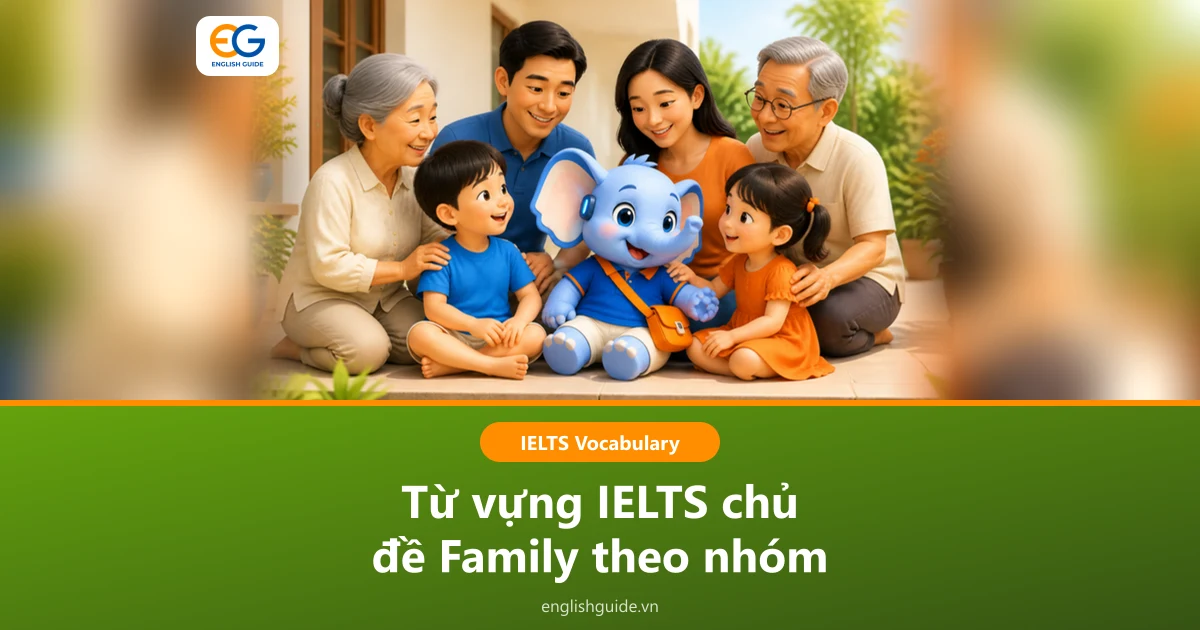
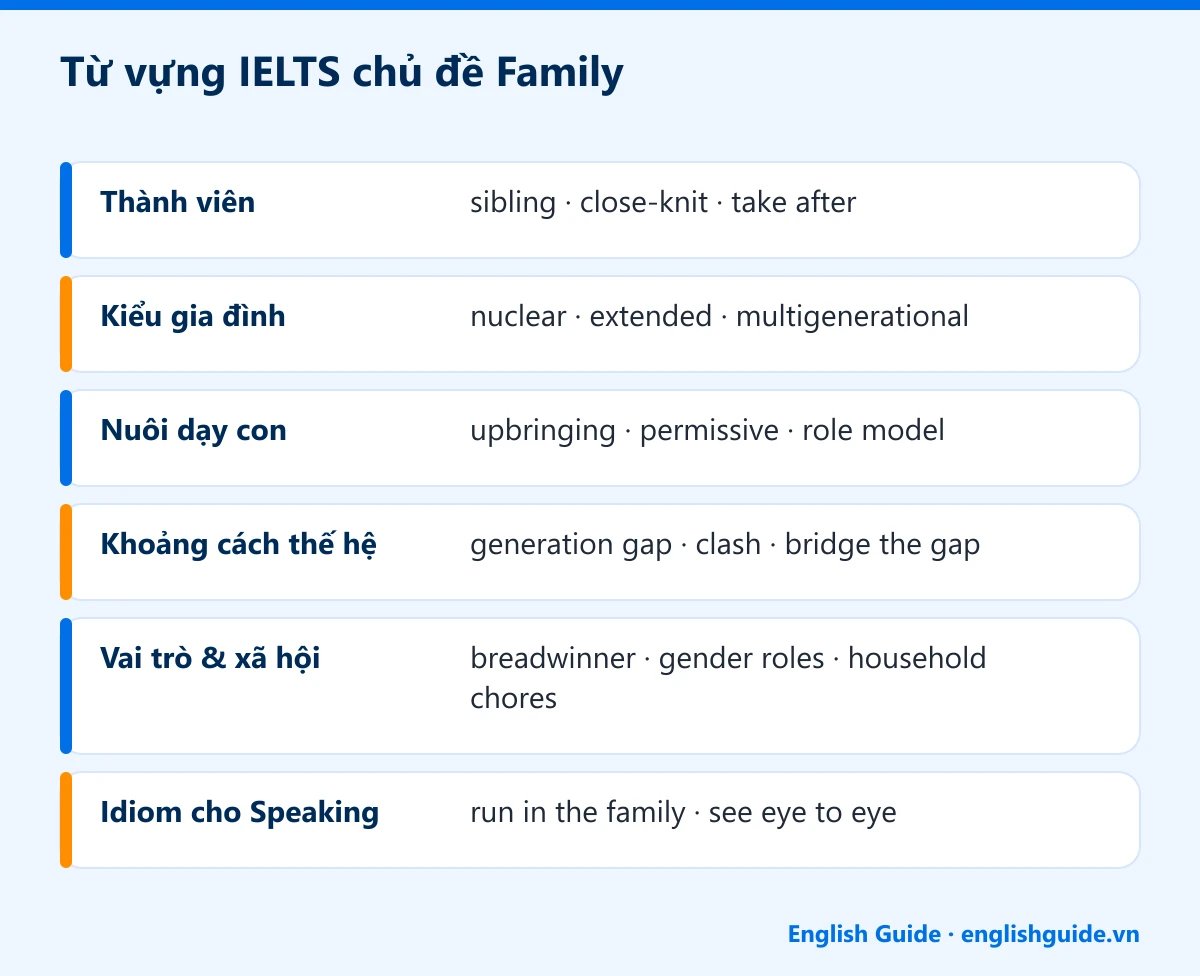
Từ vựng IELTS chủ đề Family gồm 5 nhóm ý chính: thành viên và các mối quan hệ, kiểu gia đình, nuôi dạy con, khoảng cách thế hệ, và vai trò của từng người trong gia đình khi xã hội thay đổi. Gia đình là đề tài rất quen ở Speaking Part 1 và hay quay lại ở Writing Task 2. Bài này gom những từ, cụm từ dùng được ngay, mỗi mục có từ loại, nghĩa và ví dụ đặt trong ngữ cảnh bài thi.
Cuối bài có collocation, vài idiom cho Speaking, đề Task 2 hay gặp, đoạn mẫu Writing, câu trả lời Speaking và bài tập có đáp án.
Chủ đề Family xuất hiện ở đâu trong IELTS
Speaking Part 1 (4–5 phút): mô tả phần thi Speaking của IELTS nêu gia đình là một trong những chủ đề quen thuộc của phần này, cùng với nơi ở, công việc, việc học và sở thích. Câu hỏi kiểu: nhà bạn có mấy người, bạn thân với ai nhất, cuối tuần cả nhà hay làm gì.
Speaking Part 2: mô tả một người thân bạn ngưỡng mộ, một dịp cả nhà sum họp hay một lời khuyên của ông bà; bạn có 1 phút chuẩn bị rồi nói trong khoảng 2 phút.
Speaking Part 3 (4–5 phút): vai trò của ông bà thay đổi ra sao, cha mẹ nên nghiêm khắc hay cởi mở, gia đình ở thành phố khác nông thôn thế nào.
Writing Task 2: đề về gia đình hạt nhân, chăm sóc người già, cha mẹ cùng đi làm, trách nhiệm dạy con giữa gia đình và nhà trường.
Theo trang giải thích điểm của IELTS, vốn từ được chấm qua tiêu chí Lexical Resource, một trong bốn tiêu chí có trọng số ngang nhau ở Speaking và ở mỗi bài Writing. Bảng mô tả band Writing ghi ở band 7, thí sinh cần dùng được một số từ ít phổ biến hoặc mang tính thành ngữ và cho thấy ý thức về văn phong và collocation. Nói gọn: biết từ nào đi với từ nào, từ nào hợp văn nói, từ nào hợp văn viết, quan trọng hơn biết thật nhiều từ hiếm.
Từ vựng IELTS chủ đề Family theo 5 nhóm
Ký hiệu từ loại: (n) danh từ, (v) động từ, (adj) tính từ, (phr) cụm từ, (phr v) cụm động từ. Mọi ví dụ đều viết theo kiểu câu có thể dùng lại khi nói hoặc viết.
Nhóm 1: Thành viên và các mối quan hệ
Từ, cụm từ | Từ loại | Nghĩa | Ví dụ |
|---|---|---|---|
immediate family | n | gia đình gần (bố mẹ, anh chị em, vợ chồng, con) | My immediate family is quite small: just my parents, my younger brother and me. |
sibling | n | anh chị em ruột | I have two siblings, and we still share a group chat for family news. |
relative | n | họ hàng | We visit our relatives in the countryside every Lunar New Year. |
in-laws | n | gia đình bên vợ hoặc bên chồng | My aunt gets on surprisingly well with her in-laws. |
close-knit | adj | gắn bó khăng khít | We are a close-knit family, so big decisions are always discussed together. |
get on (well) with | phr v | hòa hợp với | I get on well with my older sister, although we argue about small things. |
take after | phr v | giống (bố, mẹ) về tính cách hoặc ngoại hình | People say I take after my father because we are both rather stubborn. |
look up to | phr v | kính trọng, noi theo | I have always looked up to my grandmother for her patience. |
Nhóm 2: Kiểu gia đình
Từ, cụm từ | Từ loại | Nghĩa | Ví dụ |
|---|---|---|---|
nuclear family | n | gia đình hạt nhân (bố mẹ và con) | The nuclear family has become the norm in most Vietnamese cities. |
extended family | n | đại gia đình, gồm cả họ hàng | My extended family fills the whole house whenever we hold a reunion. |
multigenerational household | phr | hộ gia đình nhiều thế hệ | In a multigenerational household, grandparents often help look after the children. |
single-parent family | n | gia đình cha hoặc mẹ đơn thân | Single-parent families may need extra support with childcare. |
dual-income family | n | gia đình cả hai vợ chồng cùng đi làm | In dual-income families, children often spend the afternoon with their grandparents. |
live under the same roof | phr | sống chung một nhà | Three generations of my family still live under the same roof. |
household | n | hộ gia đình, những người sống chung nhà | Running a household with four children is a full-time job. |
Nhóm 3: Nuôi dạy con
Từ, cụm từ | Từ loại | Nghĩa | Ví dụ |
|---|---|---|---|
upbringing | n | sự nuôi dạy, giáo dưỡng | A strict upbringing does not always produce disciplined adults. |
bring up / raise | v | nuôi nấng, nuôi dạy | My parents brought us up to respect older people. |
permissive | adj | dễ dãi, ít đặt giới hạn | Permissive parents rarely set limits on screen time. |
overprotective | adj | bao bọc quá mức | Overprotective parents may stop children from learning to solve their own problems. |
spoil | v | nuông chiều đến mức làm hư | Grandparents sometimes spoil their grandchildren with sweets and toys. |
role model | n | tấm gương | Parents are their children's first role models, whether they like it or not. |
instil values | phr | vun đắp giá trị, nếp sống | Families play a key role in instilling values such as honesty and hard work. |
discipline | n / v | kỷ luật / dạy dỗ, uốn nắn | Discipline works best when the rules are clear and consistent. |
Nhóm 4: Khoảng cách thế hệ
Từ, cụm từ | Từ loại | Nghĩa | Ví dụ |
|---|---|---|---|
generation gap | n | khoảng cách thế hệ | The generation gap is most obvious when it comes to technology. |
clash (with) | v | va chạm, xung đột | Teenagers often clash with their parents over how late they can stay out. |
conflicting values | phr | giá trị, quan niệm trái ngược | Conflicting values between generations can lead to misunderstandings about marriage. |
old-fashioned | adj | cổ hủ, lỗi thời | My grandparents' views on careers may seem old-fashioned to young people. |
open-minded | adj | cởi mở | Open-minded parents are more likely to listen to their children's opinions. |
rebellious | adj | nổi loạn, hay chống đối | Some teenagers become rebellious when they feel they are not trusted. |
bridge the gap | phr | thu hẹp khoảng cách | Cooking together is a simple way to bridge the gap between generations. |
respect for elders | phr | sự kính trọng người lớn tuổi | Respect for elders is still highly valued in Vietnamese culture. |
Nhóm 5: Vai trò trong gia đình và thay đổi xã hội
Từ, cụm từ | Từ loại | Nghĩa | Ví dụ |
|---|---|---|---|
breadwinner | n | trụ cột kinh tế | In the past, the father was usually the sole breadwinner. |
stay-at-home parent | phr | cha hoặc mẹ ở nhà chăm con | More fathers are choosing to become stay-at-home parents. |
household chores | phr | việc nhà | Sharing household chores fairly reduces tension between couples. |
gender roles | n | vai trò giới | Traditional gender roles are changing as more women hold senior positions. |
work–life balance | n | cân bằng công việc và cuộc sống | Long working hours make work–life balance hard to achieve for young parents. |
care for elderly parents | phr | chăm sóc cha mẹ già | Caring for elderly parents is seen as a duty in many Asian families. |
nursing home | n | viện dưỡng lão | Nursing homes are becoming more common, but many families still feel uneasy about them. |
financial independence | n | sự độc lập về tài chính | Many young adults want financial independence before they start a family. |
Collocation chủ đề Family nên dùng
Collocation là những từ thường đi cùng nhau. Dịch từng chữ từ tiếng Việt rất dễ ra cụm nghe lạ tai (ví dụ "build a family" thay vì start a family), nên học nguyên cụm sẽ an toàn hơn.
Collocation | Nghĩa | Ví dụ |
|---|---|---|
start a family | lập gia đình, bắt đầu có con | Many couples now wait until their thirties to start a family. |
strengthen family ties | thắt chặt tình thân | Regular family meals help strengthen family ties. |
spend quality time with | dành thời gian thật sự cho | Busy parents should try to spend quality time with their children every day. |
share parental responsibilities | cùng gánh trách nhiệm làm cha mẹ | Both parents should share parental responsibilities, including the school run. |
provide emotional support | hỗ trợ về tinh thần | Grandparents can provide emotional support when parents are under pressure. |
a sense of belonging | cảm giác được thuộc về | A close family gives children a strong sense of belonging. |
a stable home environment | môi trường gia đình ổn định | Children need a stable home environment to do well at school. |
be financially dependent on | phụ thuộc tài chính vào | Many university students are still financially dependent on their parents. |
pass down traditions | truyền lại truyền thống | Older relatives pass down traditions such as wrapping bánh chưng for Tết. |
fall out with | giận nhau, bất hòa với | He fell out with his cousin over a business deal. |
Idiom chủ đề Family cho Speaking
Idiom làm câu nói tự nhiên hơn, nhưng chỉ nên dùng một hai cái trong cả bài nói và đúng tình huống. Trong Writing Task 2, hãy dùng các collocation trung tính ở bảng trên thay vì idiom.
Idiom | Nghĩa | Ví dụ |
|---|---|---|
run in the family | là nét chung của cả nhà | Musical talent runs in the family: my mother and my uncle both play the guitar. |
like father, like son | cha nào con nấy | He became a doctor just like his dad. Like father, like son. |
the apple doesn't fall far from the tree | con cái thường giống cha mẹ | My sister is as organised as Mum; the apple doesn't fall far from the tree. |
see eye to eye (on) | đồng quan điểm | My dad and I don't always see eye to eye on my career plans. |
the black sheep of the family | người khác biệt, "cá biệt" trong nhà | My uncle was the black sheep of the family because he left university to travel. |
blood is thicker than water | một giọt máu đào hơn ao nước lã | They argue a lot, but in a crisis they always help each other. Blood is thicker than water. |
Đề Writing Task 2 chủ đề Family hay gặp
Các đề dưới đây do EG tự diễn đạt để luyện tập, bám theo những hướng ra đề phổ biến về gia đình:
Dạng đề | Đề luyện tập |
|---|---|
Agree/disagree | Some people believe that grandparents are better at looking after young children than paid childcare workers. To what extent do you agree or disagree? |
Advantages/disadvantages | In many countries, young adults now live with their parents for longer than in the past. Do the advantages of this trend outweigh the disadvantages? |
Discussion | Some people think parents should be strict with their children, while others believe children should be given more freedom. Discuss both views and give your opinion. |
Problem/solution | Many working parents have little time to spend with their children. What problems does this cause, and how can they be solved? |
Two-part question | The traditional extended family is being replaced by smaller nuclear families. Why is this happening? Is it a positive or negative development? |
Cách phân tích đề, lập dàn ý và viết từng đoạn cho các dạng trên có ở bài cách viết IELTS Writing Task 2.
Đoạn mẫu Writing Task 2 dùng từ vựng Family
Đề: đề two-part question ở bảng trên (gia đình hạt nhân thay thế đại gia đình). Đoạn thân bài dưới đây trả lời câu hỏi thứ nhất, giải thích nguyên nhân; từ vựng của bài được in đậm.
The shift from extended to nuclear families is largely driven by economic change. As young people move to cities in search of better-paid jobs, it becomes impractical for three generations to live under the same roof. Urban housing is also small and expensive, so most couples who start a family can only afford a flat large enough for themselves and their children. In addition, the rise of dual-income families has changed attitudes towards independence. Many young adults now value financial independence and privacy, and they prefer to make decisions about their children's upbringing without interference from older relatives. However, this does not necessarily mean that family ties are weaker. Video calls and regular weekend visits allow grandparents to provide emotional support from a distance, even if they no longer share the daily routine of the household.
Đoạn văn nêu ý chính ngay câu đầu, triển khai hai nguyên nhân (kinh tế và thay đổi quan niệm), mỗi nguyên nhân có giải thích, rồi kết bằng một câu cân nhắc. Từ vựng không hề hiếm; điểm cộng nằm ở chỗ các cụm như start a family, provide emotional support được dùng đúng cặp và đúng văn phong.
Câu trả lời Speaking mẫu chủ đề Family
Part 1
Do you have a large family?
Not really, at least not my immediate family. It's just my parents, my younger brother and me. But my extended family is huge. My mum has five siblings, so when everyone gets together at Tết, my grandparents' house near Buôn Ma Thuột is packed with cousins, aunts and uncles. It's noisy, but I love it.
Who are you closest to in your family?
Probably my grandmother. She lived with us when I was little, so she basically helped bring me up. I still look up to her, because she's incredibly patient and never judges anyone. Even now that I'm busy with university, I try to call her a couple of times a week.
Part 3
How has the role of grandparents changed in modern families?
I'd say it has changed in two opposite directions. In big cities, many grandparents live on their own, so they're less involved in daily family life. But in dual-income families they've actually become more important, because they often look after the kids while both parents are at work. So in a way they've gone from being the head of the household to being a kind of unpaid childcare service, which isn't always fair on them.
Is there a generation gap between young people and their parents today?
Yes, and I think technology has made it wider. Teenagers spend so much of their lives online that their parents sometimes have no idea what they're dealing with. That said, I don't think the gap is impossible to bridge. Parents who are open-minded and genuinely ask their kids about their interests tend to get on much better with them than parents who simply set rules.
Mỗi câu Part 3 đều nêu ý, giải thích bằng ví dụ rồi nhìn sang mặt còn lại. Ở Part 2, đề "người bạn ngưỡng mộ" rất hay được trả lời bằng một người thân; xem bài mẫu Describe a person you admire để dùng lại nhóm từ ở trên.
Bài tập từ vựng Family có đáp án
Bài 1: Điền từ thích hợp
Từ gợi ý: close-knit, upbringing, breadwinner, generation gap, take after, household chores
In the past, the husband was usually the only ___ in the family.
My brother really seems to ___ our mother; they both love reading and hate crowds.
Arguments about smartphones show how wide the ___ has become.
Children who help with ___ learn responsibility from an early age.
We are a ___ family, so we talk on the phone almost every day.
A person's ___ shapes their attitude towards money and work.
Bài 2: Nối cụm động từ với nghĩa phù hợp
Cụm từ | Nghĩa |
|---|---|
1. bring up | a. có cùng quan điểm |
2. see eye to eye | b. nuôi dạy |
3. fall out with | c. kính trọng, noi theo |
4. look up to | d. giận nhau sau một trận cãi vã |
5. spoil | e. chiều con quá mức |
Bài 3: Chọn từ đúng
My parents were quite (strict / strictly) when I was a teenager.
Many young adults are still financially (depend / dependent) on their parents.
The number of (single-parent / single-parents) families has risen in many countries.
Grandparents can provide emotional (support / supportive) to busy parents.
Đáp án
Bài 1: 1. breadwinner · 2. take after · 3. generation gap · 4. household chores · 5. close-knit · 6. upbringing
Bài 2: 1-b · 2-a · 3-d · 4-c · 5-e
Bài 3: 1. strict · 2. dependent · 3. single-parent · 4. support
Học và dùng từ vựng Family sao cho nhớ lâu
Cách dễ nhất là lấy chính gia đình mình làm tư liệu. Vẽ sơ đồ gia đình bằng tiếng Anh, viết cho mỗi người một hai câu có dùng từ trong bảng (ai giống ai, ai là trụ cột, ai hay nuông chiều cháu), rồi ghi âm một câu trả lời Part 1 và nghe lại. Phương pháp ôn lặp lại theo lịch có ở bài cách học từ vựng IELTS. Hai chủ đề hay đi cặp với Family là từ vựng IELTS chủ đề Education (đề về trách nhiệm dạy con) và từ vựng IELTS chủ đề Food (bữa cơm gia đình, thói quen ăn uống).
Nếu muốn có giáo viên chữa lỗi dùng từ trong bài viết và bài nói, khóa IELTS Master 5.0–5.5 của EG có 80 giờ học, lớp 8–15 học viên, chấm Writing và Speaking chi tiết. Học tại Cơ sở Buôn Ma Thuột học phí 9.900.000đ (khoảng 124.000đ/giờ); học online cùng giáo viên 7.140.000đ (khoảng 89.000đ/giờ). Giữa các buổi, học viên ôn từ vựng trên nền tảng EG LMS. Chưa rõ trình độ hiện tại, bạn có thể bắt đầu bằng bài kiểm tra trình độ miễn phí.
Câu hỏi thường gặp
Family members, relatives và relationship khác nhau thế nào?
Family members là những người trong gia đình nói chung. Relatives là họ hàng, như cô dì chú bác, anh chị em họ. Relationship là mối quan hệ giữa hai người, ví dụ I have a good relationship with my parents. Đừng dùng relationship để chỉ người.
Bring up và grow up khác nhau ra sao?
Bring up (somebody) là nuôi dạy ai đó và luôn cần tân ngữ: My grandparents brought me up. Grow up là lớn lên, không có tân ngữ: I grew up in Đắk Lắk. Câu "My parents grew me up" là lỗi rất hay gặp.
Có nên dùng idiom về gia đình trong Writing Task 2 không?
Không nên. Các idiom như like father, like son mang sắc thái văn nói. Trong bài viết, hãy dùng cụm trung tính như strengthen family ties, share parental responsibilities, a stable home environment.
Nói về gia đình trong Speaking có cần đúng sự thật không?
Giám khảo chấm cách bạn dùng tiếng Anh, không kiểm tra thông tin về gia đình bạn. Tuy vậy, nói về chuyện có thật thường giúp bạn trôi chảy và có chi tiết tự nhiên hơn so với một câu trả lời học thuộc.