Kiến thức
Từ vựng IELTS chủ đề Food: 5 nhóm từ, collocation, idiom, đoạn mẫu Writing và Speaking
16 phút đọc
Từ vựng IELTS chủ đề Food xoay quanh 5 nhóm ý: món ăn và cách nấu, mùi vị và kết cấu, ăn uống lành mạnh, ăn ngoài và đồ ăn nhanh, an toàn thực phẩm và lãng phí thực phẩm. Food rất hay gặp ở Speaking Part 1 và Part 2; ở Writing Task 2, chủ đề này thường đi chung với sức khỏe và môi trường. Bài này gom những từ, cụm từ dùng được ngay, mỗi mục có từ loại, nghĩa và ví dụ đặt trong ngữ cảnh bài thi.
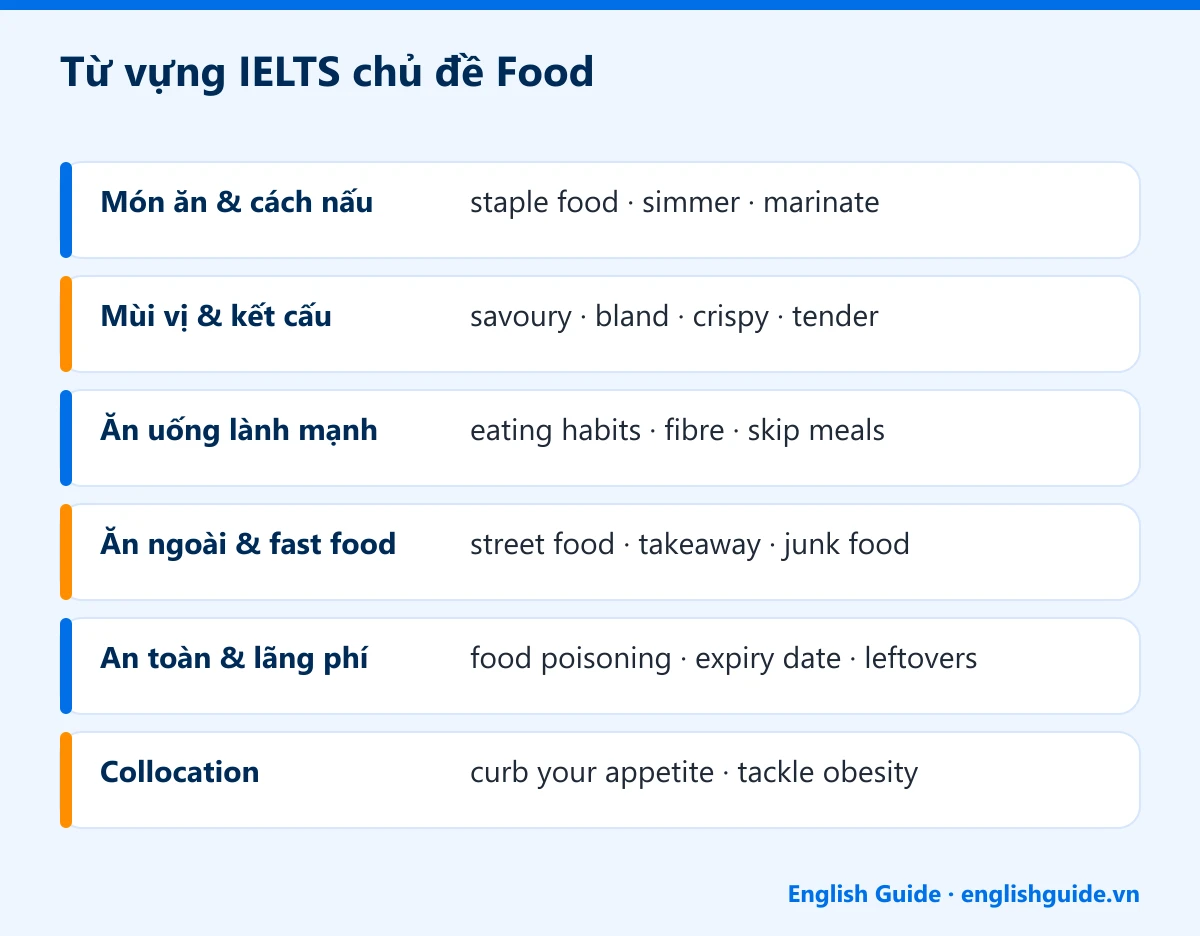
Cuối bài có collocation, vài idiom cho Speaking, đề Task 2 hay gặp, đoạn mẫu Writing, câu trả lời Speaking và bài tập có đáp án.
Chủ đề Food xuất hiện ở đâu trong IELTS
Speaking Part 1 (4–5 phút, theo mô tả phần thi Speaking của IELTS): bạn thích món gì, có hay nấu ăn không, thích ăn ở nhà hay ăn ngoài. Bộ câu hỏi và câu trả lời mẫu có ở bài IELTS Speaking Part 1 chủ đề Food.
Speaking Part 2: mô tả một món đặc sản quê bạn, một bữa ăn đáng nhớ hay một quán ăn bạn thích; bạn có 1 phút chuẩn bị rồi nói trong khoảng 2 phút.
Speaking Part 3 (4–5 phút): thói quen ăn uống thay đổi ra sao, có nên đánh thuế đồ ăn kém lành mạnh, trẻ em có nên học nấu ăn ở trường.
Writing Task 2: đồ ăn nhanh và sức khỏe, giao đồ ăn qua ứng dụng, thực phẩm nhập khẩu, lãng phí thực phẩm.
Theo trang giải thích điểm của IELTS, vốn từ được chấm qua tiêu chí Lexical Resource, có trọng số ngang với ba tiêu chí còn lại ở Speaking và ở mỗi bài Writing. Bảng mô tả band Writing ghi ở band 7, thí sinh dùng được một số từ ít phổ biến hoặc mang tính thành ngữ và cho thấy ý thức về văn phong và collocation. Với chủ đề Food, lỗi hay gặp nhất là chỉ có delicious và tasty; học thêm từ tả vị, tả độ giòn, độ mềm sẽ giúp câu trả lời cụ thể hơn hẳn.
Từ vựng IELTS chủ đề Food theo 5 nhóm
Ký hiệu từ loại: (n) danh từ, (v) động từ, (adj) tính từ, (phr) cụm từ, (phr v) cụm động từ. Ví dụ được viết theo kiểu câu có thể dùng lại khi nói hoặc viết.
Nhóm 1: Món ăn và cách nấu
Từ, cụm từ | Từ loại | Nghĩa | Ví dụ |
|---|---|---|---|
staple food | n | lương thực chính | Rice is the staple food in most parts of Vietnam. |
home-cooked meal | phr | bữa cơm nhà nấu | Nothing beats a home-cooked meal after a long day at work. |
main course / side dish | n | món chính / món ăn kèm | In a Vietnamese family meal, soup is usually a side dish rather than a starter. |
recipe | n | công thức nấu ăn | I usually follow a recipe online when I try a new dish. |
stir-fry | v / n | xào / món xào | My mother stir-fries morning glory with garlic almost every evening. |
simmer | v | ninh, đun lửa nhỏ | The broth needs to simmer for several hours to develop its flavour. |
steam | v | hấp | Steamed fish is lighter and less oily than fried fish. |
marinate | v | ướp | The pork is marinated with lemongrass and fish sauce before it is grilled. |
grill | v | nướng (trên vỉ, than) | In the Central Highlands, chicken is often grilled over charcoal. |
Nhóm 2: Mùi vị và kết cấu
Từ, cụm từ | Từ loại | Nghĩa | Ví dụ |
|---|---|---|---|
savoury | adj | mặn, đậm đà (không phải vị ngọt) | I prefer savoury snacks like rice crackers to sweets. |
bland | adj | nhạt, thiếu vị | Hospital food is often criticised for being bland. |
spicy | adj | cay | This noodle soup is too spicy for young children. |
bitter | adj | đắng | Bitter melon soup is not popular with kids, but many adults love it. |
crispy | adj | giòn | The spring rolls were crispy on the outside and juicy inside. |
tender | adj | mềm (thịt) | The beef was so tender that it almost melted in my mouth. |
chewy | adj | dai | Some people dislike the chewy texture of squid. |
rich | adj | béo, ngậy, nhiều kem hoặc dầu mỡ | The sauce was too rich for me, so I couldn't finish the plate. |
mouth-watering | adj | thơm ngon, nhìn là thèm | The smell of grilled corn at the night market is mouth-watering. |
Nhóm 3: Ăn uống lành mạnh
Các từ nền như balanced diet, nutritious, processed food đã có trong bài từ vựng IELTS chủ đề Health. Nhóm dưới đây bổ sung những từ hay dùng khi nói riêng về chuyện ăn uống.
Từ, cụm từ | Từ loại | Nghĩa | Ví dụ |
|---|---|---|---|
eating habits | n | thói quen ăn uống | Eating habits formed in childhood are hard to change later in life. |
nutrient | n | chất dinh dưỡng | Overcooking vegetables destroys many of their nutrients. |
whole grains | n | ngũ cốc nguyên hạt | Brown rice and oats are good sources of whole grains. |
fibre | n | chất xơ | Fruit and vegetables are rich in fibre, which helps digestion. |
calorie intake | n | lượng calo nạp vào | Athletes need a much higher calorie intake than office workers. |
vegetarian / vegan | n / adj | người ăn chay / ăn thuần chay | My cousin turned vegan last year and now avoids all dairy products. |
overeat | v | ăn quá nhiều | People tend to overeat when they eat in front of the TV. |
skip meals | phr | bỏ bữa | Students who skip breakfast often find it hard to concentrate in class. |
Nhóm 4: Ăn ngoài và đồ ăn nhanh
Từ, cụm từ | Từ loại | Nghĩa | Ví dụ |
|---|---|---|---|
eat out | phr v | ăn ngoài | My friends and I eat out at least twice a week. |
street food | n | đồ ăn đường phố | Street food is cheap, tasty and a big part of Vietnamese culture. |
takeaway | n | đồ ăn mang về | We ordered a takeaway because nobody wanted to cook. |
food delivery app | phr | ứng dụng giao đồ ăn | Food delivery apps have made restaurant meals available at the touch of a button. |
fast-food chain | n | chuỗi đồ ăn nhanh | Fast-food chains often attract children with toys and colourful advertising. |
junk food | n | đồ ăn vặt, đồ ăn kém lành mạnh | Junk food is convenient but offers little nutritional value. |
convenience food | n | đồ ăn tiện lợi, chế biến sẵn | Busy workers often rely on convenience food such as instant noodles. |
high in fat / sugar / salt | phr | nhiều chất béo / đường / muối | Most fried snacks are high in fat and salt. |
Nhóm 5: An toàn thực phẩm và lãng phí thực phẩm
Từ, cụm từ | Từ loại | Nghĩa | Ví dụ |
|---|---|---|---|
food safety | n | an toàn thực phẩm | Food safety is a growing concern for people who buy street food. |
food poisoning | n | ngộ độc thực phẩm | Undercooked chicken can cause food poisoning. |
contaminated | adj | bị nhiễm bẩn | Contaminated water is a common cause of stomach problems. |
additive / preservative | n | chất phụ gia / chất bảo quản | Many packaged snacks contain artificial additives and preservatives. |
expiry date | n | hạn sử dụng | Always check the expiry date before buying dairy products. |
pesticide residue | phr | dư lượng thuốc trừ sâu | Washing vegetables carefully can reduce pesticide residue. |
food waste | n | lãng phí thực phẩm, thực phẩm bị bỏ đi | Supermarkets could reduce food waste by donating unsold products. |
leftovers | n | đồ ăn thừa | We usually turn last night's leftovers into fried rice. |
go off | phr v | (thức ăn) bị hỏng, ôi | Milk goes off quickly if you leave it out of the fridge. |
Collocation chủ đề Food nên dùng
Collocation là những từ thường đi cùng nhau. Với chủ đề Food, nhiều cụm trong tiếng Anh không trùng cách nói tiếng Việt, ví dụ người bản ngữ nói strong coffee chứ không nói "thick coffee", nên hãy học nguyên cụm.
Collocation | Nghĩa | Ví dụ |
|---|---|---|
a well-balanced meal | bữa ăn cân đối | A well-balanced meal should include vegetables, protein and some carbohydrates. |
nutritional value | giá trị dinh dưỡng | Fresh fruit usually has a higher nutritional value than sweetened fruit juice. |
curb your appetite | kiềm cơn thèm ăn | A glass of water before dinner can help curb your appetite. |
a healthy appetite | ăn ngon miệng, ăn khỏe | Growing teenagers usually have a healthy appetite. |
grab a quick bite | ăn vội, ăn tạm | I usually grab a quick bite near the office at lunchtime. |
promote healthy eating | khuyến khích ăn uống lành mạnh | Schools can promote healthy eating by replacing soft drinks with water. |
impose a tax on | đánh thuế lên | Some governments have imposed a tax on sugary drinks. |
tackle obesity | giải quyết tình trạng béo phì | Taxes alone cannot tackle obesity without education. |
locally grown produce | nông sản trồng tại địa phương | Buying locally grown produce supports nearby farmers. |
culinary traditions | truyền thống ẩm thực | Every region of Vietnam has its own culinary traditions. |
Lưu ý văn phong: grab a quick bite hợp với Speaking; trong Writing Task 2 nên chọn cụm trung tính như promote healthy eating, tackle obesity, nutritional value.
Idiom chủ đề Food cho Speaking
Dùng một hai idiom đúng chỗ trong bài nói là đủ. Idiom không thay được câu trả lời rõ ý, và không nên đưa vào Writing Task 2.
Idiom | Nghĩa | Ví dụ |
|---|---|---|
have a sweet tooth | hảo ngọt, mê đồ ngọt | I have a real sweet tooth, so I can never say no to chè. |
a piece of cake | dễ như ăn kẹo | Making spring rolls looks hard, but it's a piece of cake once you've practised. |
(not) my cup of tea | (không phải) thứ mình thích | Very spicy food isn't really my cup of tea. |
eat like a horse / eat like a bird | ăn rất khỏe / ăn rất ít | My brother eats like a horse, while my sister eats like a bird. |
comfort food | món ăn khiến mình thấy dễ chịu, an ủi | Hot rice porridge is my comfort food whenever I'm ill. |
food for thought | điều đáng để suy ngẫm | The documentary about food waste gave me a lot of food for thought. |
Đề Writing Task 2 chủ đề Food hay gặp
Các đề dưới đây do EG tự diễn đạt để luyện tập, bám theo những hướng ra đề phổ biến về ăn uống:
Dạng đề | Đề luyện tập |
|---|---|
Agree/disagree | Governments should impose a tax on junk food and sugary drinks to improve public health. To what extent do you agree or disagree? |
Advantages/disadvantages | Many people now order meals through delivery apps instead of cooking at home. Do the advantages of this outweigh the disadvantages? |
Discussion | Some people think schools should teach children how to cook, while others believe this is the responsibility of parents. Discuss both views and give your opinion. |
Problem/solution | Households, restaurants and supermarkets throw away large amounts of edible food every day. Why does this happen, and what can be done about it? |
Two-part question | In many countries, people are eating more imported food than local food. Why is this happening? Is it a positive or negative development? |
Đề về ăn uống thường được chấm như một đề sức khỏe. Hai bài mẫu hoàn chỉnh kèm dàn ý có ở bài bài mẫu IELTS Writing Task 2 chủ đề Health.
Đoạn mẫu Writing Task 2 dùng từ vựng Food
Đề: đề agree/disagree về thuế đồ ăn kém lành mạnh ở bảng trên. Đoạn thân bài dưới đây đi theo hướng đồng ý; từ vựng của bài được in đậm.
There are strong reasons to believe that a tax on junk food and sugary drinks would benefit public health. Products that are high in sugar and fat are often cheaper and more convenient than fresh ingredients, which encourages busy families to rely on them. If governments impose a tax on these items, their price would rise, and consumers would have a clear financial reason to choose something else. The revenue could then be used to promote healthy eating, for example by funding cooking lessons in schools or making locally grown produce more affordable. Critics argue that such a policy limits personal choice; however, many governments already tax tobacco for similar reasons, and that policy is widely accepted. A tax alone cannot tackle obesity, but it can make the healthier option the easier one.
Đoạn văn nêu quan điểm ngay câu đầu, giải thích cơ chế (giá tăng thì hành vi đổi), gợi ý cách dùng tiền thuế, rồi phản bác một ý ngược lại. Từ vựng chủ đề nằm trong cụm có sẵn (impose a tax on, promote healthy eating) chứ không đứng rời, đó chính là ý thức về collocation mà bảng mô tả band nhắc tới.
Câu trả lời Speaking mẫu chủ đề Food
Part 1
What is your favourite food?
I'd have to say bún bò, a spicy beef noodle soup originally from Huế. There's a small stall near my house in Buôn Ma Thuột that serves a really good version. The broth is rich and slightly spicy, with a strong smell of lemongrass, and the beef is always tender. I have it at least once a week, usually for breakfast.
Do you prefer eating at home or eating out?
At home, mostly. Restaurant food is tasty, but it's often a bit too salty or oily for me. My mum cooks simple dishes, like steamed fish and stir-fried vegetables, which are healthier and much cheaper. That said, I do eat out with friends at weekends, mostly street food, because it's a nice way to catch up.
Part 3
Why do people eat more fast food nowadays?
Mainly because of time pressure. When both parents work long hours, nobody has the energy to cook a proper meal, so convenience food or a takeaway is the easy option. Food delivery apps have made it even easier, since you don't have to leave the house. Advertising plays a part too, especially with children, who are attracted by the colourful packaging and free toys.
Whose responsibility is it to reduce food waste?
I think it's shared. Supermarkets throw away a lot of edible food simply because it's near its expiry date or doesn't look perfect, so they could donate it instead. But households are part of the problem as well. Many of us buy more than we need and then let it go off in the fridge. Something as simple as planning meals and using leftovers would make a real difference.
Mỗi câu Part 1 trả lời thẳng rồi thêm một hai chi tiết cụ thể; mỗi câu Part 3 nêu lý do, giải thích và mở rộng. Món ăn Việt cứ gọi bằng tên tiếng Việt, kèm một cụm giải thích ngắn bằng tiếng Anh.
Bài tập từ vựng Food có đáp án
Bài 1: Điền từ thích hợp
Từ gợi ý: bland, staple, leftovers, expiry date, crispy, cut down on
Rice is the ___ food of most Asian countries.
The soup tasted ___, so I added some fish sauce and chilli.
The doctor told my father to ___ salty food.
Don't drink that milk; it's past its ___.
We rarely throw food away; tonight's ___ become tomorrow's lunch.
I love bánh xèo when the edges are thin and ___.
Bài 2: Nối động từ với danh từ phù hợp
Động từ | Danh từ |
|---|---|
1. follow | a. food poisoning |
2. cause | b. a recipe |
3. reduce | c. healthy eating |
4. promote | d. food waste |
5. marinate | e. the meat |
Bài 3: Chọn từ đúng
Fresh vegetables are more (nutrition / nutritious) than canned ones.
The chicken was (undercooked / overcook), so several guests felt sick.
Many snacks contain artificial (additives / addictive).
This dish is far too (spicy / spice) for young children.
Đáp án
Bài 1: 1. staple · 2. bland · 3. cut down on · 4. expiry date · 5. leftovers · 6. crispy
Bài 2: 1-b · 2-a · 3-d · 4-c · 5-e
Bài 3: 1. nutritious · 2. undercooked · 3. additives · 4. spicy
Học và dùng từ vựng Food sao cho nhớ lâu
Chủ đề Food có lợi thế là gắn với việc bạn làm mỗi ngày. Hãy thử tả bằng tiếng Anh bữa ăn vừa xong: món gì, nấu thế nào, vị ra sao, có lành mạnh không. Chỉ cần ba bốn câu mỗi ngày, sau một tuần bạn sẽ dùng quen các từ ở nhóm 1 và nhóm 2. Khi đã vững, hãy chuyển sang tập trả lời Part 3 về đồ ăn nhanh và lãng phí thực phẩm. Bạn cũng có thể học tiếp từ vựng IELTS chủ đề Family, vì bữa cơm gia đình là ý rất hay được dùng chung cho cả hai chủ đề.
Nếu bạn mới làm quen với IELTS, khóa Pre IELTS của EG có 48 giờ học, giúp làm quen 40–50% dạng bài, lớp 8–15 học viên. Học tại Cơ sở Buôn Ma Thuột học phí 6.900.000đ (khoảng 144.000đ/giờ); học online cùng giáo viên 4.740.000đ (khoảng 99.000đ/giờ). Giữa các buổi, học viên ôn từ vựng trên nền tảng EG LMS. Chưa chắc nên vào khóa nào, bạn có thể làm bài kiểm tra trình độ miễn phí trước.
Câu hỏi thường gặp
Food, dish, meal và cuisine khác nhau thế nào?
Food là thức ăn nói chung. Dish là một món cụ thể, ví dụ phở là một dish. Meal là một bữa ăn (breakfast, lunch, dinner). Cuisine là nền ẩm thực hay cách nấu của một vùng, ví dụ Vietnamese cuisine.
Có nên dùng delicious khi nói về món ăn không?
Được, nhưng đừng lặp lại nhiều lần. Hãy tả cụ thể bằng vị và kết cấu: crispy, tender, savoury, a bit too rich. Câu trả lời có chi tiết bao giờ cũng thuyết phục hơn một chuỗi tính từ khen chung chung.
Nói tên món Việt trong bài thi thế nào?
Cứ nói tên tiếng Việt rồi giải thích ngắn bằng tiếng Anh, ví dụ: bánh xèo, a kind of crispy Vietnamese pancake. Giám khảo không cần biết món đó, chỉ cần bạn diễn giải rõ ràng.
Diet có phải lúc nào cũng là ăn kiêng?
Không. Diet có hai nghĩa: chế độ ăn hằng ngày (a balanced diet, a plant-based diet) và ăn kiêng (go on a diet). Trong Writing Task 2, diet thường mang nghĩa thứ nhất.