
Kiến thức
Từ vựng IELTS chủ đề health: 5 nhóm từ, collocation, idiom, bài mẫu và bài tập
17 phút đọc

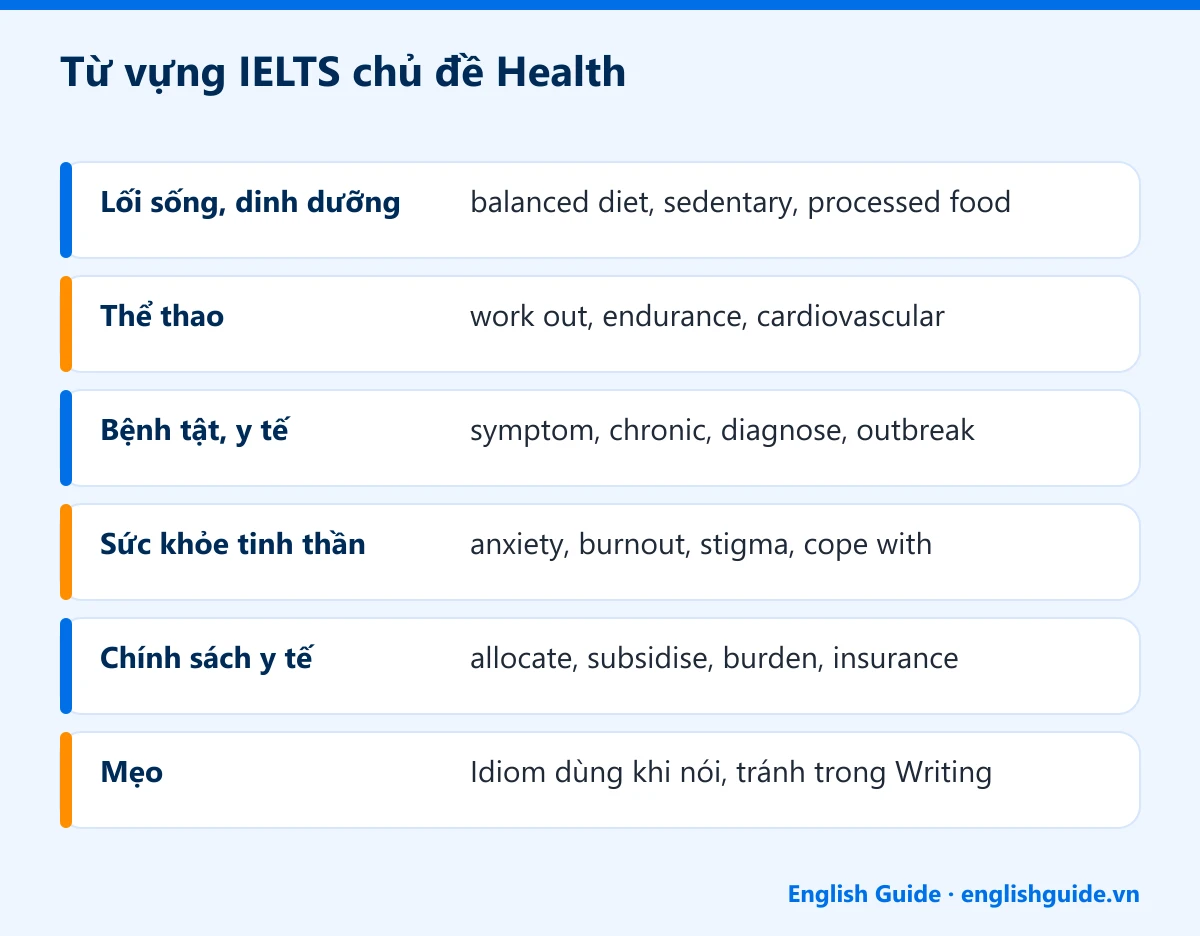
Từ vựng IELTS chủ đề health nên học theo 5 nhóm: lối sống và dinh dưỡng, thể thao, bệnh tật và y tế, sức khỏe tinh thần, chính sách y tế. Mỗi nhóm cần học cả cụm từ đi kèm (collocation) và tập đặt câu ngay, vì sức khỏe là đề tài rất hay ra ở Writing Task 2 và Speaking Part 3. Bài này có bảng từ kèm ví dụ tự soạn, collocation, idiom dùng khi nói, đoạn văn mẫu, đề hay gặp và bài tập có đáp án.
Vì sao nên chuẩn bị riêng chủ đề Health
Sức khỏe là chủ đề gần gũi nên ai cũng có ý để nói, nhưng lại dễ bí từ: nhiều bạn chỉ xoay quanh healthy, unhealthy, exercise và junk food. Đề thi thì hỏi rộng hơn nhiều, từ chuyện béo phì ở trẻ em, áp lực học hành, đến việc nhà nước nên chi tiền cho phòng bệnh hay chữa bệnh.
Theo trang cấu trúc bài thi Writing của IELTS, Task 2 cần tối thiểu 250 từ, nên làm trong khoảng 40 phút và được tính điểm gấp đôi Task 1. Ở Speaking, Part 3 kéo dài 4–5 phút, giám khảo hỏi sâu và khái quát hơn về chủ đề của Part 2. Nếu Part 2 bạn kể về một môn thể thao hay một lần bị ốm, Part 3 rất dễ chuyển sang lối sống, bệnh viện, chính sách y tế.
Vốn từ được chấm qua tiêu chí Lexical Resource. Bảng mô tả band 7 của cả Writing lẫn Speaking đều nhắc đến việc dùng được từ ít phổ biến và có ý thức về văn phong, collocation. Vì vậy mục tiêu không phải là học thật nhiều từ khó, mà là dùng đúng cụm, đúng ngữ cảnh.
Từ vựng IELTS chủ đề health theo 5 nhóm
Phiên âm trong bảng là giọng Anh của từ chính. Các câu ví dụ do EG tự soạn, bạn có thể dùng làm khung để đặt câu của mình.
1. Lối sống và dinh dưỡng (lifestyle & nutrition)
Từ (loại từ) | Phiên âm | Nghĩa | Ví dụ |
|---|---|---|---|
balanced diet (n) | /ˈbælənst ˈdaɪət/ | chế độ ăn cân bằng | A balanced diet doesn't mean giving up rice; it means eating it with enough vegetables and protein. |
nutritious (adj) | /njuˈtrɪʃəs/ | bổ dưỡng | A home-cooked bowl of soup is usually more nutritious than a packet of instant noodles. |
processed food (n) | /ˈprəʊsest fuːd/ | thực phẩm chế biến sẵn | Processed food is convenient, but it is often high in salt and sugar. |
sedentary (adj) | /ˈsedntri/ | ít vận động | Sitting at a desk for eight hours a day is a typical sedentary lifestyle. |
obesity (n) | /əʊˈbiːsəti/ | bệnh béo phì | Childhood obesity is rising as children spend more time on screens than outdoors. |
portion (n) | /ˈpɔːʃn/ | khẩu phần | Restaurants keep serving bigger portions, so customers eat more than they need. |
cut down on (phr v) | /kʌt daʊn ɒn/ | cắt giảm (dần) | My father cut down on sugary drinks after his last check-up. |
well-being (n) | /ˌwelˈbiːɪŋ/ | sự khỏe mạnh, an vui (cả thân và tâm) | Getting enough sleep is essential for your overall well-being. |
2. Thể thao và vận động (sport & fitness)
Từ (loại từ) | Phiên âm | Nghĩa | Ví dụ |
|---|---|---|---|
physical activity (n) | /ˈfɪzɪkl ækˈtɪvəti/ | hoạt động thể chất | Even thirty minutes of physical activity a day can make a noticeable difference. |
work out (phr v) | /wɜːk aʊt/ | tập luyện (thường ở phòng tập) | I try to work out three times a week before my evening class. |
fitness (n) | /ˈfɪtnəs/ | thể lực, sự dẻo dai | Swimming improves fitness without putting pressure on your knees. |
endurance (n) | /ɪnˈdjʊərəns/ | sức bền | Long-distance running builds endurance rather than muscle size. |
cardiovascular (adj) | /ˌkɑːdiəʊˈvæskjələ(r)/ | thuộc tim mạch | Brisk walking lowers the risk of cardiovascular disease. |
strengthen (v) | /ˈstreŋkθn/ | làm khỏe, tăng cường | Yoga can strengthen the muscles that support your back. |
injury (n) | /ˈɪndʒəri/ | chấn thương | Warming up properly reduces the risk of injury. |
recreational facilities (n) | /ˌrekriˈeɪʃənl fəˈsɪlətiz/ | cơ sở vui chơi, thể thao công cộng | Local authorities should invest more in recreational facilities such as parks and public pools. |
3. Bệnh tật và y tế (illness & medical care)
Từ (loại từ) | Phiên âm | Nghĩa | Ví dụ |
|---|---|---|---|
symptom (n) | /ˈsɪmptəm/ | triệu chứng | High fever and joint pain are common symptoms of dengue. |
chronic (adj) | /ˈkrɒnɪk/ | mãn tính | Diabetes is a chronic condition that needs lifelong management. |
diagnose (v) | /ˈdaɪəɡnəʊz/ | chẩn đoán | Many cancers are far easier to treat when they are diagnosed early. |
prescribe (v) | /prɪˈskraɪb/ | kê đơn (thuốc) | Doctors should not prescribe antibiotics for a common cold. |
infectious (adj) | /ɪnˈfekʃəs/ | truyền nhiễm | Measles is a highly infectious disease, so vaccination is vital. |
outbreak (n) | /ˈaʊtbreɪk/ | đợt bùng phát (dịch) | The hospital opened an extra ward during the flu outbreak. |
side effect (n) | /ˈsaɪd ɪfekt/ | tác dụng phụ | Drowsiness is a common side effect of this medicine. |
recover from (v) | /rɪˈkʌvə(r)/ | hồi phục sau (bệnh) | It took her nearly two weeks to recover from the flu. |
be admitted to / discharged from hospital (v) | /ədˈmɪtɪd/, /dɪsˈtʃɑːdʒd/ | nhập viện / xuất viện | He was admitted to hospital on Monday and discharged three days later. |
4. Sức khỏe tinh thần (mental health)
Từ (loại từ) | Phiên âm | Nghĩa | Ví dụ |
|---|---|---|---|
mental health (n) | /ˈmentl helθ/ | sức khỏe tinh thần | Schools are paying more attention to students' mental health than before. |
anxiety (n) | /æŋˈzaɪəti/ | sự lo âu | Exam anxiety is common among final-year high school students. |
burnout (n) | /ˈbɜːnaʊt/ | tình trạng kiệt sức vì quá tải | Working twelve hours a day without a break is a fast route to burnout. |
depression (n) | /dɪˈpreʃn/ | bệnh trầm cảm | Depression is a medical condition, not simply a bad mood. |
cope with (phr v) | /kəʊp wɪð/ | đương đầu, xoay xở với | Teenagers need practical ways to cope with academic pressure. |
stigma (n) | /ˈstɪɡmə/ | sự kỳ thị, định kiến | The stigma around mental illness stops many people from asking for help. |
resilience (n) | /rɪˈzɪliəns/ | sức bật, khả năng vượt khó | Sport can build resilience because it teaches young people to handle failure. |
counselling (n) | /ˈkaʊnsəlɪŋ/ | tư vấn tâm lý | Every university should offer free counselling to its students. |
5. Chính sách y tế (health policy)
Từ (loại từ) | Phiên âm | Nghĩa | Ví dụ |
|---|---|---|---|
public health (n) | /ˈpʌblɪk helθ/ | sức khỏe cộng đồng, y tế công cộng | Clean water is one of the cheapest ways to improve public health. |
healthcare system (n) | /ˈhelθkeə(r) ˈsɪstəm/ | hệ thống y tế | An ageing population puts pressure on the healthcare system. |
health insurance (n) | /helθ ɪnˈʃʊərəns/ | bảo hiểm y tế | Health insurance protects families from huge hospital bills. |
preventive (adj) | /prɪˈventɪv/ | phòng ngừa | Preventive measures such as vaccination cost less than treatment. |
allocate (v) | /ˈæləkeɪt/ | phân bổ (ngân sách, nguồn lực) | The government should allocate more funding to rural clinics. |
subsidise (v) | /ˈsʌbsɪdaɪz/ | trợ giá, bao cấp một phần | Some cities subsidise gym memberships for elderly residents. |
burden (n) | /ˈbɜːdn/ | gánh nặng | Lifestyle diseases place a heavy financial burden on public hospitals. |
life expectancy (n) | /laɪf ɪkˈspektənsi/ | tuổi thọ trung bình | Better nutrition and healthcare have raised life expectancy in many countries. |
understaffed (adj) | /ˌʌndəˈstɑːft/ | thiếu nhân lực | Hospitals in remote areas are often understaffed. |
Collocation chủ đề sức khỏe nên thuộc
Giám khảo nhận ra ngay khi bạn ghép từ theo kiểu dịch từng chữ từ tiếng Việt. Thuộc sẵn các cụm dưới đây giúp câu văn tự nhiên hơn hẳn.
Collocation | Nghĩa | Ví dụ ngắn |
|---|---|---|
lead a healthy / sedentary lifestyle | sống lành mạnh / sống ít vận động | Many young people lead a sedentary lifestyle without realising it. |
do / take regular exercise | tập thể dục đều đặn | Doctors advise people to take regular exercise. |
stick to a diet | duy trì chế độ ăn | Few people manage to stick to a strict diet for long. |
boost the immune system | tăng cường hệ miễn dịch | Sleep and fresh food help boost the immune system. |
suffer from / contract a disease | mắc bệnh (contract trang trọng hơn) | Travellers can contract malaria if they do not take precautions. |
seek medical advice | đi khám, hỏi ý kiến bác sĩ | Seek medical advice if the pain lasts more than a week. |
have a regular check-up | khám sức khỏe định kỳ | Adults over 40 should have a regular check-up. |
undergo surgery / treatment | trải qua phẫu thuật / điều trị | She underwent surgery on her knee last year. |
relieve stress / pain | giải tỏa căng thẳng / giảm đau | Listening to music helps me relieve stress. |
raise awareness of | nâng cao nhận thức về | Campaigns can raise awareness of the dangers of smoking. |
place a burden on | đặt gánh nặng lên | Obesity places a burden on the healthcare system. |
access to healthcare | khả năng tiếp cận dịch vụ y tế | Rural residents often have limited access to healthcare. |
Một số lỗi người Việt hay mắc khi nói về sức khỏe:
Sai | Đúng | Ghi chú |
|---|---|---|
make exercise | do / take exercise | exercise không đi với make |
eat / drink medicine | take medicine | “uống thuốc” luôn dùng take |
release stress | relieve stress | release nghĩa là thả ra, không phải giải tỏa |
She has a strong health. | She is in good health. | health không đi với strong |
a healthy | a healthy meal / habit | healthy là tính từ, cần danh từ đi kèm |
Idiom về sức khỏe: dùng khi nói, hạn chế khi viết
Các idiom dưới đây nghe tự nhiên trong Speaking, nhất là Part 1 và Part 2 khi bạn kể chuyện của mình. Bảng mô tả band Speaking ghi rõ ở band 7 thí sinh cần có khả năng dùng từ ít phổ biến và mang tính thành ngữ, có ý thức về văn phong và collocation.
Idiom | Nghĩa | Ví dụ khi nói |
|---|---|---|
under the weather | hơi mệt, không được khỏe | I was a bit under the weather last week, so I skipped football. |
as fit as a fiddle | khỏe như vâm | My grandmother is 80 but still as fit as a fiddle. |
on the mend | đang hồi phục | I had a bad cough, but I'm on the mend now. |
back on my feet | khỏe lại hẳn, trở lại bình thường | After a week in bed, I was finally back on my feet. |
run down | mệt mỏi, kiệt sức (thân mật) | I always feel run down at the end of exam season. |
burn the candle at both ends | thức khuya dậy sớm, làm quá sức | Before the mock test I was burning the candle at both ends. |
couch potato | người lười vận động, chỉ ngồi xem TV | I used to be a couch potato until I joined a badminton club. |
Lưu ý với Writing Task 2: bài luận cần văn phong trang trọng. Bảng mô tả band Writing nói đến việc dùng từ mang tính thành ngữ “when appropriate”, tức là chỉ khi phù hợp. Những câu như “Many office workers are couch potatoes” hay “The patient was under the weather” bị xem là sai văn phong. Trong bài viết, hãy thay bằng cách nói trung tính: lead a sedentary lifestyle, feel unwell. Mỗi bài Speaking cũng chỉ nên có một vài idiom, chen vào đúng chỗ, đừng cố nhồi cả danh sách.
Ví dụ đoạn văn Writing Task 2
Đề (tự soạn): Some people believe that individuals are responsible for their own weight, while others think governments and food companies should take action against obesity. Discuss both views and give your opinion.
Đoạn thân bài dưới đây trình bày quan điểm thứ hai. Các từ in đậm lấy từ bảng ở trên.
On the other hand, there are strong reasons why governments cannot leave the problem to individuals alone. Many people already know that processed food is harmful, yet they live in conditions that make unhealthy choices the easiest ones: sugary drinks are cheaper than fresh fruit, and long working hours leave little time to cook nutritious meals. In this situation, public policy can change behaviour far more effectively than personal willpower. For example, taxing sugar-sweetened drinks and using the revenue to subsidise school lunches would make the healthy option both cheaper and easier to reach. Moreover, obesity-related conditions such as type 2 diabetes place a heavy burden on the healthcare system, so preventive measures protect taxpayers' money as well as individual health. Therefore, although personal responsibility matters, it is unrealistic to expect people to make sensible decisions when the system works against them.
Muốn xem trọn một bài luận có mở bài, hai thân bài và kết bài, bạn đọc thêm bài mẫu IELTS Writing Task 2 chủ đề Health.
Câu trả lời Speaking mẫu
Part 1: Do you think you have a healthy lifestyle?
Mostly, yes, although I'm far from perfect. I try to eat home-cooked meals and I go jogging around the lake near my house a few evenings a week. My weak point is sleep. During exam season I tend to burn the candle at both ends, so by Friday I usually feel a bit run down.
Part 3: Are people more health-conscious than they used to be?
I'd say so, at least in towns and cities. People have much easier access to health information than their parents did, so things like calorie intake or blood pressure come up in everyday conversation. Having said that, being aware of something isn't the same as acting on it. Plenty of people know they should cut down on sugar but still drink milk tea every day. So awareness has risen quickly, but habits have changed much more slowly.
Part 3: Why do people keep unhealthy habits even when they know the risks?
I think it's because the reward is immediate while the damage is gradual. A cigarette or a late-night snack makes you feel better right now, whereas a chronic illness might not appear for twenty years, so it feels abstract. Stress plays a part too. When people are under pressure, they often use food or alcohol to cope with it, and breaking that cycle usually takes support from family or a doctor, not just willpower.
Part 3: Will there be less illness in the future?
Partly. Vaccines and earlier diagnosis will probably keep many infectious diseases under control. But I suspect lifestyle-related conditions will become more common, because we're all becoming more sedentary. So the challenge may shift from treating infections to preventing illnesses that we bring on ourselves.
Để nắm cách giám khảo dẫn dắt từ Part 2 sang các câu hỏi thảo luận như trên, xem bài IELTS Speaking Part 3.
Đề Writing Task 2 chủ đề sức khỏe hay gặp
Dưới đây là những hướng đề thường xuất hiện, được EG diễn đạt lại để bạn luyện. Cột cuối gợi ý nhóm từ nên dùng.
Đề (tự diễn đạt) | Dạng bài | Nhóm từ nên dùng |
|---|---|---|
Governments should spend more on preventing illness than on treating it. Do you agree? | Agree or disagree | Chính sách y tế |
Healthcare should be free for everyone, paid for by taxes. Discuss both views. | Discussion | Chính sách y tế |
Advertising junk food to children should be banned. To what extent do you agree? | Agree or disagree | Lối sống và dinh dưỡng |
More young people suffer from stress and anxiety. What are the causes and solutions? | Problem – solution | Sức khỏe tinh thần |
Physical education should be a compulsory subject at every level of school. Do you agree? | Agree or disagree | Thể thao và vận động |
People are living longer. Is this a positive or negative development? | Positive or negative | Chính sách y tế, bệnh tật |
Many people now use alternative medicine instead of seeing a doctor. What are the advantages and disadvantages? | Advantages – disadvantages | Bệnh tật và y tế |
Bài tập từ vựng có đáp án
Bài 1: Điền từ vào chỗ trống
Chọn từ phù hợp: sedentary, diagnosed, outbreak, cope, stigma, burden.
Sitting in front of a computer all day is a typical example of a ______ lifestyle.
The earlier a disease is ______, the cheaper it is to treat.
During the dengue ______, the clinic had to stay open at weekends.
Many students don't know how to ______ with exam pressure.
The ______ attached to mental illness prevents people from seeking help.
An ageing population puts a heavy ______ on public hospitals.
Bài 2: Sửa lỗi collocation
I make exercise every morning before school.
You should eat this medicine after meals.
Playing the guitar helps me release stress.
My grandfather received an operation on his heart last year.
Bài 3: Câu nào hợp với Writing Task 2?
(a) Many teenagers are couch potatoes. / (b) Many teenagers lead sedentary lives.
(a) Lots of patients feel under the weather after the injection. / (b) Some patients experience mild side effects after the injection.
(a) The state should allocate more funding to rural clinics. / (b) The state should throw more money at rural clinics.
Đáp án
Bài 1: 1. sedentary · 2. diagnosed · 3. outbreak · 4. cope · 5. stigma · 6. burden.
Bài 2: 1. make exercise → do/take exercise · 2. eat → take this medicine · 3. release → relieve stress · 4. received an operation → had/underwent an operation.
Bài 3: 1. (b) · 2. (b) · 3. (a). Các câu còn lại dùng idiom hoặc cách nói thân mật, chỉ hợp khi nói.
Học từ vựng sức khỏe sao cho nhớ lâu
Học theo cụm, không học từ lẻ: chép cả “lead a sedentary lifestyle” thay vì chỉ “sedentary”.
Gắn với chính mình: mỗi nhóm từ, viết 3 câu về thói quen ăn uống, ngủ nghỉ, tập luyện của bạn hoặc người thân.
Nói thành tiếng mỗi ngày: tự trả lời một câu Part 1 trong 1 phút, ghi âm lại và nghe xem đã dùng được cụm mới nào.
Ôn giãn cách: xem lại sau 1 ngày, 3 ngày, 1 tuần. Cách sắp lịch ôn có trong bài cách học từ vựng IELTS.
Học liền các chủ đề gần nhau: sức khỏe hay đi chung với môi trường (ô nhiễm không khí, nước sạch), nên ôn kèm từ vựng IELTS chủ đề Environment.
Tự học từ vựng thì được, nhưng tự phát hiện lỗi collocation thì khó. Trong các lớp IELTS tại English Guide, mỗi lớp 8–15 học viên, bài Writing và Speaking được giáo viên chấm, chỉ ra chỗ dùng từ chưa tự nhiên. Bạn có thể học ở cơ sở 36 Trần Nhật Duật, Buôn Ma Thuột hoặc học online trực tiếp cùng giáo viên. Ví dụ khóa IELTS Master 5.0–5.5 (80 giờ) có học phí 9.900.000đ tại cơ sở, khoảng 124.000đ/giờ; bản online 7.140.000đ, khoảng 89.000đ/giờ.
Câu hỏi thường gặp
Chủ đề Health hay gặp ở phần nào của IELTS?
Gặp nhiều nhất ở Writing Task 2 và Speaking Part 3, nơi bạn phải bàn về lối sống, bệnh viện hay chính sách y tế. Speaking Part 1 cũng hay hỏi về thói quen ăn uống, tập thể dục; bài Reading và Listening thỉnh thoảng có đoạn về y học.
Health, healthy và healthcare khác nhau thế nào?
Health là danh từ (sức khỏe): good health, mental health. Healthy là tính từ (khỏe mạnh, lành mạnh): a healthy diet. Healthcare là danh từ chỉ dịch vụ, hệ thống chăm sóc y tế: access to healthcare, the healthcare system.
Có nên dùng idiom trong Writing Task 2 không?
Hạn chế. Idiom như under the weather hay couch potato mang sắc thái thân mật, không hợp văn phong bài luận. Trong Writing, hãy ghi điểm bằng collocation chính xác như place a burden on, raise awareness of.
Disease, illness và sickness dùng khác nhau ra sao?
Disease thường chỉ một bệnh cụ thể có tên, như heart disease, infectious disease. Illness nói chung về tình trạng ốm, cả thể chất lẫn tinh thần, như mental illness. Sickness thân mật hơn và hay dùng trong cụm cố định như sick leave, motion sickness.