Kiến thức
Từ vựng IELTS chủ đề Environment: 5 nhóm từ, collocation, bài mẫu và bài tập
12 phút đọc
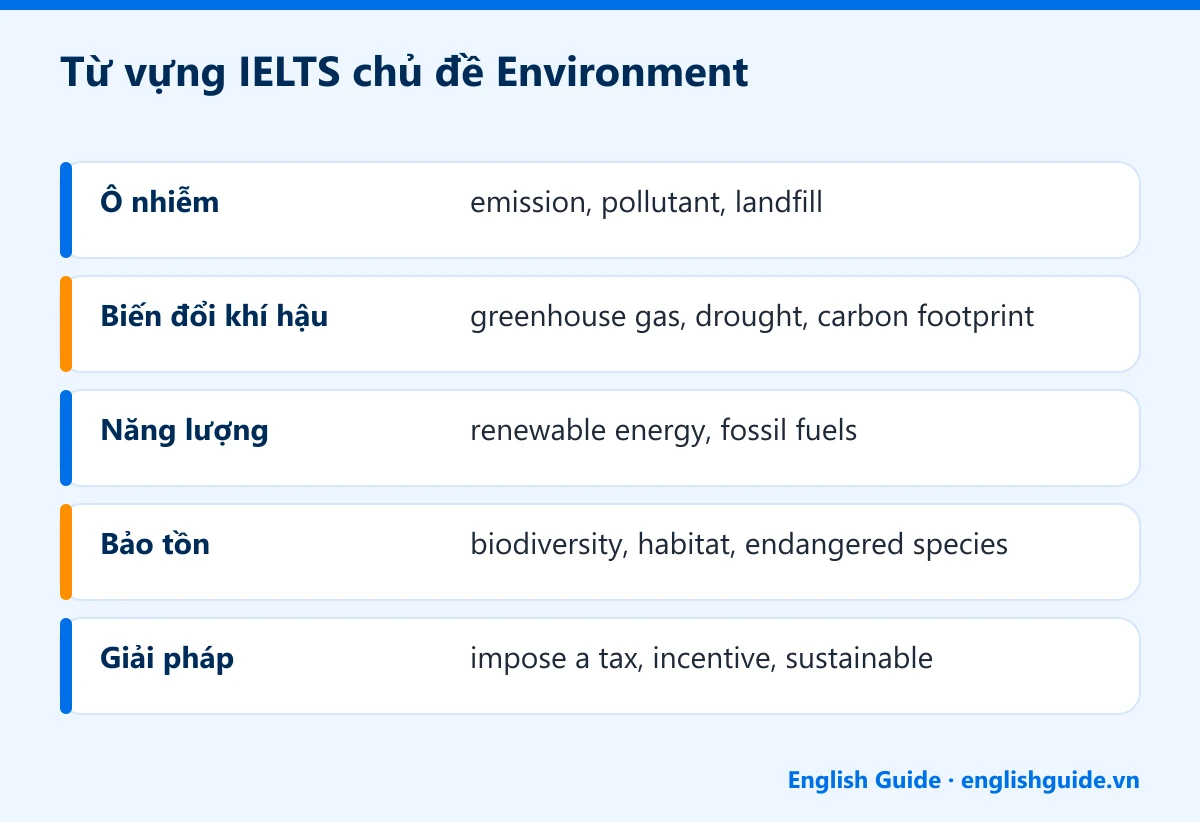
Từ vựng IELTS chủ đề Environment nên học theo 5 nhóm: ô nhiễm, biến đổi khí hậu, năng lượng, bảo tồn thiên nhiên và giải pháp. Với mỗi nhóm, hãy học cả cụm từ đi kèm (collocation) chứ không chỉ từ đơn, rồi tập dùng ngay trong Writing Task 2 và Speaking Part 3, hai phần hay hỏi về môi trường nhất. Bài này có bảng từ kèm phiên âm và ví dụ, collocation, idiom, đoạn văn mẫu, đề hay gặp và bài tập có đáp án.
Vì sao chủ đề môi trường quan trọng trong IELTS
Môi trường là đề tài xã hội quen thuộc của IELTS. Bạn có thể gặp nó ở bài đọc Reading, ở câu hỏi thảo luận Speaking Part 3 và đặc biệt ở Writing Task 2. Theo trang cấu trúc bài thi Writing của IELTS, Task 2 yêu cầu tối thiểu 250 từ trong khoảng 40 phút và được tính điểm gấp đôi Task 1, nên chuẩn bị tốt một chủ đề hay ra như môi trường là cách đầu tư có lợi.
Từ vựng được chấm qua tiêu chí Lexical Resource, chiếm 1/4 điểm mỗi bài Writing. Theo bảng mô tả band, ở band 7 bài viết cần cho thấy khả năng dùng một số từ ít phổ biến và có ý thức về văn phong, collocation. Nghĩa là giám khảo không đếm số từ khó, mà xem bạn dùng từ có đúng ngữ cảnh và đúng cụm hay không.
Từ vựng IELTS chủ đề Environment theo 5 nhóm
Phiên âm trong bảng là phiên âm giọng Anh của từ chính trong cụm.
1. Ô nhiễm (pollution)
Từ (loại từ) | Phiên âm | Nghĩa | Ví dụ |
|---|---|---|---|
emission (n) | /iˈmɪʃən/ | khí thải, sự phát thải | Vehicle emissions are a major cause of smog in crowded cities. |
pollutant (n) | /pəˈluːtənt/ | chất gây ô nhiễm | Plastic bags are among the most visible pollutants on our beaches. |
contaminate (v) | /kənˈtæmɪneɪt/ | làm nhiễm bẩn | Waste water from the factory contaminated the river. |
toxic (adj) | /ˈtɒksɪk/ | độc hại | Burning rubbish releases toxic fumes into the air. |
landfill (n) | /ˈlændfɪl/ | bãi chôn lấp rác | Most household waste still ends up in landfill instead of being recycled. |
pesticide (n) | /ˈpestɪsaɪd/ | thuốc trừ sâu | Overusing pesticides on coffee farms can damage the soil in the long run. |
2. Biến đổi khí hậu (climate change)
Từ (loại từ) | Phiên âm | Nghĩa | Ví dụ |
|---|---|---|---|
greenhouse gas (n) | /ˈɡriːnhaʊs/ | khí nhà kính | Burning coal releases large amounts of greenhouse gases. |
global warming (n) | /ˈwɔːmɪŋ/ | sự nóng lên toàn cầu | Global warming is making heatwaves longer and more frequent. |
carbon footprint (n) | /ˈfʊtprɪnt/ | lượng khí thải carbon một người hoặc hoạt động tạo ra | Flying less is one way to shrink your carbon footprint. |
drought (n) | /draʊt/ | hạn hán | A long drought can ruin a whole coffee harvest in the Central Highlands. |
extreme weather (n) | /ɪkˈstriːm/ | thời tiết cực đoan | Extreme weather events such as floods and storms are becoming harder to predict. |
rising sea levels (n) | /ˈraɪzɪŋ/ | mực nước biển dâng | Rising sea levels threaten farmland in low-lying coastal areas. |
3. Năng lượng (energy)
Từ (loại từ) | Phiên âm | Nghĩa | Ví dụ |
|---|---|---|---|
renewable energy (n) | /rɪˈnjuːəbəl/ | năng lượng tái tạo | Solar and wind power are the most common forms of renewable energy. |
fossil fuels (n) | /ˈfɒsəl/ | nhiên liệu hóa thạch | Many countries still depend heavily on fossil fuels for electricity. |
solar panel (n) | /ˈsəʊlə/ | tấm pin mặt trời | My uncle put solar panels on his roof to cut his electricity bill. |
energy-efficient (adj) | /ɪˈfɪʃənt/ | tiết kiệm năng lượng | Energy-efficient air conditioners cost more but use far less power. |
consumption (n) | /kənˈsʌmpʃən/ | sự tiêu thụ | Energy consumption usually peaks during the hottest months. |
phase out (phr v) | /feɪz/ | loại bỏ dần | The government plans to phase out old coal power plants. |
4. Bảo tồn thiên nhiên (conservation)
Từ (loại từ) | Phiên âm | Nghĩa | Ví dụ |
|---|---|---|---|
deforestation (n) | /diːˌfɒrɪˈsteɪʃən/ | nạn phá rừng | Deforestation leaves hillsides exposed to landslides. |
biodiversity (n) | /ˌbaɪəʊdaɪˈvɜːsəti/ | đa dạng sinh học | Tropical forests have extremely high biodiversity. |
habitat (n) | /ˈhæbɪtæt/ | môi trường sống | Expanding farmland is shrinking the natural habitat of wild elephants. |
endangered species (n) | /ɪnˈdeɪndʒəd/ | loài có nguy cơ tuyệt chủng | The Asian elephant is an endangered species. |
conservation (n) | /ˌkɒnsəˈveɪʃən/ | sự bảo tồn | Yok Don National Park plays a key role in wildlife conservation in Dak Lak. |
poaching (n) | /ˈpəʊtʃɪŋ/ | săn bắt trái phép | Stricter penalties are needed to stop poaching. |
5. Giải pháp (solutions)
Từ (loại từ) | Phiên âm | Nghĩa | Ví dụ |
|---|---|---|---|
recycle (v) | /ˌriːˈsaɪkəl/ | tái chế | Schools should teach children how to sort and recycle waste. |
single-use plastic (n) | /ˈplæstɪk/ | nhựa dùng một lần | Many cafés have replaced single-use plastic straws with paper or bamboo ones. |
impose (v) | /ɪmˈpəʊz/ | áp (thuế, lệnh cấm) | Governments could impose a tax on companies that pollute heavily. |
incentive (n) | /ɪnˈsentɪv/ | ưu đãi khuyến khích | Tax incentives can encourage people to buy electric motorbikes. |
sustainable (adj) | /səˈsteɪnəbəl/ | bền vững | Sustainable farming protects the soil for future generations. |
raise awareness (v) | /əˈweənəs/ | nâng cao nhận thức | Local campaigns can raise awareness of the harm caused by burning rubbish. |
Collocation chủ đề môi trường nên thuộc
Biết từ pollution chưa đủ, bạn cần biết nó đi với động từ nào. Đây là các cụm dùng được ngay trong bài viết và bài nói:
Collocation | Nghĩa | Câu ví dụ |
|---|---|---|
tackle / combat pollution | giải quyết, chống ô nhiễm | Cities need long-term plans to tackle air pollution. |
cut / reduce carbon emissions | cắt giảm khí thải carbon | Switching to electric buses would cut carbon emissions significantly. |
pose a threat to | đe dọa | Plastic waste poses a serious threat to marine life. |
switch to renewable energy | chuyển sang năng lượng tái tạo | Factories that switch to renewable energy often save money in the long term. |
environmentally friendly products | sản phẩm thân thiện môi trường | Young consumers increasingly prefer environmentally friendly products. |
irreversible damage | tổn hại không thể đảo ngược | Cutting down old-growth forests causes irreversible damage. |
Một số lỗi người Việt hay mắc vì dịch từng chữ:
make pollution → cause pollution (gây ô nhiễm).
protect environment → protect the environment (luôn có the).
environment pollution → environmental pollution (dùng tính từ).
put a tax to plastic bags → impose a tax on plastic bags.
Idiom về môi trường: dùng khi nói, hạn chế khi viết
Idiom giúp câu trả lời Speaking tự nhiên hơn, nhưng chỉ dùng khi đúng ngữ cảnh. Theo bảng mô tả band Writing, dùng không phù hợp các cụm học thuộc, mang tính công thức là đặc điểm của band 4, nên trong Writing Task 2 bạn nên ưu tiên collocation trang trọng hơn idiom.
Idiom | Nghĩa | Ví dụ (Speaking) |
|---|---|---|
go green | chuyển sang lối sống, cách làm thân thiện môi trường | Our school decided to go green and banned plastic cups in the canteen. |
a drop in the ocean | muối bỏ biển | One person refusing plastic bags is a drop in the ocean, but it's still a start. |
the tip of the iceberg | phần nổi của tảng băng | The rubbish you see on the street is just the tip of the iceberg. |
cost the earth | tốn rất nhiều tiền | Solar panels used to cost the earth, but they're much cheaper now. |
not out of the woods yet | chưa thoát khỏi khó khăn | The river is cleaner, but we're not out of the woods yet. |
Ví dụ đoạn văn Writing Task 2
Đề tự soạn: Some people believe that environmental problems are too big for individuals to solve, so governments and large companies should take responsibility. To what extent do you agree or disagree?
Đoạn thân bài mẫu (khoảng 140 từ), các cụm in đậm lấy từ bảng trên:
Admittedly, governments and corporations have far greater power to tackle environmental problems than ordinary citizens. A large share of greenhouse gas emissions comes from power plants, heavy industry and transport, which only the authorities can regulate. For example, a government can impose a tax on major polluters or offer tax incentives to firms that switch to renewable energy, and a single policy of this kind can have a far wider effect than the efforts of thousands of households. By contrast, one person refusing plastic bags has only a marginal impact. However, this does not mean that individual action is meaningless. When consumers choose energy-efficient appliances and environmentally friendly products, they send a clear signal to businesses, which then have a commercial reason to adopt more sustainable practices.
Để ý cách đoạn văn dùng từ nối (Admittedly, For example, By contrast, However) để dẫn ý. Muốn nối ý mượt hơn, xem thêm bài linking words IELTS.
Câu trả lời Speaking mẫu
Part 1: Do you try to protect the environment in your daily life?
I'd like to think so. I stopped buying bottled water last year and now I carry a refillable bottle everywhere, because I was shocked by how much plastic piled up in just one week. I'm not perfect, though. I still ride my motorbike almost everywhere, since buses in my area don't run very often.
Part 3: Why do some people not care about environmental problems?
I think it's mainly because the effects feel distant. If the air in your town is clean, it's hard to worry about melting ice on the other side of the world. Cost is another factor: environmentally friendly products are often more expensive, so for families on a tight budget, going green simply isn't a priority. That said, attitudes change quickly once people see the impact first-hand. Coffee farmers in my province, for example, have become far more concerned about climate change since long droughts started to hurt their harvests.
Part 3 hỏi theo hướng khái quát và cần giải thích, phân tích, nên câu trả lời nên có lý do và ví dụ. Xem thêm cách trả lời ở bài IELTS Speaking Part 3.
Đề Writing Task 2 chủ đề môi trường hay gặp
Các đề dưới đây do EG soạn theo những hướng hỏi thường gặp. Hãy thử lập dàn ý cho từng đề với từ vựng gợi ý.
Dạng đề | Đề | Từ vựng nên dùng |
|---|---|---|
Agree or disagree | The best way to reduce plastic waste is to ban single-use plastic products completely. To what extent do you agree or disagree? | single-use plastic, impose a ban, alternatives, consumer habits |
Discussion | Some people think protecting the environment should come before economic growth, while others believe development matters more. Discuss both views and give your opinion. | sustainable, irreversible damage, living standards |
Problem–solution | Air pollution in many cities is getting worse. What are the causes, and what measures can be taken? | vehicle emissions, public transport, tackle pollution |
Advantages–disadvantages | More households are installing solar panels on their roofs. Do the advantages outweigh the disadvantages? | renewable energy, upfront cost, electricity bill |
Two-part question | Many wild animals are in danger of extinction. Why is this happening? Should governments spend money on protecting them? | habitat loss, poaching, biodiversity, conservation |
Dạng nêu nguyên nhân và giải pháp rất hợp với chủ đề này; cách làm từng bước có trong bài Problem–Solution IELTS Writing Task 2.
Bài tập từ vựng có đáp án
Bài 1: Điền từ vào chỗ trống
Từ cho sẵn: emissions, endangered, renewable, landfill, incentives, deforestation
Clearing forests for farmland, known as ______, destroys the habitats of many animals.
Governments could offer financial ______ to encourage people to buy electric vehicles.
Wind and solar power are examples of ______ energy.
Every year, millions of tonnes of household waste are buried in ______ sites.
Factories should be required to reduce their carbon ______.
The saola, found only in Vietnam and Laos, is a critically ______ species.
Bài 2: Sửa lỗi collocation
We must protect environment for our children.
Factories make a lot of pollution in this area.
Environment pollution is a serious issue.
The government should put a tax to plastic bags.
Đáp án
Bài 1: 1. deforestation · 2. incentives · 3. renewable · 4. landfill · 5. emissions · 6. endangered
Bài 2: 1. protect the environment · 2. cause/produce a lot of pollution · 3. Environmental pollution · 4. impose a tax on plastic bags
Học từ vựng môi trường sao cho nhớ lâu
Mỗi ngày học 8–10 cụm của một nhóm, đặt một câu của chính bạn, ôn lại sau 1, 3 và 7 ngày. Cuối tuần, viết một đoạn thân bài cho một đề trong bảng trên và ghi âm một câu trả lời Part 3 để dùng lại các cụm đã học. Phương pháp chi tiết có ở bài cách học từ vựng IELTS. Nếu muốn có giáo viên sửa bài, khóa IELTS Master 5.0–5.5 của EG có 80 giờ học, lớp 8–15 học viên, chấm Writing và Speaking chi tiết. Học tại cơ sở Buôn Ma Thuột học phí 9.900.000đ (khoảng 124.000đ/giờ); học online cùng giáo viên 7.140.000đ (khoảng 89.000đ/giờ). Học viên dùng thêm nền tảng EG LMS để ôn từ vựng giữa các buổi.
Câu hỏi thường gặp
Chủ đề Environment hay gặp ở phần nào của IELTS?
Hay gặp nhất ở Writing Task 2 và Speaking Part 3. Speaking Part 1 có thể hỏi câu nhẹ hơn như thói quen tái chế, còn Reading đôi khi có bài đọc về khí hậu, động vật hoang dã.
Có nên dùng idiom trong Writing Task 2 không?
Nên hạn chế. Writing Task 2 cần văn phong trang trọng, nên collocation như pose a threat to hay tackle pollution an toàn hơn idiom.
Climate change và global warming khác nhau thế nào?
Global warming là sự tăng nhiệt độ trung bình của Trái Đất. Climate change rộng hơn, gồm cả thay đổi về mưa, hạn hán, bão. Trong bài viết, dùng climate change khi nói chung thường chính xác hơn.
Environment và nature dùng khác nhau ra sao?
The environment là môi trường sống nói chung, kể cả không khí, nước, đô thị; nature là thiên nhiên, cây cỏ, động vật. Ví dụ: protect the environment, nhưng spend time in nature.