Kiến thức
Từ vựng IELTS chủ đề Economy: 6 nhóm từ, collocation, đoạn mẫu Writing và Speaking
16 phút đọc
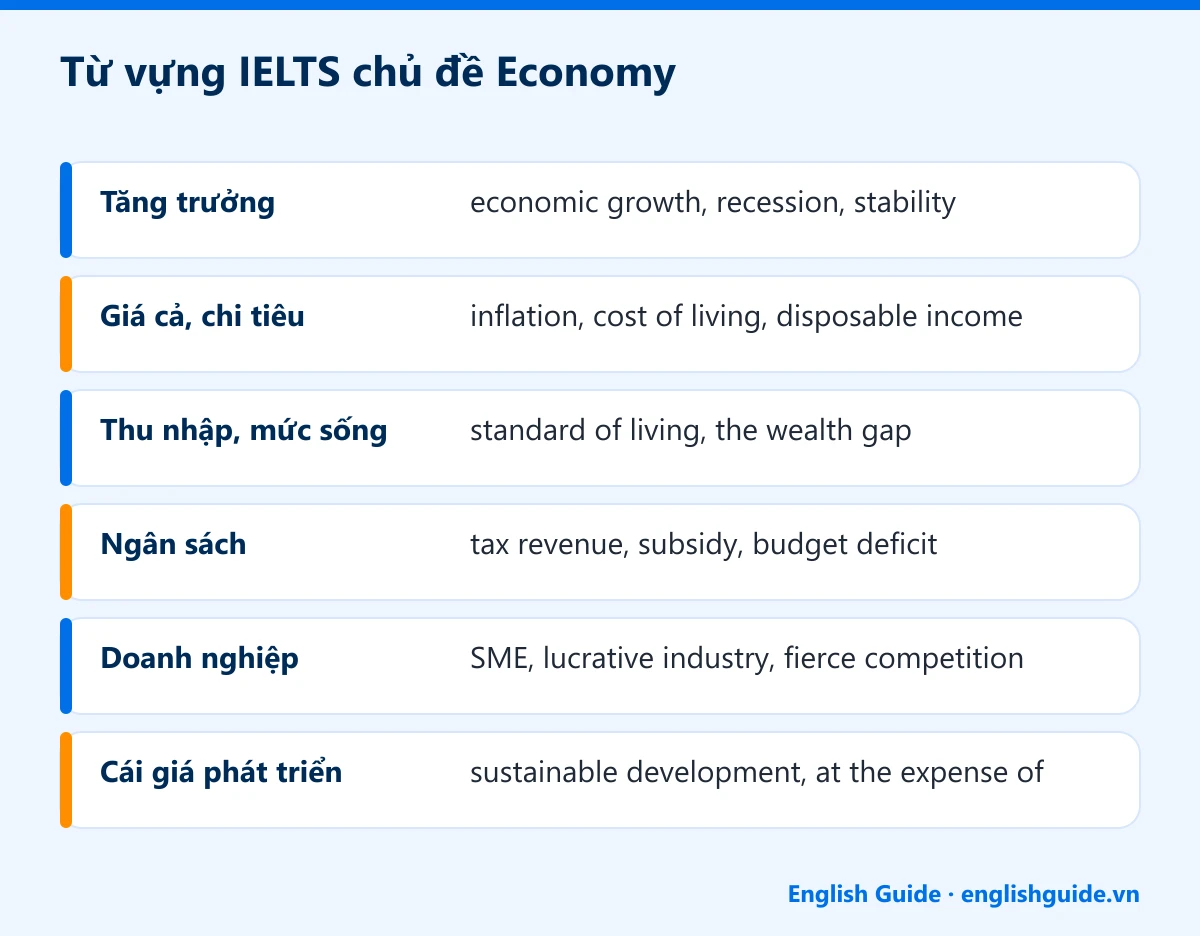
Từ vựng IELTS chủ đề Economy xoay quanh 6 nhóm ý: tăng trưởng và suy thoái, giá cả và chi tiêu, thu nhập và mức sống, ngân sách nhà nước, doanh nghiệp và thị trường, và cái giá của phát triển. Nhiều bạn ngại chủ đề này ở Speaking Part 3 và Writing Task 2 vì nghĩ phải hiểu kinh tế, trong khi bạn chỉ cần đủ từ để nói về những điều thấy hằng ngày như giá cả, tiền thuê nhà, việc buôn bán của gia đình. Bài này gom những từ, cụm từ dùng được ngay, mỗi mục có từ loại, nghĩa và ví dụ đặt trong ngữ cảnh bài thi.
Chủ đề Economy xuất hiện ở đâu trong IELTS
Speaking Part 1 (4–5 phút): ít khi hỏi thẳng về kinh tế, mà hỏi về tiền bạc đời thường như bạn có hay tiết kiệm không, giá cả bây giờ so với hồi nhỏ thế nào.
Speaking Part 2: mô tả một doanh nghiệp nhỏ thành công ở nơi bạn sống, một món đồ đắt tiền bạn đã mua, một lần bạn tiết kiệm tiền; bạn có 1 phút chuẩn bị rồi nói khoảng 2 phút.
Speaking Part 3 (4–5 phút): bàn rộng hơn, ví dụ vì sao giá nhà tăng, tăng trưởng hay môi trường quan trọng hơn, nhà nước nên giúp người thu nhập thấp thế nào.
Writing Task 2: đề về khoảng cách giàu nghèo, thuế, viện trợ cho nước nghèo, chi tiêu công, tăng trưởng đổi lấy môi trường.
Tin vui là bạn không cần kiến thức chuyên ngành. Trang cấu trúc bài thi Writing của IELTS cho biết dẫn chứng và ví dụ trong Task 2 có thể lấy từ chính trải nghiệm của bạn. Điều được chấm là ngôn ngữ và cách lập luận: theo trang giải thích điểm của IELTS, Lexical Resource là một trong bốn tiêu chí có trọng số ngang nhau ở Speaking và ở mỗi bài Writing. Bảng mô tả band Writing (cập nhật 5/2023) ghi band 7 cần có khả năng dùng một số từ ít phổ biến hoặc thành ngữ, và cho thấy ý thức về văn phong và collocation.
Từ vựng IELTS chủ đề Economy theo 6 nhóm
Ký hiệu từ loại trong bảng: (n) danh từ, (v) động từ, (adj) tính từ, (phr) cụm từ. Ví dụ được viết theo kiểu câu có thể dùng lại trong bài thi.
Nhóm 1: Tăng trưởng và suy thoái
Từ, cụm từ | Từ loại | Nghĩa | Ví dụ |
|---|---|---|---|
economic growth | n | tăng trưởng kinh tế | Economic growth can lift millions of people out of poverty. |
GDP (gross domestic product) | n | tổng sản phẩm quốc nội | GDP measures the value of the goods and services a country produces. |
developed / developing country | n | nước phát triển / đang phát triển | Developing countries often rely on farming and low-cost manufacturing. |
recession | n | suy thoái kinh tế | Many small firms closed during the recession. |
economic downturn | n | giai đoạn kinh tế đi xuống | Tourism is often among the first sectors to suffer in an economic downturn. |
maintain economic stability | phr | duy trì ổn định kinh tế | Central banks adjust interest rates to help maintain economic stability. |
Nhóm 2: Giá cả và chi tiêu
Từ, cụm từ | Từ loại | Nghĩa | Ví dụ |
|---|---|---|---|
inflation | n | lạm phát | High inflation means that wages buy less each month. |
the cost of living | n | chi phí sinh hoạt | The rising cost of living is forcing many young couples to delay buying a home. |
purchasing power | n | sức mua | Inflation reduces the purchasing power of people on fixed incomes. |
disposable income | n | thu nhập còn lại sau thuế để chi tiêu, tiết kiệm | As disposable income rises, families spend more on travel and education. |
patterns of consumption | phr | xu hướng, thói quen tiêu dùng | Online shopping has changed patterns of consumption among young people. |
interest rate | n | lãi suất | Higher interest rates make it more expensive to borrow money. |
afford / affordable | v / adj | có đủ tiền mua / giá phải chăng | Few young workers can afford a house in the city centre. |
make ends meet | phr | xoay xở đủ sống (thân mật) | Some families need a second income just to make ends meet. |
Nhóm 3: Thu nhập và mức sống
Từ, cụm từ | Từ loại | Nghĩa | Ví dụ |
|---|---|---|---|
a high standard of living | phr | mức sống cao | Better roads and schools have brought a higher standard of living to the countryside. |
the middle class / middle-income | n / adj | tầng lớp trung lưu / thu nhập trung bình | The growing middle class is spending more on healthcare and education. |
low-income household | phr | hộ thu nhập thấp | Free school meals would help low-income households. |
impoverished | adj | nghèo khó (trang trọng) | Aid can pay for schools and clinics in impoverished countries. |
affluent | adj | giàu có, sung túc | Affluent families can pay for private tutors and overseas study. |
the wealth gap | n | khoảng cách giàu nghèo | Higher taxes on the rich could narrow the wealth gap. |
social welfare | n | an sinh xã hội | A strong social welfare system protects people who lose their jobs. |
Nhóm 4: Ngân sách nhà nước
Từ, cụm từ | Từ loại | Nghĩa | Ví dụ |
|---|---|---|---|
tax revenue | n | nguồn thu từ thuế | Tax revenue pays for hospitals, roads and schools. |
public spending | n | chi tiêu công | Public spending on healthcare tends to rise as the population ages. |
a reduction in the national budget on | phr | việc cắt giảm ngân sách quốc gia cho | A reduction in the national budget on education would hurt rural schools most. |
budget deficit | n | thâm hụt ngân sách | To reduce the budget deficit, the government may have to raise taxes. |
allocate | v | phân bổ | More funds should be allocated to vocational training. |
subsidy / subsidise | n / v | trợ cấp | Fuel subsidies help consumers but put pressure on public finances. |
infrastructure | n | cơ sở hạ tầng | Investment in infrastructure, such as ports and highways, attracts businesses. |
Nhóm 5: Doanh nghiệp và thị trường
Từ, cụm từ | Từ loại | Nghĩa | Ví dụ |
|---|---|---|---|
small and medium-sized enterprise (SME) | n | doanh nghiệp nhỏ và vừa | SMEs play a vital role in many local economies. |
entrepreneur | n | người khởi nghiệp kinh doanh | Some young entrepreneurs in Dak Lak sell speciality coffee online. |
lucrative industry | phr | ngành sinh lợi cao | Tourism can be a lucrative industry for mountainous provinces. |
fierce competition | phr | cạnh tranh gay gắt | Fierce competition from online sellers has hurt traditional shops. |
supply and demand | n | cung và cầu | Coffee prices depend heavily on supply and demand. |
export / import | v, n | xuất khẩu / nhập khẩu | Vietnam exports large quantities of coffee and rice. |
expansion | n | sự mở rộng | The firm's need for expansion led it to open three new branches. |
manufacturing sector | n | khu vực sản xuất, chế tạo | Growth in the manufacturing sector has created many new jobs. |
Từ về lương, tuyển dụng, thăng tiến đã có ở bài từ vựng IELTS chủ đề Work. Từ về đầu tư nước ngoài, thuế nhập khẩu, chuỗi cung ứng có ở bài IELTS Writing Task 2 Globalisation, kèm hai bài mẫu hoàn chỉnh.
Nhóm 6: Cái giá của phát triển
Từ, cụm từ | Từ loại | Nghĩa | Ví dụ |
|---|---|---|---|
prioritise economic growth | phr | ưu tiên tăng trưởng kinh tế | Some governments prioritise economic growth over clean air. |
sustainable development | n | phát triển bền vững | Sustainable development meets today's needs without damaging the future. |
at the expense of | phr | đánh đổi bằng, gây thiệt hại cho | Industry must not grow at the expense of local rivers. |
environmental degradation | n | sự suy thoái môi trường | Unregulated mining causes serious environmental degradation. |
deforestation on a massive scale | phr | phá rừng trên quy mô lớn | Clearing land for crops has led to deforestation on a massive scale in some countries. |
mitigate the negative impact of | phr | giảm nhẹ tác động tiêu cực của | Strict rules can mitigate the negative impact of industrial waste. |
(basic) amenities | n | tiện nghi, tiện ích (thiết yếu) | Some villages still lack basic amenities such as clean water. |
gender equality | n | bình đẳng giới | Gender equality at work allows a country to make use of all its talent. |
cultural preservation | n | bảo tồn văn hóa | Development plans should include cultural preservation as well as new roads. |
Phát âm các từ chủ đề Economy dễ đọc sai
Phiên âm theo giọng Anh. Pronunciation là một tiêu chí riêng của Speaking, nên đừng bỏ qua trọng âm.
Từ | Phiên âm | Lưu ý |
|---|---|---|
economy | /ɪˈkɒnəmi/ | trọng âm ở âm tiết thứ hai |
economic | /ˌiːkəˈnɒmɪk/ | trọng âm chuyển sang âm tiết thứ ba; cũng có thể đọc /ˌekəˈnɒmɪk/ |
lucrative | /ˈluːkrətɪv/ | trọng âm ở âm tiết đầu |
deficit | /ˈdefɪsɪt/ | c đọc là /s/ |
subsidy | /ˈsʌbsɪdi/ | trọng âm ở âm tiết đầu |
entrepreneur | /ˌɒntrəprəˈnɜː/ | trọng âm ở cuối từ |
affluent | /ˈæfluənt/ | trọng âm ở âm tiết đầu |
impoverished | /ɪmˈpɒvərɪʃt/ | đuôi -ed đọc là /t/ |
Phân biệt economy, economic, economical và economics
Từ | Nghĩa và cách dùng | Ví dụ |
|---|---|---|
economy (n) | nền kinh tế | Tourism is important to the local economy. |
economic (adj) | thuộc về kinh tế | The country has enjoyed strong economic growth. |
economical (adj) | tiết kiệm, ít tốn kém | A small motorbike is more economical than a car. |
economics (n) | môn kinh tế học | My sister studied economics at university. |
Lỗi rất hay gặp là viết economical growth. Tăng trưởng kinh tế luôn là economic growth; economical chỉ dùng khi nói một thứ gì đó tiết kiệm.
Collocation chủ đề Economy nên dùng
Collocation là những từ thường đi với nhau. Dùng đúng cặp từ giúp câu tự nhiên hơn so với dịch từng chữ từ tiếng Việt.
Collocation | Nghĩa | Ví dụ |
|---|---|---|
boost the local economy | thúc đẩy kinh tế địa phương | Eco-tourism could boost the local economy in the Central Highlands. |
widen / narrow the gap between rich and poor | nới rộng / thu hẹp khoảng cách giàu nghèo | Free education helps narrow the gap between rich and poor. |
a sharp rise in prices | giá tăng mạnh | A sharp rise in food prices hurts poorer families most. |
place a heavy burden on | đặt gánh nặng lên | High fuel prices place a heavy burden on small businesses. |
invest heavily in | đầu tư mạnh vào | Many countries invest heavily in public transport. |
go bankrupt | phá sản | Several small shops went bankrupt during the downturn. |
live beyond your means | tiêu quá khả năng | Easy credit encourages people to live beyond their means. |
tighten your belt | thắt lưng buộc bụng | We had to tighten our belts when my father's business slowed down. |
Lưu ý văn phong: make ends meet và tighten your belt hợp với Speaking. Trong Writing Task 2, nên ưu tiên cụm trung tính như place a heavy burden on, invest heavily in. Khi viết về các nước nghèo, developing countries hoặc low-income countries là cách nói trung tính và an toàn.
Một số lỗi người Việt hay mắc:
the price is expensive → the price is high hoặc it is expensive.
increase the living standard → raise living standards.
harsh competition → fierce competition hoặc intense competition thường tự nhiên hơn.
Đề Writing Task 2 chủ đề Economy hay gặp
Các đề dưới đây do EG tự diễn đạt để luyện tập, bám theo những hướng ra đề phổ biến về kinh tế:
Dạng đề | Đề luyện tập |
|---|---|
Agree/disagree | Economic growth is the best way to reduce poverty in any country. To what extent do you agree or disagree? |
Discussion | Some people think rich countries should give financial aid to poorer nations, while others believe this does more harm than good. Discuss both views and give your opinion. |
Problem/solution | The gap between rich and poor is widening in many countries. What problems does this cause, and what measures could be taken? |
Two-part question | Many young adults today cannot afford to buy their own home. Why is this happening? Is this a negative development? |
Đoạn mẫu Writing Task 2 dùng từ vựng Economy
Đề: đề agree/disagree về tăng trưởng và xóa nghèo ở bảng trên. Đoạn thân bài dưới đây đi theo hướng đồng ý một phần; từ vựng của bài được in đậm.
There is little doubt that economic growth can lift families out of poverty. When a country expands its manufacturing sector or increases its exports, more jobs are created, tax revenue rises and the government can invest heavily in schools and hospitals. As a result, the standard of living improves even for low-income households. However, growth alone does not guarantee that everyone benefits. Without fair policies, it may widen the gap between rich and poor, since most of the profits flow to those who already own land or businesses. It can also come at the expense of the environment, leaving rural communities with polluted water and poorer harvests. A wiser strategy would therefore combine growth with targeted subsidies, a strong social welfare system and a commitment to sustainable development.
Đoạn văn không có con số nào mà vẫn thuyết phục, vì mỗi ý đều có lý do và hệ quả rõ ràng. Không có nguồn thì đừng đưa số liệu GDP hay lạm phát vào bài; một câu lập luận chặt chẽ có ích hơn một con số đoán.
Câu trả lời Speaking mẫu chủ đề Economy
Part 1
Are things more expensive now than when you were a child?
Definitely. When I was at primary school, a bowl of noodles cost a fraction of what it does today. People earn more now as well, of course, but I'd say inflation has eaten up a lot of that increase, especially when it comes to food and rent.
Part 3
Is economic growth more important than protecting the environment?
I don't think we should see it as an either-or choice. In poorer regions, economic growth obviously matters, because families need jobs and basic amenities. But if growth comes at the expense of clean water or healthy soil, you end up paying later. Take farming in the Central Highlands: when too many chemicals are used, harvests may rise for a while, but the land suffers in the long run. So I'd argue for sustainable development, even if it's a bit slower.
What can governments do to help people with the high cost of living?
Well, they could start by making essentials more affordable. For instance, they might offer housing subsidies to young workers or invest in cheap public transport, so that people spend less on getting to work. That said, governments can't do everything, because every programme has to be paid for out of tax revenue. So I think it's also about teaching young people how to manage money, since many of them live beyond their means without realising it.
Để ý rằng các câu trả lời không dùng thuật ngữ khó, mà đi từ ví dụ quen thuộc tới ý khái quát. Cách triển khai chi tiết có ở bài IELTS Speaking Part 3.
Bài tập từ vựng Economy có đáp án
Bài 1: Điền từ vào đoạn văn
Từ gợi ý (thừa một từ): allocate, boost, cost, deficit, degradation, expense, mitigate, revenue, standard
A province that depends on tourism faces a difficult choice. New hotels and roads can (1) ___ the local economy, create jobs and raise the (2) ___ of living. However, if construction goes too far, the result may be environmental (3) ___ and a higher (4) ___ of living for residents, who often cannot afford the rising rents. To (5) ___ these problems, the authorities could (6) ___ part of the new tax (7) ___ to public housing and conservation. In this way, growth would not come at the (8) ___ of local people.
Bài 2: Chọn từ, cụm từ gần nghĩa nhất với phần in đậm
Affluent neighbourhoods usually have better schools. (A. wealthy · B. polluted · C. crowded)
Many small firms closed during the downturn. (A. festival season · B. period of economic decline · C. tax inspection)
Rents have soared since last year. (A. fallen slightly · B. risen very quickly · C. stayed the same)
Exporting speciality coffee has become a lucrative business. (A. risky · B. profitable · C. traditional)
The new policy aims to mitigate the impact of inflation. (A. reduce · B. measure · C. ignore)
Đáp án
Bài 1: 1. boost · 2. standard · 3. degradation · 4. cost · 5. mitigate · 6. allocate · 7. revenue · 8. expense (từ thừa: deficit)
Bài 2: 1-A · 2-B · 3-B · 4-B · 5-A
Học và dùng từ vựng Economy sao cho nhớ lâu
Đừng học chủ đề này một cách tách biệt: nó hay đi cùng Work, Globalisation và Environment, nên một cụm như at the expense of dùng lại được ở rất nhiều đề. Mỗi ngày học một nhóm 6–8 từ và đặt câu về chính đời sống quanh bạn: giá cà phê năm nay ở quê bạn, việc buôn bán của gia đình, tiền thuê trọ. Ghi lại cả câu vào sổ, đừng chỉ ghi từ, rồi dùng lại trong một câu trả lời Speaking có ghi âm. Phương pháp ôn lặp lại có ở bài cách học từ vựng IELTS.
Nếu muốn có giáo viên chữa lỗi dùng từ trong bài viết và bài nói, khóa IELTS Master 5.0–5.5 của EG có 80 giờ học, lớp 8–15 học viên, chấm Writing và Speaking chi tiết. Học tại Cơ sở Buôn Ma Thuột học phí 9.900.000đ (khoảng 124.000đ/giờ); học online cùng giáo viên 7.140.000đ (khoảng 89.000đ/giờ). Học viên ôn từ vựng giữa các buổi trên nền tảng EG LMS. Chưa rõ trình độ, bạn có thể bắt đầu bằng bài kiểm tra trình độ miễn phí.
Câu hỏi thường gặp
Có cần kiến thức kinh tế để làm đề Economy không?
Không. Bạn chỉ cần vài ý rõ ràng và ví dụ quen thuộc như giá thực phẩm, tiền thuê nhà, việc làm ở quê. Giám khảo chấm ngôn ngữ và cách lập luận, không chấm kiến thức chuyên ngành.
Recession và depression khác nhau thế nào?
Recession là giai đoạn kinh tế suy giảm. Depression là suy thoái rất nặng và kéo dài nhiều năm, ít khi xảy ra. Khi nói về khó khăn kinh tế thông thường, dùng recession hoặc economic downturn.
Cost of living và standard of living khác nhau ra sao?
Cost of living là số tiền cần để chi trả nhu cầu hằng ngày, nên đi với high, low, rising. Standard of living là mức độ sung túc của cuộc sống, nên đi với raise, improve. Ví dụ: The cost of living is rising, but living standards have not improved.