Kiến thức
Từ vựng IELTS chủ đề Media: báo chí, tin tức, quảng cáo kèm collocation và bài mẫu
17 phút đọc
Từ vựng IELTS chủ đề Media gồm hai mảng hay đi cùng nhau trong đề thi: truyền thông (báo in, truyền hình, báo điện tử, cách đưa tin) và quảng cáo (hình thức quảng cáo, cách thuyết phục người mua, tác động tới người tiêu dùng). Bài này chia hơn 40 từ và cụm từ thành 5 nhóm, mỗi mục có từ loại, nghĩa tiếng Việt và câu ví dụ đặt trong ngữ cảnh Writing, Speaking.
Phần sau có collocation, những từ hay dùng sai, đề Writing Task 2 thường gặp, đoạn mẫu, câu trả lời Speaking và bài tập có đáp án. Từ vựng về mạng xã hội, thuật toán hay thời gian dùng màn hình đã có ở bài từ vựng IELTS chủ đề Technology, nên bài này tập trung vào báo chí, tin tức và quảng cáo.
Chủ đề Media và quảng cáo xuất hiện ở đâu trong IELTS
Speaking Part 1 (4–5 phút, theo mô tả phần thi Speaking của IELTS): câu hỏi về thói quen như bạn đọc tin tức bằng cách nào, có hay xem TV không, có để ý quảng cáo không.
Speaking Part 2: thẻ đề kiểu mô tả một mẫu quảng cáo bạn nhớ rõ, một tin tức gây chú ý, một chương trình truyền hình bạn thích. Bạn có 1 phút chuẩn bị và nói khoảng 2 phút.
Speaking Part 3 (4–5 phút): bàn rộng hơn, chẳng hạn báo chí có nên đưa tin về đời tư người nổi tiếng không, quảng cáo ảnh hưởng tới trẻ em ra sao.
Writing Task 2: đề về vai trò của báo chí, tin giả, người nổi tiếng quảng cáo sản phẩm, quảng cáo khiến người ta mua sắm quá mức, có nên hạn chế quảng cáo hay không.
Theo trang mô tả bài thi Writing của IELTS, Task 2 cần ít nhất 250 từ và được tính điểm gấp đôi Task 1, nên đây là nơi vốn từ chủ đề phát huy nhiều nhất. Vốn từ được chấm qua tiêu chí Lexical Resource. Bảng mô tả band Writing (bản cập nhật 05/2023) ghi ở band 7: người viết có "some ability to use less common and/or idiomatic items" và "an awareness of style and collocation is evident". Nói cách khác, giám khảo không chỉ để ý từ khó, mà còn xem bạn ghép từ có tự nhiên và hợp văn phong hay không.
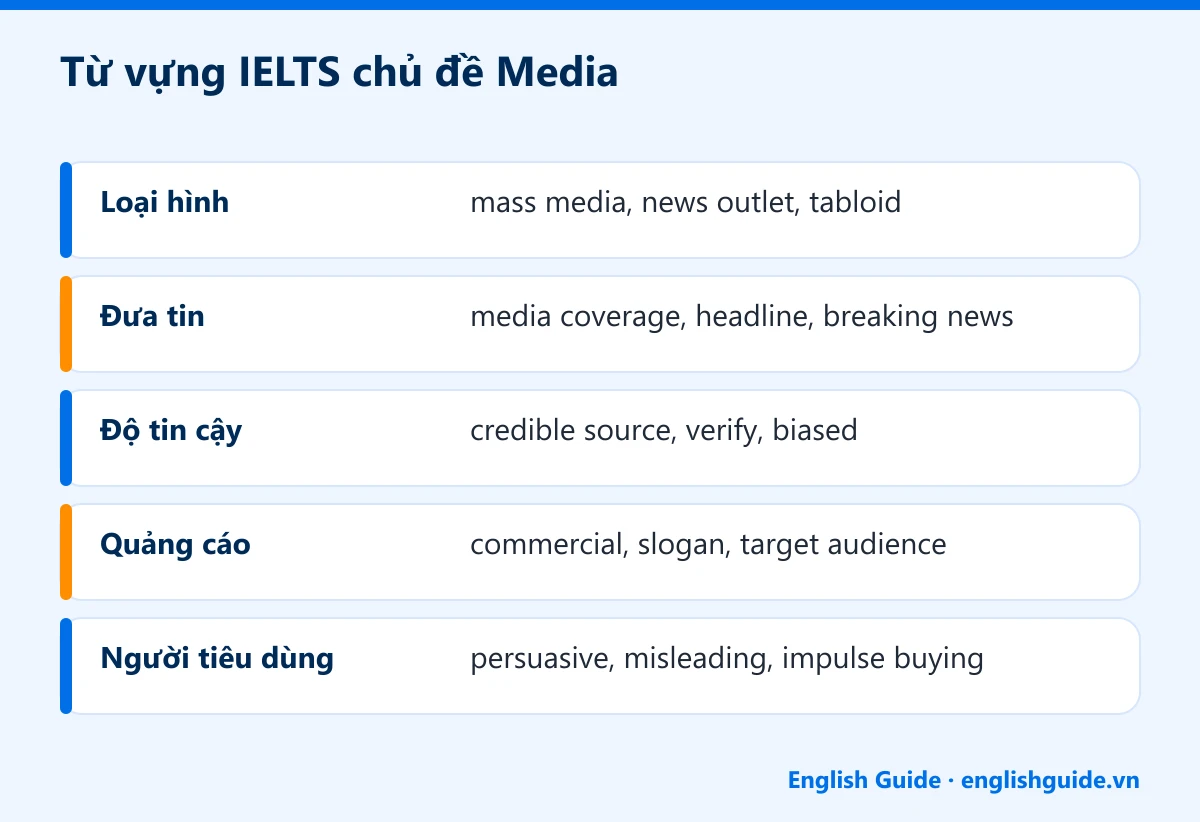
Từ vựng IELTS chủ đề Media theo 5 nhóm
Ký hiệu từ loại trong bảng: (n) danh từ, (v) động từ, (adj) tính từ, (phr) cụm từ. Câu ví dụ được viết để bạn có thể đổi chủ ngữ, đổi chi tiết rồi dùng lại trong bài thi.
Nhóm 1: Các loại hình truyền thông
Từ, cụm từ | Từ loại | Nghĩa | Ví dụ |
|---|---|---|---|
the mass media | n | truyền thông đại chúng | The mass media can turn a local issue into a national debate within days. |
print media | n | báo in, ấn phẩm in | Print media has lost many readers, yet some weekly magazines are still doing well. |
broadcast | v / n | phát sóng / chương trình phát sóng | The final match was broadcast live on national television. |
news outlet | n | cơ quan báo chí, kênh tin tức | Most news outlets now publish stories online before they appear in print. |
tabloid | n | báo lá cải | Tabloids tend to focus on celebrity scandals rather than serious issues. |
current affairs | n | thời sự | I try to watch a current affairs programme at least once a week. |
documentary | n | phim tài liệu | A documentary about coffee farmers changed the way I think about the price of a cup of coffee. |
prime time | n | giờ vàng (truyền hình) | Advertising during prime time costs far more than late at night. |
Nhóm 2: Đưa tin và nghề báo
Từ, cụm từ | Từ loại | Nghĩa | Ví dụ |
|---|---|---|---|
journalist / reporter | n | nhà báo / phóng viên | The reporter spent three months gathering evidence before publishing the story. |
the press | n | giới báo chí | The singer refused to speak to the press after the concert was cancelled. |
media coverage | n | sự đưa tin của truyền thông | The flood received extensive media coverage, which helped charities raise money. |
headline | n | tiêu đề bài báo | Many readers only skim the headlines without reading the full article. |
make the headlines | phr | trở thành tin nóng | The small village made the headlines when a farmer dug up an ancient bronze drum. |
breaking news | n | tin nóng, tin vừa xảy ra | TV channels often interrupt their programmes for breaking news. |
investigative journalism | n | báo chí điều tra | Investigative journalism can expose wrongdoing that would otherwise stay hidden. |
press freedom | n | tự do báo chí | Press freedom allows journalists to ask difficult questions on behalf of the public. |
Nhóm 3: Độ tin cậy và sức ảnh hưởng của truyền thông
Từ, cụm từ | Từ loại | Nghĩa | Ví dụ |
|---|---|---|---|
reliable / reliability | adj / n | đáng tin cậy / độ tin cậy | Before quoting a statistic, check the reliability of the website it comes from. |
credible source | phr | nguồn đáng tin | Students should learn to tell a credible source from an anonymous blog. |
verify / verification | v / n | xác minh / sự xác minh | Good journalists verify a story with at least two sources before publishing it. |
fact-check | v | kiểm chứng thông tin | It only takes a minute to fact-check a shocking claim before sharing it. |
fake news | n | tin giả | Fake news often travels faster than the correction that follows it. |
biased / bias | adj / n | thiên lệch, phiến diện / sự thiên lệch | A biased report presents only one side of the argument. |
sensational / sensationalism | adj / n | giật gân / lối đưa tin giật gân | Sensational headlines attract clicks but can damage a newspaper's reputation. |
exaggerate / exaggerated | v / adj | phóng đại / bị thổi phồng | The risks of the new medicine were greatly exaggerated by some websites. |
invasion of privacy | phr | sự xâm phạm đời tư | Photographing celebrities' children without permission is an invasion of privacy. |
shape public opinion | phr | định hướng dư luận | Television debates can shape public opinion on important social issues. |
unrealistic beauty standards | phr | chuẩn mực vẻ đẹp phi thực tế | Heavily edited photos in magazines promote unrealistic beauty standards among teenagers. |
Nhóm 4: Quảng cáo và tiếp thị
Từ, cụm từ | Từ loại | Nghĩa | Ví dụ |
|---|---|---|---|
advertisement (advert, ad) | n | mẫu quảng cáo | I saw an advertisement for a new bakery on the back of a city bus. |
commercial | n | quảng cáo trên TV, radio | The commercial was shown several times during the football match. |
billboard | n | biển quảng cáo ngoài trời | Huge billboards line the main road into the city centre. |
slogan | n | khẩu hiệu | A short slogan is much easier to remember than a long description. |
advertising campaign | n | chiến dịch quảng cáo | The company launched a nationwide advertising campaign for its new drink. |
target audience | n | nhóm khán giả, khách hàng mục tiêu | The target audience for this mobile game is teenagers aged 13 to 17. |
celebrity endorsement | phr | việc người nổi tiếng quảng bá sản phẩm | Celebrity endorsement can make a very ordinary product seem desirable. |
sponsor / sponsorship | v / n | tài trợ / sự tài trợ | A local coffee company sponsored the school's football tournament. |
product placement | n | quảng cáo lồng ghép trong phim, chương trình | Product placement is so common in films that viewers rarely notice it. |
Nhóm 5: Người tiêu dùng và tác động của quảng cáo
Từ, cụm từ | Từ loại | Nghĩa | Ví dụ |
|---|---|---|---|
potential customer | n | khách hàng tiềm năng | Free samples are a simple way to reach potential customers. |
persuasive | adj | có sức thuyết phục | The most persuasive adverts appeal to emotions rather than facts. |
catchy | adj | bắt tai, dễ nhớ | The jingle was so catchy that children sang it in the playground. |
misleading | adj | gây hiểu lầm | Misleading claims about weight loss should lead to heavy fines. |
impulse buying | n | mua sắm bốc đồng | Supermarkets place sweets near the checkout to encourage impulse buying. |
shopaholic | n | người nghiện mua sắm | My cousin admits she is a shopaholic and owns clothes she has never worn. |
consumerism | n | chủ nghĩa tiêu dùng | Critics argue that advertising fuels consumerism and waste. |
materialistic | adj | coi trọng vật chất | Constant exposure to adverts may make children more materialistic. |
boost sales | phr | tăng doanh số | A well-timed discount can boost sales in a quiet month. |
Collocation chủ đề Media và quảng cáo nên dùng
Collocation là những từ thường đi với nhau. Học cả cụm giúp bạn tránh lỗi dịch từng chữ từ tiếng Việt, ví dụ "đọc tin trên báo" bị dịch thành "read news on newspaper" thay vì read the news in the paper. Bài collocation trong IELTS giải thích kỹ hơn cách học loại cụm từ này.
Collocation | Nghĩa | Ví dụ |
|---|---|---|
play a crucial role in | đóng vai trò then chốt trong | Local radio plays a crucial role in warning residents about storms. |
keep the public informed | giúp công chúng nắm thông tin | During power cuts, radio is still the fastest way to keep the public informed. |
gain access to information | tiếp cận thông tin | Cheap smartphones allow farmers to gain access to information about market prices. |
be bombarded with adverts | bị dội quảng cáo | Viewers are bombarded with adverts every few minutes during popular shows. |
target young consumers | nhắm vào người tiêu dùng trẻ | Fast-food chains spend heavily to target young consumers. |
raise brand awareness | tăng độ nhận biết thương hiệu | Sponsoring a local festival is a cheap way to raise brand awareness. |
make false claims | đưa ra tuyên bố sai sự thật | Companies that make false claims about their products should face penalties. |
impose restrictions on | đặt giới hạn đối với | Some countries impose restrictions on advertising aimed at children. |
a household name | cái tên ai cũng biết | Clever advertising turned a small family bakery into a household name. |
be easily swayed by | dễ bị tác động bởi | Young viewers are easily swayed by adverts featuring their favourite stars. |
Lưu ý văn phong: make the headlines, a household name nghe tự nhiên khi nói. Trong Writing Task 2, nên ưu tiên các cụm trung tính như play a crucial role in, make false claims, impose restrictions on.
Những từ hay dùng sai trong chủ đề Media
Từ | Cách dùng đúng | Ví dụ |
|---|---|---|
news | Danh từ không đếm được, đi với động từ số ít; muốn đếm thì dùng a piece of news hoặc a news story | The news is on at seven. / I read an interesting news story today. |
information | Không đếm được, không thêm s | The website gives useful information about the exam. |
commercial | Chỉ dùng cho quảng cáo trên TV hoặc radio; biển ngoài đường là billboard | The commercial was only 15 seconds long. |
the press | Báo chí nói chung, luôn có the | The press has a responsibility to check its facts. |
Đề Writing Task 2 chủ đề Media hay gặp
Các đề dưới đây do EG tự diễn đạt để luyện tập, bám theo những hướng ra đề phổ biến về truyền thông và quảng cáo:
Dạng đề | Đề luyện tập |
|---|---|
Agree/disagree | Newspapers and news websites should not be allowed to publish details of famous people's private lives. To what extent do you agree or disagree? |
Advantages/disadvantages | Advertising encourages people to buy things they do not really need. Do the disadvantages of advertising outweigh the advantages? |
Discussion | Some people get most of their news from free online sources, while others think it is worth paying for a trusted newspaper. Discuss both views and give your opinion. |
Problem/solution | Fake news is becoming increasingly common. What problems does this cause, and what can be done to tackle it? |
Two-part question | Many companies pay celebrities to promote their products. Why do they do this? Is it a positive or negative trend? |
Đoạn mẫu Writing Task 2 dùng từ vựng Media
Đề: đề Advantages/disadvantages về quảng cáo ở bảng trên. Đoạn dưới đây là thân bài thứ hai, trình bày mặt trái và dẫn tới quan điểm của người viết; từ vựng của bài được in đậm.
On the other hand, the drawbacks of advertising are harder to ignore. Modern consumers are bombarded with adverts from the moment they wake up, and many of these messages are designed to create desires rather than meet real needs. Persuasive techniques such as celebrity endorsement and limited-time offers encourage impulse buying, so people often end up with products they rarely use. Children are particularly vulnerable, since they cannot easily tell entertainment from marketing and are easily swayed by their favourite stars. In the worst cases, firms make false claims about health benefits, and a misleading advert for a slimming product can cause real harm. For these reasons, I believe the disadvantages outweigh the benefits unless governments impose stricter restrictions on what advertisers are allowed to say.
Đoạn văn đi theo trình tự: nêu ý chính, giải thích cơ chế (quảng cáo tạo ra nhu cầu), đưa ví dụ, chỉ ra nhóm chịu ảnh hưởng nhiều nhất, rồi chốt quan điểm. Các cụm như bombarded with adverts, make false claims vừa đúng collocation vừa hợp văn phong trang trọng, không cần tới thành ngữ. Cách triển khai trọn bài cho dạng đề này có ở bài Advantages/Disadvantages IELTS Writing Task 2.
Câu trả lời Speaking mẫu chủ đề Media
Part 1
How do you usually get the news?
Mostly through news apps on my phone, to be honest. I skim the headlines over breakfast and only read the full story if it affects me directly, like a change to the exam schedule or a storm warning. My parents still prefer the evening news on TV, so I catch the main stories that way too.
Do you pay attention to advertisements?
Not really, unless they're funny. I skip most video adverts after five seconds. But I have to admit some slogans are so catchy that I find myself humming them later, which probably means the advertising worked on me after all.
Part 3
Should newspapers report on the private lives of celebrities?
Only when it's genuinely in the public interest. If a famous person breaks the law or does something that affects other people, journalists have every right to report it. But following a singer's children to school or publishing photos of a private wedding is simply an invasion of privacy. The problem is that tabloids know these stories sell, so I think clear rules work better than relying on editors' good judgement.
How can people protect themselves from fake news?
The first step is simply slowing down. A lot of fake news spreads because people share a shocking headline without reading the article. Before passing something on, it's worth checking whether a credible source, say a major news outlet, is reporting the same thing. Schools could help too, by teaching students how to fact-check a claim, because that's a skill you can't pick up overnight.
Bài tập từ vựng Media có đáp án
Bài 1: Điền từ thích hợp
Từ gợi ý: tabloid, verify, catchy, prime time, misleading, target audience
Advertising slots during ___ are the most expensive of the day.
Before sharing a shocking story, try to ___ it with another source.
The ___ ran yet another front-page story about a singer's divorce.
A ___ tune can stay in your head for days.
The advert was ___ because the "free" gift actually cost extra.
Teenagers are the main ___ for most mobile games.
Bài 2: Chọn cụm gần nghĩa nhất
Chọn phương án gần nghĩa nhất với cụm in đậm. Đây chính là kỹ năng paraphrase cần cho cả Reading và Writing.
The story received widespread media coverage. (A) was reported by many news outlets (B) was hidden from the press (C) was written by one journalist
Many adverts are aimed at children. (A) are banned for (B) target (C) are made by
The claims in the article could not be verified. (A) were too long (B) could not be confirmed (C) were not interesting
She is easily swayed by celebrity endorsements. (A) easily influenced by (B) annoyed by (C) unaware of
The brand became a household name. (A) a family business (B) very well known (C) a cheap product
Bài 3: Chọn từ đúng
The news (is / are) on at seven o'clock.
I saw a funny (advertising / advertisement) on the bus.
The article gave a (bias / biased) account of the event.
(Advertising / Advertisement) is one of the biggest industries in the world.
We need more (information / informations) before we decide.
Đáp án
Bài 1: 1. prime time · 2. verify · 3. tabloid · 4. catchy · 5. misleading · 6. target audience
Bài 2: 1-A · 2-B · 3-B · 4-A · 5-B
Bài 3: 1. is · 2. advertisement · 3. biased · 4. Advertising · 5. information
Học và dùng từ vựng Media sao cho nhớ lâu
Chủ đề này có một lợi thế: tài liệu luyện tập ở quanh bạn mỗi ngày. Mỗi lần thấy một biển quảng cáo trên đường hay một mẫu quảng cáo chạy trước video, thử tự hỏi bằng tiếng Anh: target audience là ai, slogan là gì, có chỗ nào misleading không. Mỗi ngày đọc một tin ngắn trên một trang tin tiếng Anh, ghi lại 3 cụm từ đi cùng nhau, rồi dùng lại chúng trong một câu trả lời Speaking có ghi âm. Cách ôn lặp lại để nhớ lâu có ở bài cách học từ vựng IELTS.
Nếu bạn đang ở khoảng 5.0–5.5 và muốn dùng từ chính xác hơn để lên 6.0–6.5, khóa IELTS Advanced 6.0+ của EG có 60 giờ học, lớp 8–15 học viên, giáo viên chấm Writing và Speaking chi tiết. Học tại Cơ sở Buôn Ma Thuột học phí 7.400.000đ (khoảng 123.000đ/giờ); học online cùng giáo viên 5.940.000đ (khoảng 99.000đ/giờ). Giữa các buổi, học viên ôn từ vựng trên nền tảng EG LMS. Chưa chắc trình độ của mình, bạn có thể làm bài kiểm tra trình độ miễn phí trước.
Câu hỏi thường gặp
"Media" là số ít hay số nhiều?
Media vốn là số nhiều của medium. Trong tiếng Anh hiện nay, the media đi được với cả động từ số ít và số nhiều (the media is / the media are). Khi làm bài, chọn một cách và dùng thống nhất. Khi nói về một kênh cụ thể, dùng a newspaper, a TV channel hay a news website sẽ rõ hơn.
Advertising, advertisement và advert khác nhau thế nào?
Advertising là hoạt động, ngành quảng cáo và không đếm được. Advertisement là một mẫu quảng cáo cụ thể, đếm được. Advert (Anh-Anh) và ad là cách nói ngắn của advertisement, rất tự nhiên trong Speaking; trong Writing dùng advertisement hoặc advert đều được.
Mạng xã hội có thuộc chủ đề Media không?
Có, social media là một phần của truyền thông. Tuy vậy, đề IELTS về mạng xã hội thường nghiêng về công nghệ và thói quen dùng điện thoại, nên từ vựng cho hướng đó nằm ở bài chủ đề Technology. Bài này tập trung vào báo chí, tin tức và quảng cáo.
Có nên dùng "fake news" trong Writing không?
Được. Fake news đã là cụm phổ biến trong báo chí chính thống. Để tránh lặp, bạn có thể luân phiên với false or misleading stories hoặc inaccurate reporting.