Kiến thức
Từ vựng IELTS chủ đề City: đô thị hóa, nhà ở, hạ tầng kèm bài mẫu Writing và Speaking
17 phút đọc
Từ vựng IELTS chủ đề City xoay quanh cuộc sống ở thành phố: quá trình đô thị hóa, nhà ở, hạ tầng và dịch vụ, cơ hội việc làm, giải trí, cùng những mặt trái như ùn tắc, giá nhà cao, chênh lệch giàu nghèo. Chủ đề này gặp từ câu hỏi Part 1 về nơi bạn sống tới đề Writing Task 2 về dòng người rời quê lên thành phố. Bài này gom hơn 40 từ và cụm từ chia 5 nhóm, mỗi mục có từ loại, nghĩa và ví dụ đặt trong ngữ cảnh bài thi.
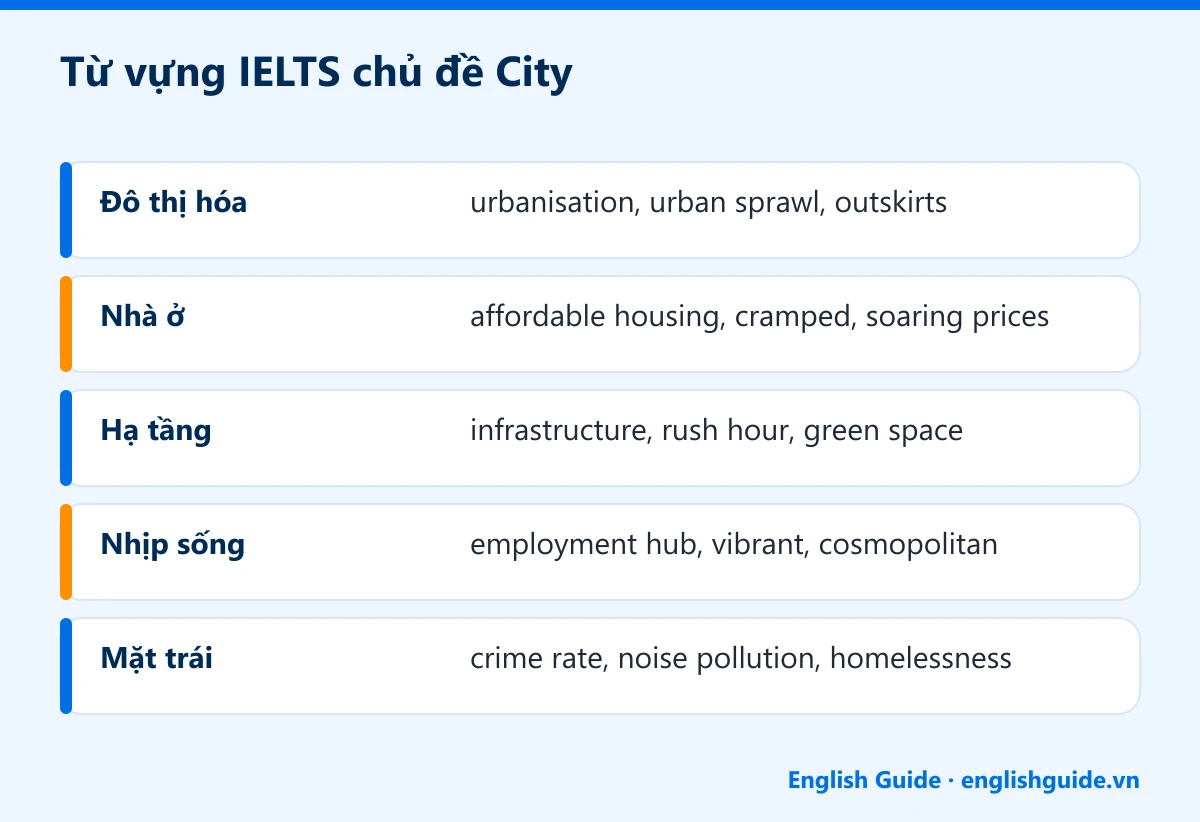
Phần sau có bảng từ đối lập thành thị và nông thôn, collocation, đề Task 2 hay gặp, đoạn mẫu Writing, câu trả lời Speaking và bài tập có đáp án. Từ về khí thải, ô nhiễm có ở bài từ vựng IELTS chủ đề Environment; từ về đi lại, tham quan có ở bài từ vựng IELTS chủ đề Travel, nên ở đây không lặp lại.
Chủ đề City xuất hiện ở đâu trong IELTS
Speaking Part 1 (4–5 phút, theo mô tả phần thi Speaking của IELTS): câu hỏi về nơi bạn sống, như bạn sống ở thành phố hay nông thôn, bạn thích gì ở đó, nơi đó đã thay đổi ra sao. Cách trả lời nhóm câu hỏi này có ở bài IELTS Speaking Part 1 chủ đề Hometown.
Speaking Part 2: mô tả một thành phố bạn từng đến hoặc muốn sống, một nơi yên tĩnh giữa phố, một tòa nhà bạn thích. Bạn có 1 phút chuẩn bị rồi nói khoảng 2 phút.
Speaking Part 3 (4–5 phút): so sánh thành thị với nông thôn, vì sao người trẻ lên thành phố, thành phố tương lai sẽ thế nào.
Writing Task 2: đề về đô thị hóa, nhà ở, ùn tắc, không gian xanh, khoảng cách giữa thành thị và nông thôn.
Trang mô tả bài thi Writing của IELTS ghi rõ Task 2 cần ít nhất 250 từ và được tính điểm gấp đôi Task 1. Ở cả Writing lẫn Speaking, vốn từ được chấm qua tiêu chí Lexical Resource. Theo bảng mô tả band Writing (bản cập nhật 05/2023), để đạt band 7 bài viết cần thể hiện "some ability to use less common and/or idiomatic items" và "an awareness of style and collocation". Vì vậy, thay vì chỉ nhớ city, crowded, noisy, bạn nên có sẵn những cụm cụ thể hơn như urban sprawl, soaring property prices, overstretched public services.
Từ vựng IELTS chủ đề City theo 5 nhóm
Ký hiệu từ loại trong bảng: (n) danh từ, (v) động từ, (adj) tính từ, (phr) cụm từ. Câu ví dụ được viết theo kiểu có thể dùng lại trong bài nói và bài viết.
Nhóm 1: Đô thị và đô thị hóa
Từ, cụm từ | Từ loại | Nghĩa | Ví dụ |
|---|---|---|---|
metropolis / metropolitan area | n | đô thị lớn / vùng đô thị | Hanoi and Ho Chi Minh City are the country's two largest metropolitan areas. |
urbanisation | n | quá trình đô thị hóa | Rapid urbanisation has turned many rice fields on the edge of town into housing estates. |
urban sprawl | n | sự lan rộng thiếu kiểm soát của đô thị | Urban sprawl forces people to travel longer distances to work and school. |
city dweller | n | người sống ở thành phố | Many city dwellers dream of retiring to a quiet village. |
densely populated | adj | đông dân cư | Densely populated districts need more schools and clinics than they currently have. |
outskirts / suburbs | n | vùng ven / ngoại ô | Houses are cheaper on the outskirts, but the journey to the centre takes much longer. |
rural-to-urban migration | phr | di cư từ nông thôn ra thành thị | Rural-to-urban migration has left many villages with mostly elderly residents. |
migrant worker | n | lao động từ nơi khác đến | Migrant workers often send part of their wages home to their families. |
megacity | n | siêu đô thị | Megacities such as Tokyo and Jakarta face enormous pressure on housing. |
Nhóm 2: Nhà ở
Từ, cụm từ | Từ loại | Nghĩa | Ví dụ |
|---|---|---|---|
housing shortage | n | tình trạng thiếu nhà ở | A housing shortage pushes up prices for young families. |
affordable housing | n | nhà ở giá phải chăng | The city plans to build more affordable housing for factory workers. |
high-rise apartment block | n | chung cư cao tầng | High-rise apartment blocks have replaced many low houses in the centre. |
soaring property prices | phr | giá nhà đất tăng vọt | Soaring property prices mean that many graduates cannot afford to buy a flat. |
cramped | adj | chật chội | Five of us shared a cramped room near the university. |
overcrowded | adj | quá đông, quá tải | Overcrowded housing allows diseases to spread quickly. |
tenant / landlord | n | người thuê nhà / chủ nhà | The landlord raised the rent, so the tenants had to move out. |
slum | n | khu ổ chuột | Many of the world's largest cities still have slums without proper sanitation. |
Nhóm 3: Hạ tầng và dịch vụ đô thị
Từ, cụm từ | Từ loại | Nghĩa | Ví dụ |
|---|---|---|---|
infrastructure | n | cơ sở hạ tầng | Investment in infrastructure must keep up with population growth. |
traffic congestion | n | ùn tắc giao thông | Traffic congestion costs drivers several hours every week. |
rush hour | n | giờ cao điểm | It can take an hour to cross the city during rush hour. |
commute / commuter | v, n / n | đi lại hằng ngày giữa nhà và nơi làm / người đi làm hằng ngày | Long commutes leave workers with little time for their families. |
green space | n | không gian xanh | Every neighbourhood should have green space where children can play safely. |
pedestrian zone | n | khu, phố đi bộ | The pedestrian zone becomes lively on weekend evenings. |
educational and healthcare facilities | phr | cơ sở giáo dục và y tế | Families often move to cities for better educational and healthcare facilities. |
waste collection | n | việc thu gom rác | Efficient waste collection keeps crowded streets clean. |
overstretched public services | phr | dịch vụ công bị quá tải | Rapid population growth has left public services overstretched. |
Nhóm 4: Cơ hội và nhịp sống đô thị
Từ, cụm từ | Từ loại | Nghĩa | Ví dụ |
|---|---|---|---|
employment hub | n | trung tâm việc làm | The capital has become an employment hub for graduates from all over the country. |
job opportunities | n | cơ hội việc làm | Better job opportunities are the main reason young people move to cities. |
cosmopolitan | adj | đa văn hóa, mang tính quốc tế | The city has a cosmopolitan atmosphere, with restaurants from dozens of countries. |
vibrant | adj | sôi động, đầy sức sống | The old quarter has a vibrant night market every weekend. |
entertainment options | n | các lựa chọn giải trí | Cinemas, concerts and shopping centres give city dwellers plenty of entertainment options. |
cultural venues | n | địa điểm văn hóa (bảo tàng, nhà hát…) | Museums and theatres are cultural venues that rural areas often lack. |
fast-paced lifestyle | phr | nhịp sống nhanh | Not everyone can cope with the fast-paced lifestyle of a big city. |
ubiquitous | adj | có mặt ở khắp nơi | Convenience stores have become ubiquitous in the city centre. |
anonymity | n | sự vô danh, không ai để ý tới mình | Some people enjoy the anonymity of city life, where nobody knows their business. |
Nhóm 5: Mặt trái của cuộc sống đô thị
Từ, cụm từ | Từ loại | Nghĩa | Ví dụ |
|---|---|---|---|
crime rate | n | tỷ lệ tội phạm | Better street lighting can help lower the crime rate. |
the gap between rich and poor | phr | khoảng cách giàu nghèo | Luxury towers next to run-down neighbourhoods show the widening gap between rich and poor. |
disadvantaged neighbourhood | n | khu dân cư khó khăn | Children from disadvantaged neighbourhoods often have fewer chances to join after-school activities. |
noise pollution | n | ô nhiễm tiếng ồn | Constant noise pollution from building sites can disturb residents' sleep. |
exhaust fumes | n | khói xe | Cyclists in the city centre breathe in exhaust fumes every day. |
homelessness | n | tình trạng vô gia cư | Rising rents are one cause of homelessness in large cities. |
lack of community spirit | phr | thiếu tinh thần gắn kết hàng xóm | The lack of community spirit in tall apartment blocks means neighbours may live side by side for years without speaking. |
be under constant stress | phr | luôn chịu áp lực | Many office workers are under constant stress from long hours and long commutes. |
Thành thị và nông thôn: các cặp từ đối lập
Đề so sánh thành phố với nông thôn rất hay gặp ở Part 3 và Writing Task 2. Thuộc sẵn từng cặp giúp bạn viết câu so sánh nhanh hơn.
Thành phố | Nông thôn | Câu so sánh mẫu |
|---|---|---|
bustling, crowded | peaceful, tranquil | The city centre is bustling, whereas my grandparents' village is tranquil. |
a fast pace of life | a slower pace of life | Some retirees move to the countryside for a slower pace of life. |
anonymous | a strong sense of community | Rural areas often have a strong sense of community, while city life can feel anonymous. |
a wide range of services | limited access to services | Villagers may have limited access to specialist doctors. |
built-up area | open countryside, farmland | The road leaves the built-up area and runs through open farmland. |
better-paid jobs, higher expenses | lower wages, lower expenses | Wages are higher in the city, but so are rents and daily expenses. |
Collocation chủ đề City nên dùng
Những cụm dưới đây giúp câu văn nghe tự nhiên hơn so với ghép từng từ theo tiếng Việt.
Collocation | Nghĩa | Ví dụ |
|---|---|---|
ease traffic congestion | giảm ùn tắc | A ring road could ease traffic congestion in the city centre. |
invest in public infrastructure | đầu tư vào hạ tầng công cộng | Cities must invest in public infrastructure before new districts are built. |
revitalise run-down areas | hồi sinh những khu xuống cấp | The old market area was revitalised with cafés and small galleries. |
urban regeneration | cải tạo, tái thiết đô thị | Urban regeneration projects should involve local residents, not just developers. |
move to the city in search of work | lên thành phố tìm việc | Many young people move to the city in search of work after finishing school. |
put a strain on | gây sức ép lên | A sudden rise in population can put a strain on schools and hospitals. |
improve the quality of life | nâng cao chất lượng sống | More parks would improve the quality of life for city residents. |
the hustle and bustle of city life | nhịp sống hối hả nơi phố thị | I enjoy the hustle and bustle of city life, but I need a quiet weekend now and then. |
a concrete jungle | rừng bê tông | Without parks and trees, the city would feel like a concrete jungle. |
a melting pot of cultures | nơi giao thoa nhiều nền văn hóa | Port cities have long been melting pots of cultures. |
Lưu ý văn phong: a concrete jungle và the hustle and bustle hợp với Speaking. Trong Writing Task 2, nên ưu tiên các cụm trung tính như put a strain on, invest in public infrastructure, urban regeneration.
Đề Writing Task 2 chủ đề City hay gặp
Các đề dưới đây do EG tự diễn đạt để luyện tập, bám theo những hướng ra đề phổ biến về đô thị:
Dạng đề | Đề luyện tập |
|---|---|
Agree/disagree | Governments should encourage large companies to move their offices from big cities to smaller towns. To what extent do you agree or disagree? |
Advantages/disadvantages | In many countries, more and more families live in high-rise apartment blocks. Do the advantages of this outweigh the disadvantages? |
Discussion | Some people think a big city is the best place to bring up children, while others believe the countryside is better. Discuss both views and give your opinion. |
Problem/solution | Many young people are leaving rural areas to live in big cities. What problems does this cause, and what solutions can you suggest? |
Two-part question | In many cities, old buildings are being knocked down to make way for modern ones. Why is this happening? Is it a positive or negative development? |
Đề về ùn tắc và phương tiện công cộng trong thành phố có bài mẫu riêng ở bài bài mẫu IELTS Writing Task 2 chủ đề Transport.
Đoạn mẫu Writing Task 2 dùng từ vựng City
Đề: đề Problem/solution về người trẻ rời nông thôn ở bảng trên. Đoạn dưới đây nêu vấn đề chính rồi đưa giải pháp; từ vựng của bài được in đậm.
The most visible consequence of rural-to-urban migration is the pressure it places on cities themselves. When large numbers of newcomers arrive every year, the demand for homes quickly outstrips supply, which leads to soaring property prices and pushes many low-income families into cramped rented rooms on the outskirts. At the same time, roads, schools and hospitals designed for a much smaller population become overstretched, and traffic congestion turns daily commutes into an exhausting routine. One practical solution is to make smaller towns more attractive places to live and work. If governments invest in public infrastructure and offer tax breaks to firms that open factories or offices outside the major cities, young people would have job opportunities closer to home. This would not stop migration altogether, but it would slow it to a pace that cities can manage.
Đoạn văn nối các ý bằng quan hệ nguyên nhân – kết quả (demand outstrips supply, which leads to…), rồi chuyển sang giải pháp có điều kiện cụ thể (If governments…). Câu cuối thừa nhận giới hạn của giải pháp, cách làm giúp lập luận chín chắn hơn. Từ vựng không hiếm, nhưng đi đúng cặp: soaring property prices, invest in public infrastructure.
Câu trả lời Speaking mẫu chủ đề City
Part 1
Do you live in a city or in the countryside?
I live in Buon Ma Thuot, a medium-sized city in the Central Highlands. It's nowhere near as big as Ho Chi Minh City, but it has most of what I need: good schools, hospitals and a few shopping centres. What I like most is that I rarely get stuck in traffic for long, and I can be out among the coffee farms in a short ride.
Would you like to live in a big city in the future?
Maybe for a few years, while I'm young. Big cities offer far better job opportunities, and I'd love to make the most of the cultural venues and the nightlife. But I don't think I could put up with the noise and the rush hour forever. Ideally, I'd work in a big city for a while, save some money and then move somewhere with a slower pace of life.
Part 3
Why do so many young people move to big cities?
Mainly for work and education. The top universities and the best-paid jobs are concentrated in a handful of large cities, so for many graduates there isn't much choice. There's also the appeal of the lifestyle: more entertainment options and more people their own age. The downside is that their home towns lose energetic young workers, which makes it harder for those places to develop.
What can be done to make cities better places to live?
I'd make green space a priority. A city can have modern buildings and wide roads, but if there's nowhere to walk or sit under a tree, it just feels like a concrete jungle. Local authorities could also turn a few busy streets into pedestrian zones at weekends. These changes aren't especially expensive, yet they make a real difference to residents' quality of life.
Mỗi câu trả lời Part 3 nêu quan điểm, giải thích, rồi thêm ví dụ hoặc mặt trái. Không cần nhồi nhiều từ khó: chỉ cần vài cụm đúng chỗ như concentrated in, a concrete jungle, pedestrian zones.
Bài tập từ vựng City có đáp án
Bài 1: Điền từ thích hợp
Từ gợi ý: outskirts, cramped, rush hour, employment hub, green space, densely populated
During ___, the main roads are packed with motorbikes.
The capital has become an ___ for graduates from across the country.
We moved to the ___ because houses there were cheaper.
Our first flat was so ___ that we had to fold the bed away every morning.
___ areas usually need more schools and clinics.
The new park gives local children some much-needed ___.
Bài 2: Nối cụm từ với nghĩa gần nhất
Cụm từ | Gần nghĩa với |
|---|---|
1. ease traffic congestion | a. a place where many cultures mix |
2. soaring property prices | b. reduce traffic jams |
3. a melting pot | c. house prices that rise very quickly |
4. overstretched services | d. a calmer, slower way of living |
5. a slower pace of life | e. services that cannot meet demand |
Bài 3: Chọn từ đúng
The city centre is very (crowd / crowded) at weekends.
Rapid (urban / urbanisation) has changed many farming areas.
Many (commuters / commutes) spend two hours on the road every day.
This is one of the most densely (population / populated) parts of the city.
There is a shortage of (affordable / afford) housing.
Đáp án
Bài 1: 1. rush hour · 2. employment hub · 3. outskirts · 4. cramped · 5. Densely populated · 6. green space
Bài 2: 1-b · 2-c · 3-a · 4-e · 5-d
Bài 3: 1. crowded · 2. urbanisation · 3. commuters · 4. populated · 5. affordable
Học và dùng từ vựng City sao cho nhớ lâu
Cách dễ nhất là dùng chính nơi bạn sống làm tư liệu. Chọn 8–10 từ trong bài, viết một đoạn ngắn tả thành phố hoặc thị trấn của bạn, ví dụ Buôn Ma Thuột đã thay đổi thế nào trong vài năm qua, rồi so sánh với một thành phố lớn bạn từng đến. Sau đó nói lại đoạn đó trong 2 phút và ghi âm, như một bài Part 2. Phương pháp ôn lặp lại có ở bài cách học từ vựng IELTS.
Nếu muốn có giáo viên sửa cách dùng từ trong bài viết và bài nói, khóa IELTS Master 5.0–5.5 của EG có 80 giờ học, lớp 8–15 học viên, chấm Writing và Speaking chi tiết. Học tại Cơ sở Buôn Ma Thuột học phí 9.900.000đ (khoảng 124.000đ/giờ); học online cùng giáo viên 7.140.000đ (khoảng 89.000đ/giờ). Giữa các buổi, học viên ôn từ vựng trên nền tảng EG LMS. Chưa rõ trình độ, bạn có thể bắt đầu bằng bài kiểm tra trình độ miễn phí.
Câu hỏi thường gặp
City, town và urban khác nhau thế nào?
City là thành phố lớn, town là thị trấn hoặc thành phố nhỏ hơn. Urban là tính từ, nghĩa là thuộc về đô thị, thường dùng trong văn viết: urban areas, urban residents. Trong Writing, urban areas và rural areas là cặp an toàn để so sánh.
Viết urbanisation hay urbanization?
Cả hai đều đúng: -isation là cách viết Anh-Anh, -ization là Anh-Mỹ. IELTS chấp nhận cả hai, miễn bạn dùng thống nhất một kiểu chính tả trong cả bài.
City centre và downtown khác gì nhau?
Cùng chỉ khu trung tâm thành phố. City centre là cách nói Anh-Anh, downtown phổ biến trong Anh-Mỹ. Dùng cách nào cũng được, nhưng nên khớp với kiểu chính tả bạn đang dùng.
Countryside và rural area dùng khác nhau ra sao?
Countryside là danh từ, gợi cảnh đồng ruộng, làng quê, hay dùng khi nói: I grew up in the countryside. Rural là tính từ, mang sắc thái trung tính và học thuật hơn, hợp với Writing: rural communities, rural areas.